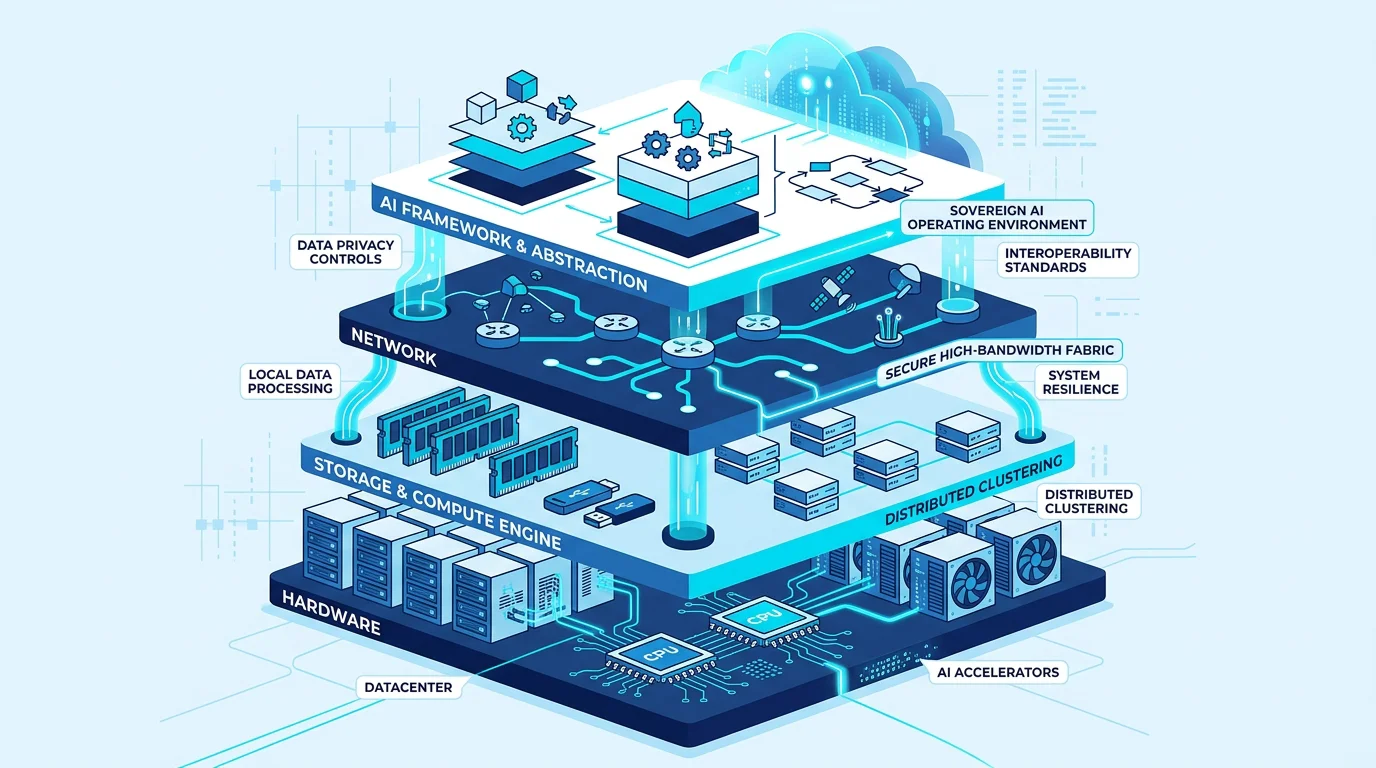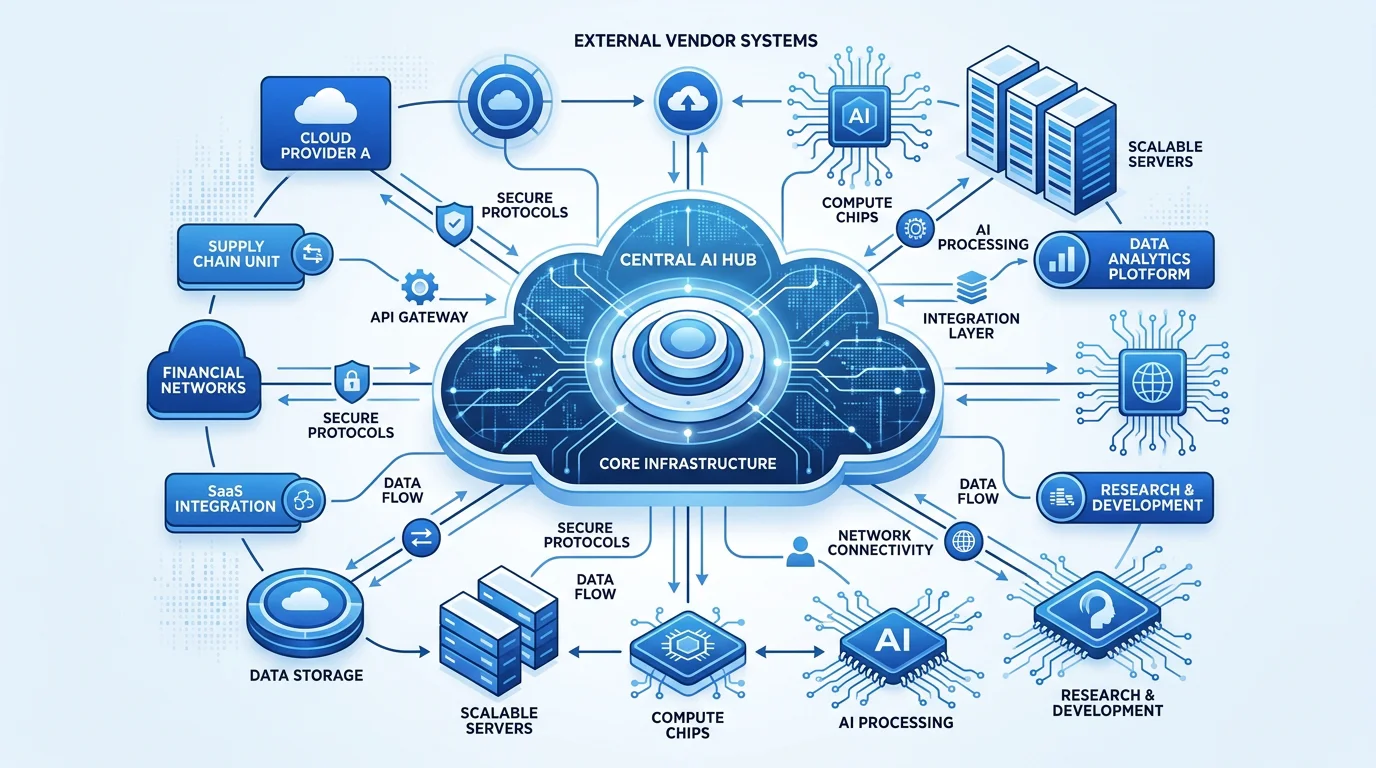

More than half of AI failures now originate outside the walls of your organization, inside the tools you license rather than the systems you build. That single reality reframes how modern enterprises must approach the risks of third-party AI, and it explains why vendor governance has become a board-level concern. Controlling what external systems can access starts with architecture, which is why our approach to Sovereign AI for controlling data from third parties treats data dependency as a design decision, not an afterthought.
Enterprises rarely develop their own models anymore. They buy, license, or embed them. According to MIT Sloan research, 78% of organizations use third-party AI tools, and 55% of all AI failures trace back to those external tools. When an external model misbehaves, the consequences still land on your reputation, your compliance posture, and your balance sheet.
What makes third-party AI risk distinct
Traditional vendor risk assumed a fairly static relationship: a supplier delivered a product, and you assessed it periodically. The dynamic nature of third-party AI risk breaks that model. Models drift, retrain, and update after the contract is signed, so a vendor you evaluated as safe last quarter may behave differently today.
There is also the question of opacity. Many external systems operate as black box models, meaning even their developers cannot fully explain a given output. When a licensed model influences credit decisions, hiring, or customer communications, that opacity converts directly into legal and reputational exposure. Understanding this distinction is the foundation of any credible AI vendor risk assessment.
Where the exposure actually comes from
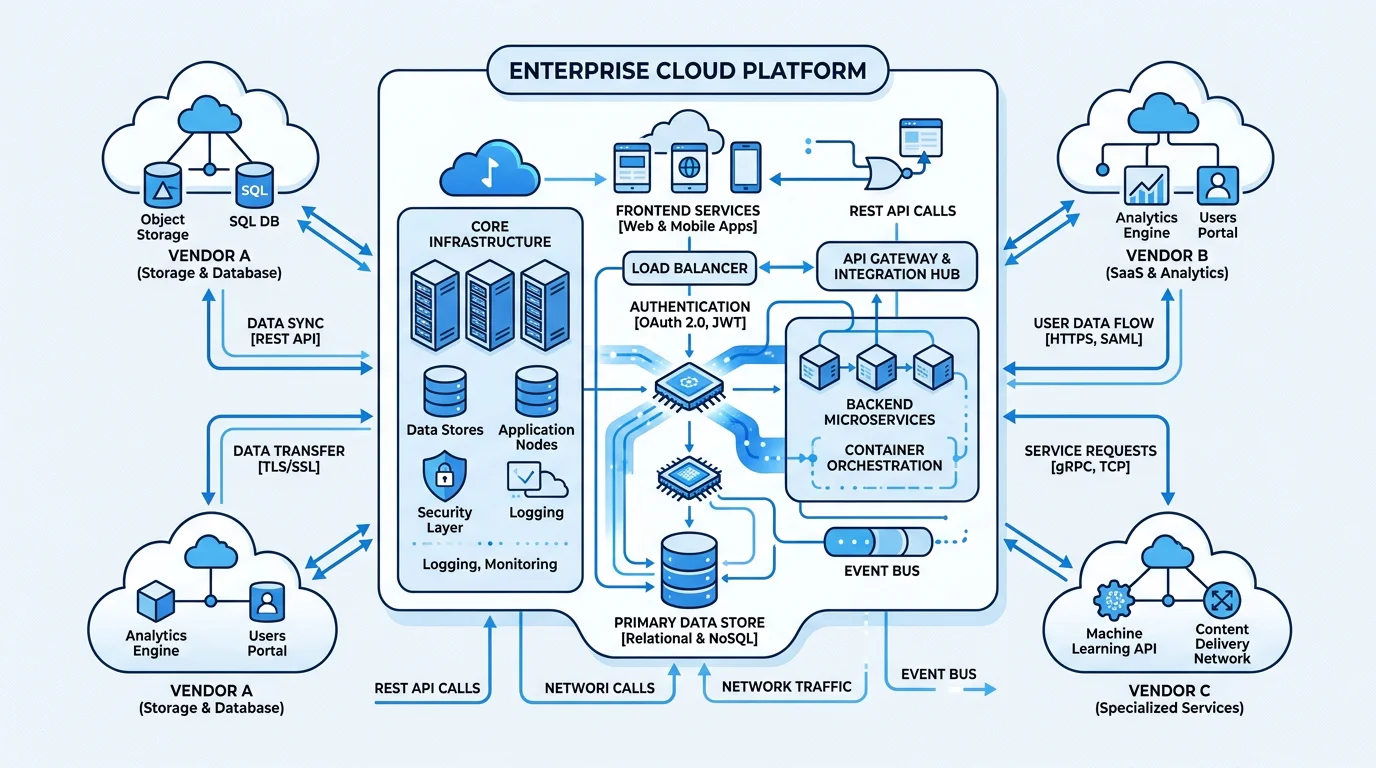
The largest source of risk is often the AI you did not knowingly adopt. Vendors embed models into SaaS products, cloud platforms, and outsourced services, frequently without clear disclosure. Research from Practical DevSecOps indicates that 98% of organizations use at least one third-party SaaS application with AI capabilities embedded, yet fewer than 30% maintain a formal AI vendor risk assessment process.
Then there is shadow AI, the unsanctioned tools employees adopt on their own. This invisible layer creates real financial consequences. A 2025 industry analysis summarized by Accorian reported that 20% of organizations experienced breaches tied to unauthorized AI activity, with an average breach cost increase of roughly $670,000 attributable to shadow AI exposure.
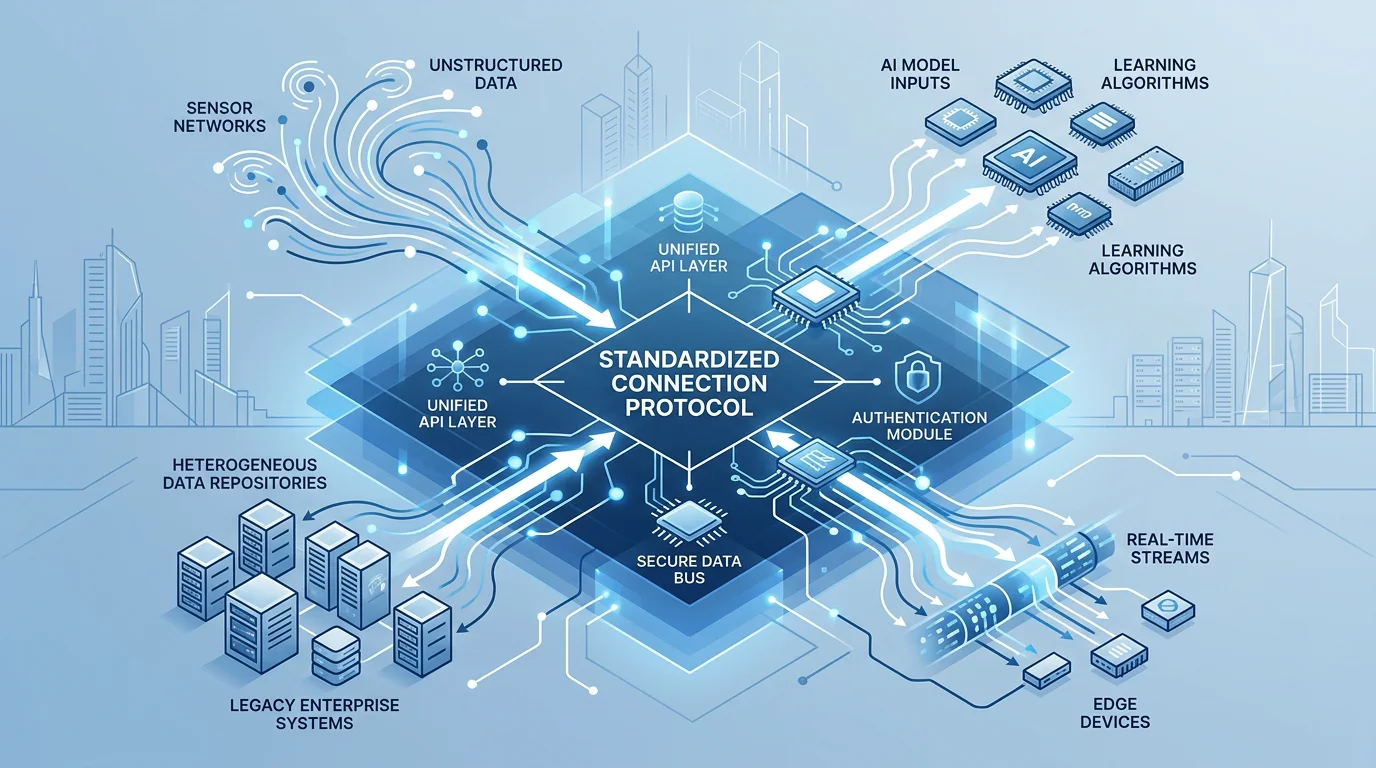
Finally, the AI supply chain itself introduces compounding dependencies. Foundation models, open-source libraries, vector databases, embedding models, and agent frameworks each expand the attack surface. A poisoned dataset or a compromised model repository can affect your applications without a single change to your own code, which is why standardizing how systems exchange information matters. Our work on standardizing agent data protocols to limit third-party exposure addresses precisely this layer of dependency.
The data dependency problem most frameworks ignore
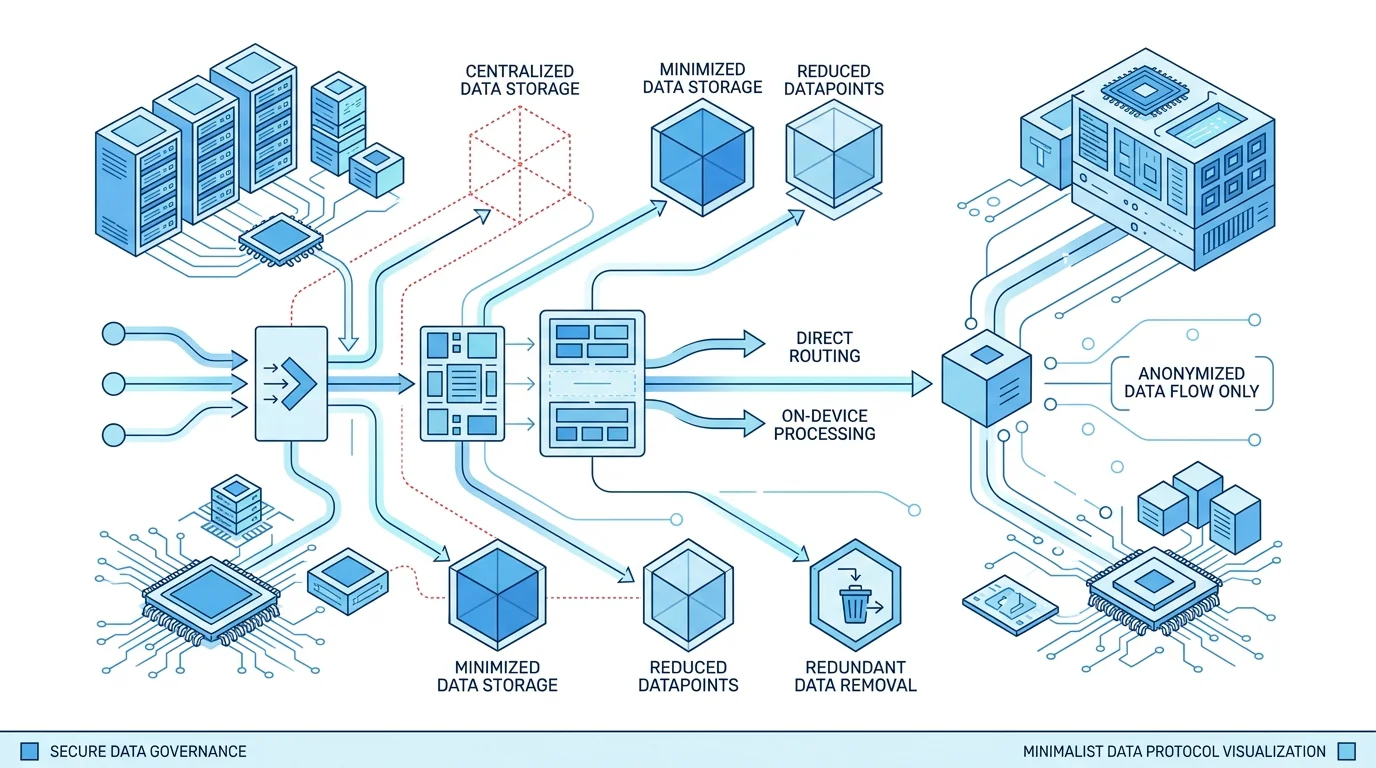
Conventional vendor governance focuses on protecting data after it has already been collected and shared. That is a defensive posture, and it leaves a structural weakness intact: the data still exists somewhere a third party can reach it. If a vendor cannot be breached for information it never received, the entire category of exposure collapses.
This is the differentiating angle worth examining. The safest data is the data that was never collected. Instead of asking how to guard the personal data flowing to external systems, ask whether that data needs to flow at all. A structural approach applies three principles: Zero Collection, so personal data is not gathered by default; Zero Retention, so nothing is stored, cached, or archived; and Zero Exploitation, so information cannot be monetized, analyzed, or repurposed downstream.
We describe the outcome as structural sovereignty, where the absence of data becomes a designed feature rather than an operational limitation. When systems are architected this way, the question shifts from "how do we secure this vendor" to "what could this vendor even expose." For teams weighing how to operationalize this shift, our guidance on how to make enterprise AI deployments safer and third-party-ready connects the principle to practical deployment.
How to evaluate and govern vendor AI
Checkbox diligence no longer suffices. The more evaluation methods you apply, the more failures you uncover. MIT Sloan researchers found that organizations using seven distinct methods to assess third-party tools were more than twice as likely to detect AI failures as those using only three. Depth of scrutiny is not bureaucracy; it is measurable protection.
Visibility remains the persistent gap. According to EY data compiled by Secureframe, 23% of organizations still do not monitor vendor AI usage, though that figure has improved from 37% in 2024. Practical governance means several concrete steps:
- Revisit vendor contracts to require disclosure whenever AI is used in service delivery.
- Confirm whether third parties use your data to train their models, and document any limits on reuse.
- Adjust risk tiering to account for the sensitivity of data involved and the business impact of a model failure.
- Track evolving regulations, including the EU AI Act, and verify vendor alignment.
These controls reduce the frequency of incidents, but they do not eliminate the underlying dependency. That is why detection and architecture must work together.
Comparing approaches to third-party AI exposure
Not every strategy addresses the same layer of risk. Reactive vendor management catches problems after data has been shared. Data minimization narrows what is collected. A structural protocol removes the dependency entirely. The distinction matters because the volume of incidents keeps climbing: research reported by VentureBurn found that 44% of companies experienced security incidents tied to third-party dependencies in their AI workflows.
| Approach | Focus | Data still exposed to vendors | Residual exposure |
|---|---|---|---|
| Reactive vendor management | Assess and monitor after sharing | Yes | High |
| Data minimization | Reduce what is collected | Partial | Moderate |
| Zero Data Protocol (our approach) | Eliminate data dependency by design | No, by architecture | Structurally reduced |
The comparison is not about ranking tools; it is about where in the lifecycle you intervene. The earlier you remove the dependency, the fewer downstream controls you must maintain. Where network-level oversight is required without accumulating sensitive records, our model for Zero Data Network Access Control to prevent third-party surveillance demonstrates that monitoring and data minimization are not mutually exclusive.
Turning vendor exposure into a design decision
Managing third-party AI exposure in 2026 requires two moves at once. First, mature your vendor governance: evaluate models continuously, demand transparency, and monitor for the shadow AI that already lives inside your stack. Second, and more durably, reduce the surface itself by questioning whether external systems need your data at all. Governance limits the damage of a breach; architecture can prevent the breach from having anything worth stealing. Enterprises that combine disciplined vendor oversight with structural data minimization will carry far less risk into every new AI partnership they form.
Take action with Zero Data Protocol
If your teams are spending more time securing vendor data than questioning whether that data should exist, it is worth reconsidering the foundation. The most resilient enterprises are moving from protecting collected data to designing systems that never depend on it, closing the exposure that vendor governance alone cannot reach.
Zero Data Protocol is a protocol-level architecture that eliminates personal-data dependency by design, built on Zero Collection, Zero Retention, and Zero Exploitation. Rather than adding another compliance layer, it makes the absence of data a structural feature so external systems have nothing to expose. To understand how this architecture can reshape your exposure to external AI systems, explore the Zero Data Protocol architecture.
Frequently Asked Questions
What is third-party AI risk?
It is the exposure your organization inherits when it licenses, integrates, or depends on AI systems developed by external vendors. Because those systems often process sensitive data and make consequential decisions, their failures become your legal, financial, and reputational liabilities.
Why is shadow AI so dangerous for enterprises?
Shadow AI refers to unsanctioned AI tools that employees adopt without oversight, creating data flows that bypass corporate governance entirely. Because leadership frequently does not know these tools exist, the associated breaches often go undetected until costs accumulate.
How can enterprises reduce third-party AI exposure?
Strengthen vendor governance by requiring AI disclosure in contracts, scrutinizing data usage, and applying multiple evaluation methods rather than a single questionnaire. Beyond governance, architectures such as Zero Data Protocol reduce exposure structurally by removing the data dependency that vendors could otherwise abuse.
Does data minimization eliminate vendor AI risk?
Data minimization reduces exposure but does not remove it, since some data is still collected and shared. Eliminating the dependency at the architectural level closes a category of risk that minimization alone leaves partially open.
What regulations govern third-party AI use?
Frameworks such as the EU AI Act increasingly place obligations on organizations that deploy AI, even when the systems are built by others. You remain responsible as a deployer, so verifying vendor alignment with applicable regional and sector rules is essential.