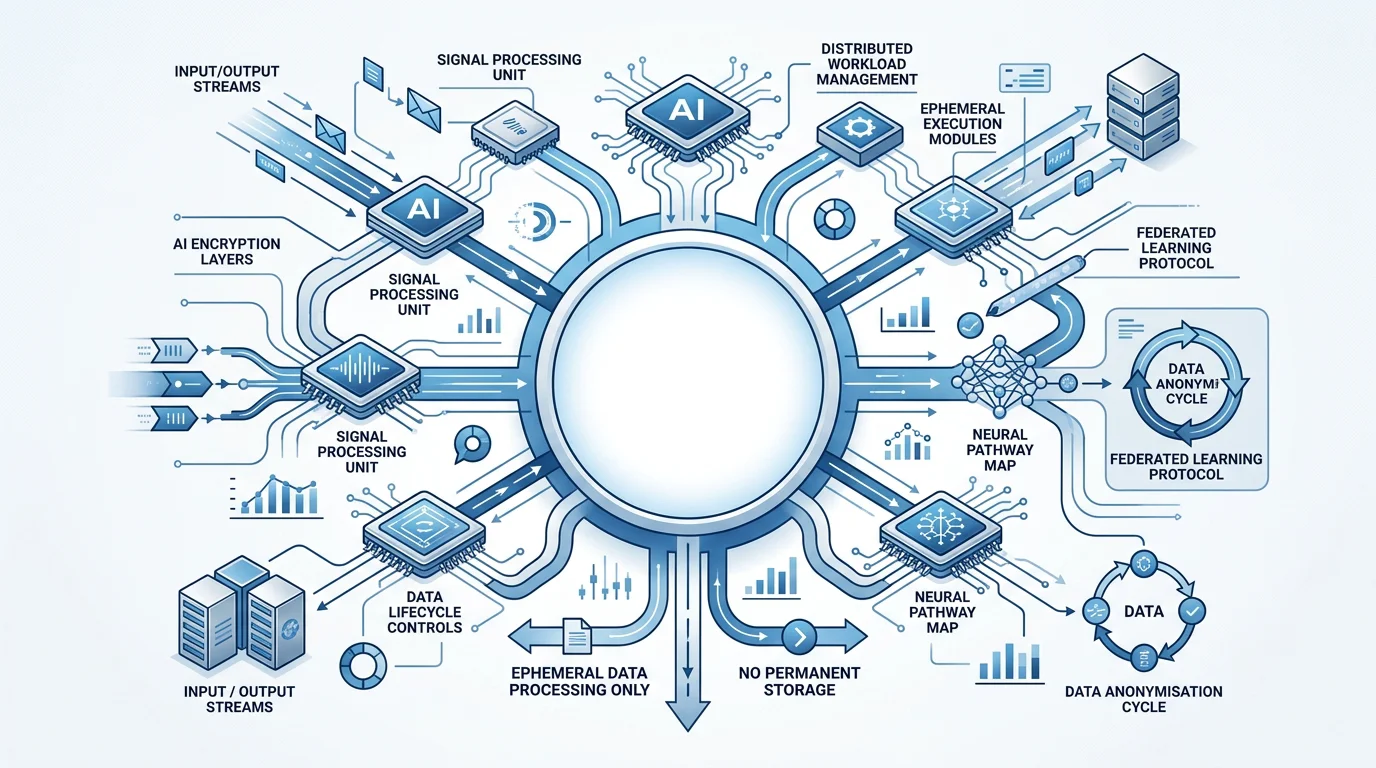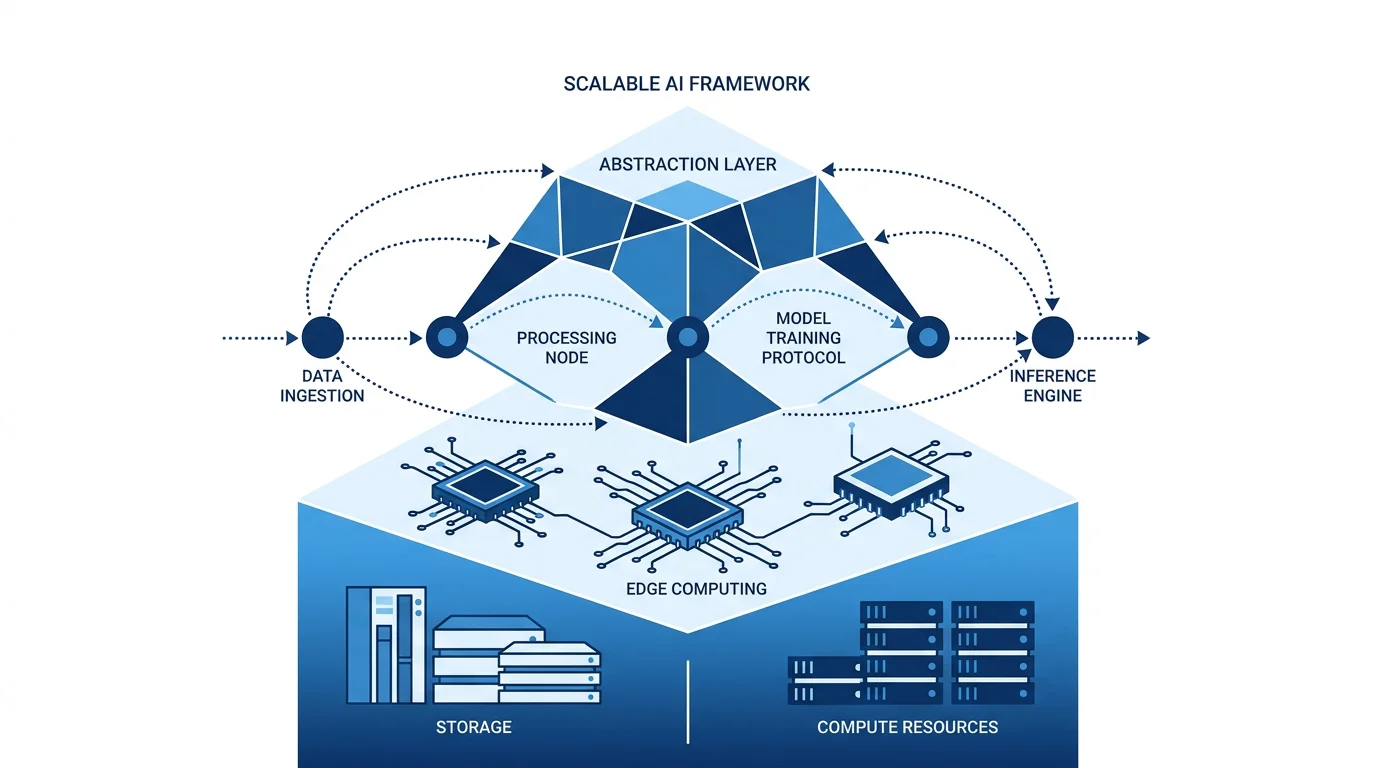

Access decisions are made billions of times each day, yet many of them leave a lasting trail of personal data. Every authentication, posture check, and session log can add to a profile that outlives its purpose. The question is no longer only who reaches the network, but how much is retained about them afterward. A disciplined model of network access governance can enforce strong controls while minimizing what is collected. To understand the architectural principle behind that idea, you may explore What Is Zero AI? Understanding Zero-Data AI Architecture.
The stakes are measurable. The network access control market is estimated at US$ 6.35 billion in 2026, growing at a projected 22.2% compound annual rate through 2033. As adoption accelerates, so does the volume of identity and device information these systems handle. That expansion makes the privacy posture of access control a strategic concern, not merely an operational one.
What network access control actually does
Network access control restricts unauthorized users and devices from reaching a corporate or private network. In practice, it authenticates the identity requesting entry, evaluates the security posture of the device, and enforces policy about where that device may go once admitted. A basic form is the 802.1X standard, which governs port-based admission at the network edge.
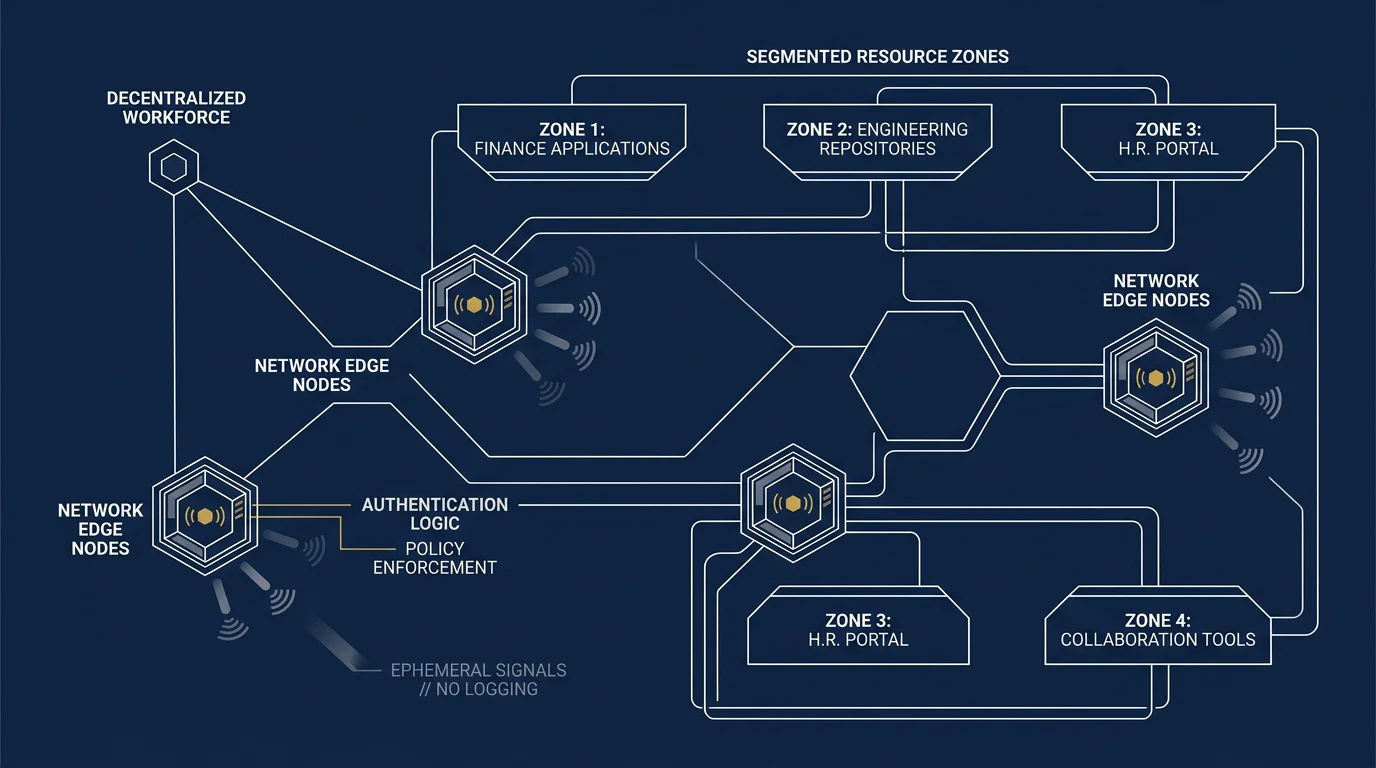
Most deployments operate in two phases. Pre-admission checks inspect a device before it joins, for example verifying patch levels or antivirus status. Post-admission controls then govern lateral movement, deciding which segments and resources an authenticated session may reach. Common enforcement mechanisms include quarantine networks and captive portals, which route non-compliant devices only to remediation resources until they meet policy.
The benefits are well established: control over who enters, role-based segmentation, automated response to suspicious activity, and continuous visibility into connected endpoints. These capabilities matter more as bring-your-own-device policies and Internet-of-Things deployments expand the attack surface. The design goal is sound. The concern addressed in this article is the data exhaust that accumulates alongside it.
The hidden data footprint of conventional access control
To make decisions, a traditional system observes a great deal. It typically records user identities, device fingerprints, MAC and IP addresses, operating system versions, location, time-of-day, and authentication events. Post-admission monitoring adds behavioral telemetry: which resources were reached, when, and how often. Each data point is justified individually, yet together they form a durable behavioral profile.
The problem is that much of this information persists far beyond the moment of decision. Logs are retained, cached, and replicated across security tools, and each copy becomes an asset an attacker may target. According to the 2026 Verizon DBIR, the human element and stolen credentials remain among the most frequent factors in breaches. A system that stockpiles identity and behavioral data therefore increases exactly what a successful intrusion can expose.
This is the central tension. The more an access system remembers about people, the larger the consequence when that memory is compromised. A profile that was never created cannot be stolen, sold, or repurposed. That principle reframes data minimization from a compliance obligation into a structural defense, and it is the discipline explored in What Is ZDP? The Zero Data Protocol for secure AI systems.
A zero data protocol approach to access control
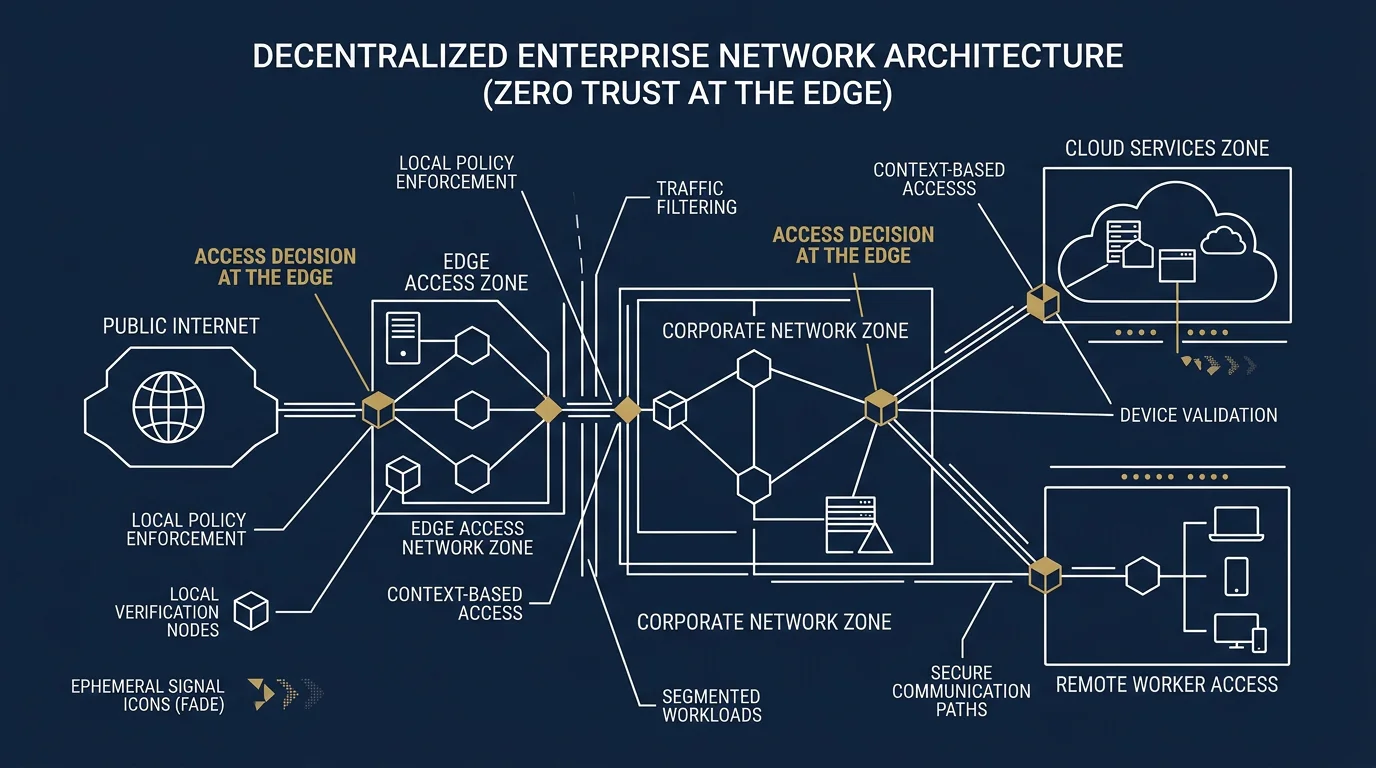
What if verification did not require retention? A zero data protocol approach applies the principles of the Zero Data Protocol as a privacy architecture layer over access control. It does not replace your enforcement engine, and it is not an industry standard. It is a design discipline that asks each control to prove entitlement without building a persistent personal record.
In practice, this rests on a few structural choices. Verification happens locally or through ephemeral signals that are discarded once the decision is made. Access is granted on a least-privilege basis, scoped to the session rather than the identity. Segmentation contains any compromised session, so a breach cannot cascade. Above all, no persistent personal-data profile is assembled, and nothing is retained beyond operational necessity.
These ideas align naturally with zero trust, a market valued at US$ 48.43 billion in 2026. Zero trust already assumes that no session should be implicitly trusted. A zero data protocol layer extends that logic to the data itself: the system should not implicitly retain what it does not structurally need. For teams designing this kind of containment, our guide to Micro-segmentation for zero trust breach containment details the segmentation dimension.
Traditional access control compared with a zero-data-aligned layer
| Dimension | Conventional NAC | ZDP-aligned NAC layer |
|---|---|---|
| Identity handling | Persistent identity records stored and correlated | Local or ephemeral verification, no durable profile |
| Device data | Fingerprints and posture history retained | Posture checked at decision time, then discarded |
| Behavioral telemetry | Continuous logging of resource usage | Minimized to operational necessity only |
| Access scope | Often role-wide, standing access | Least privilege, scoped per session |
| Breach exposure | Large data store increases what can leak | Reduced footprint limits what can be exposed |
| Retention posture | Retain by default, purge later | Do not collect or retain unless required |
The comparison is not a claim that one tool defeats another. It illustrates where a privacy architecture layer changes the default assumptions of an existing deployment.
An implementation checklist
Adopting this posture is incremental. You may begin with your current enforcement stack and reduce its data footprint step by step. The following checklist orders the work from foundational to advanced.
- Inventory what you collect. Map every identity, device, and behavioral attribute your access system records, and note where each copy lives.
- Classify by necessity. Distinguish data required for a real-time decision from data retained only by habit or convenience.
- Shorten retention. Set aggressive expiry on logs and posture records, and eliminate silent replication into secondary tools.
- Prefer ephemeral verification. Where feasible, verify posture and entitlement at the moment of access rather than storing historical state.
- Enforce least privilege. Scope access to the session and task, not to a broad standing role.
- Segment aggressively. Contain sessions so that a single compromise cannot traverse the network.
- Audit for absence. Confirm that decommissioned data is genuinely gone, and treat the absence of a profile as a designed feature.
Progress on any one item reduces exposure. You do not need to complete the list before the security posture improves.
Practical use cases
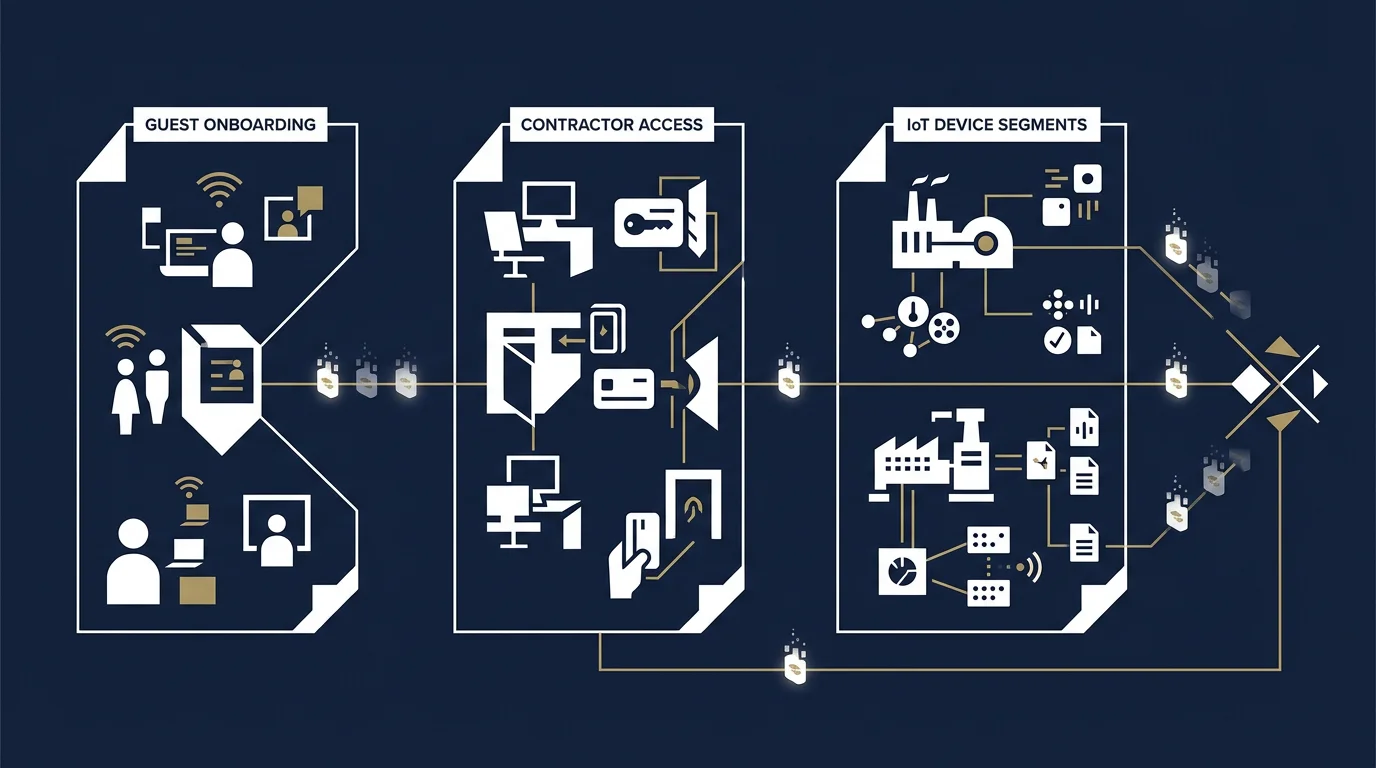
Consider guest and contractor onboarding. A conventional flow may create durable accounts and log activity long after the engagement ends. A zero-data-aligned flow issues session-scoped access that expires automatically, verifying entitlement without building a lasting record of the individual.
Internet-of-Things and operational-technology fleets present a second case. These devices are numerous and often unmonitored for long periods. Profiling categories rather than persistent per-device identities allows enforcement while limiting the personal and organizational data that accumulates around each endpoint.
A third case concerns AI infrastructure. As models are embedded into internal systems, access to sensitive data multiplies. The IBM 2025 report found that among breaches involving unsanctioned generative AI, 65% exposed personally identifiable information. Reducing what an AI-connected system can reach, and what it retains about users, directly shrinks that exposure. Teams building for this environment may find our overview of AI-Ready Network architecture useful when designing controls from the ground up.
Limits and risks to weigh
This approach is not without tradeoffs, and honesty about them matters. Reducing retained telemetry can complicate forensic investigation, because after-the-fact analysis often depends on historical logs. You must balance minimization against the evidentiary needs of incident response and compliance obligations that require records.
Ephemeral verification can also add operational complexity. Remediation that takes seconds on a fast connection may take longer under constrained conditions, and session-scoped access requires disciplined policy design to avoid disrupting legitimate work. Some regulatory frameworks additionally mandate specific retention periods, which you must honor even while minimizing elsewhere.
Finally, a privacy architecture layer does not eliminate the need for a capable enforcement engine. It reshapes what that engine remembers; it does not perform authentication, posture assessment, or segmentation on its own. Treat it as a complementary discipline, applied deliberately, rather than a replacement for the controls you already operate.
Bringing it together
Strong network access control and rigorous data minimization are not in conflict. You can authenticate users, verify devices, and contain sessions while refusing to build a persistent profile of the people behind them. The discipline is to question each retained attribute, to prefer local or ephemeral verification, and to treat the absence of stored data as a deliberate security feature. Begin with an honest inventory, shorten retention aggressively, and let least privilege and segmentation carry the load. In an era of AI-driven risk, the data you never keep is the data no adversary can take.
Take action with Zero Data Protocol
If your access controls have quietly become a warehouse of identity and behavioral data, you are carrying risk that strong enforcement alone cannot offset. The path forward is to design systems that verify without accumulating, and to make the absence of personal data a structural property rather than an afterthought.
We built the Zero Data Protocol as a protocol-level architecture that removes personal-data dependency by design, preventing unnecessary collection, retention, and exploitation before they occur. Rather than protecting data after it is gathered, our approach helps you architect systems where lack of data is not a limitation but a designed advantage. Explore the Zero Data Protocol architecture to see how structural data minimization can strengthen your access posture.
Frequently Asked Questions
Does a zero data protocol approach replace network access control?
No. It is a privacy architecture layer that complements your existing enforcement engine, not a substitute for it. Your access system still handles authentication, posture assessment, and segmentation, while the zero-data discipline reduces what is collected and retained.
Is the Zero Data Protocol an industry standard?
No. The Zero Data Protocol is a protocol-level architectural approach, not a formal standard or a compliance framework. It offers a design discipline for minimizing personal-data dependency, which you may apply alongside recognized standards such as 802.1X and zero trust models.
Will minimizing retained data weaken incident investigation?
It can, if applied without balance. Forensic analysis often relies on historical logs, so you must retain what your response and compliance obligations genuinely require. The goal is to eliminate unnecessary retention, not the records that legitimately support investigation.
How does this approach relate to zero trust?
The two are highly complementary. Zero trust assumes no session is implicitly trusted, and a zero-data layer extends that logic by refusing to implicitly retain personal data. Together they reduce both unauthorized access and the exposure created by stored information.
Where should an enterprise begin?
Start with an inventory of every identity, device, and behavioral attribute your access system collects and stores. Classify each by whether it is truly needed for a real-time decision, then shorten retention and adopt ephemeral verification where feasible. Incremental steps improve your posture immediately.