
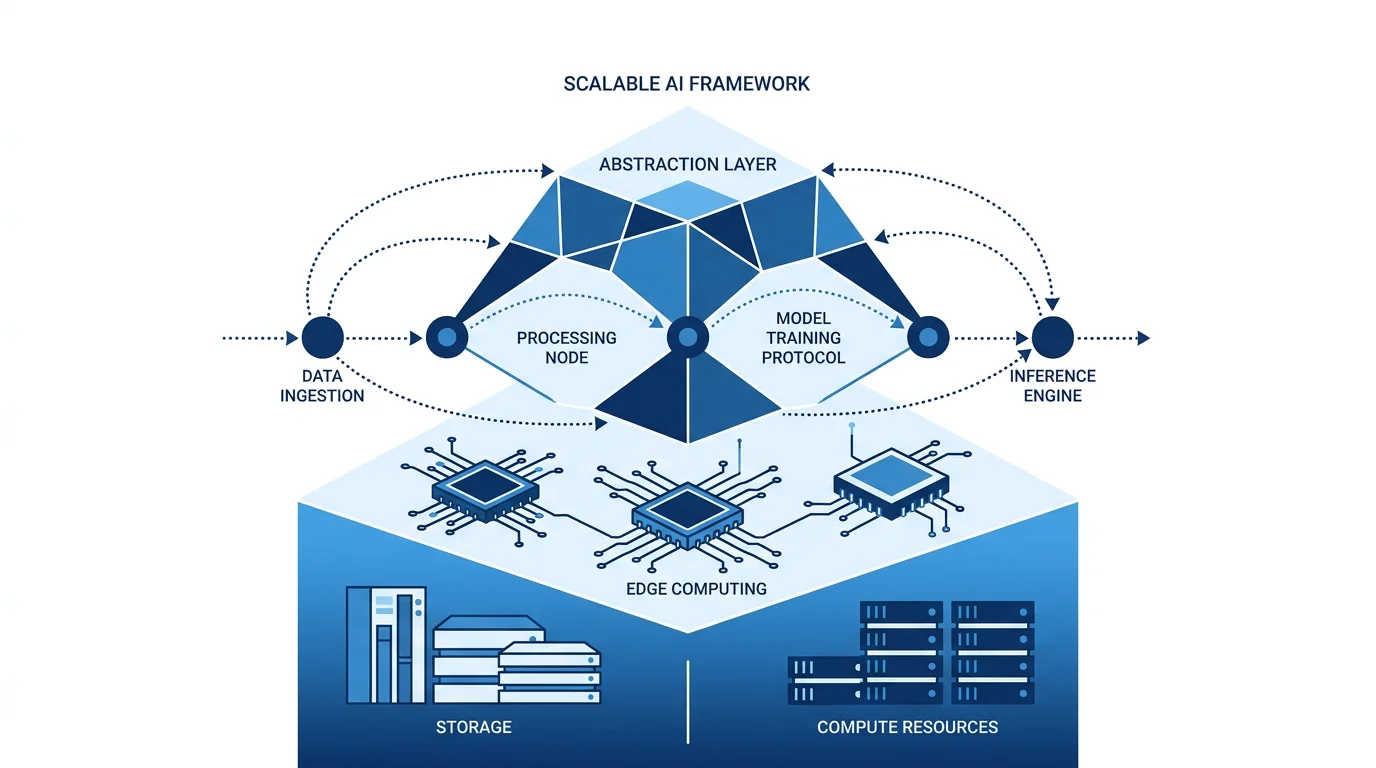
What Is ZDP? The Zero Data Protocol for Secure AI Systems
ZDP, the Zero Data Protocol, eliminates personal-data dependency by design. Learn how this architecture reduces breach risk for modern AI systems.
 Written by Lajos NAGY
 Every system that holds personal data becomes a target worth attacking. In 2025, the global average cost of a single data breach reached 4.44 million dollars, a reminder that stored information is rarely a neutral asset. This is the structural problem that our Zero Data Protocol architecture was designed to address: not how to defend the data you keep, but whether that data needs to exist inside your systems at all.
Most security strategies still begin with an unspoken assumption, namely that personal data must live somewhere and therefore must be protected. The Zero Data Protocol inverts that logic. Rather than minimizing damage after collection, it questions collection itself. According to analysis of the 2025 report, costs fell for the first time in five years, yet the United States still averaged 10.22 million dollars per breach. When data does not exist, there is nothing to lose.
What the Zero Data Protocol actually means
The term ZDP describes a foundational architecture rather than a product, an application, or a compliance checklist. It rests on three structural commitments. Zero Collection means no personal data is gathered by default. Zero Retention means nothing is stored, cached, or archived. Zero Exploitation means no information is monetized, analyzed, or repurposed.
Together, these principles produce what we describe as structural sovereignty: systems are engineered so that the absence of data is a designed feature, not a limitation to work around. This distinguishes the approach from privacy tools that operate after the fact. A consent banner, an encryption layer, or a retention schedule all assume the data has already been captured. A zero-data architecture removes that assumption at the protocol level, before a single record is created.
Why personal data has become a structural liability
Consider how a modern breach unfolds. Attackers do not need to defeat every control; they need only reach one accessible store of valuable records. The more personal data a system accumulates, the larger the prize and the longer the recovery.
Artificial intelligence has intensified this dynamic. The 2025 research found that 13 percent of organizations had already suffered an attack affecting their AI models or applications, and that extensive use of AI in security delivered measurable cost savings. The same systems that create competitive advantage also widen the attack surface.
The problem is compounded by tools nobody approved. Research on the AI oversight gap reported that 97 percent of organizations experiencing an AI-related incident lacked proper AI access controls, and breaches involving heavy shadow AI added roughly 670,000 dollars to the average cost. Critically, those incidents were more likely to expose personally identifiable information. Less collected data means fewer of these scenarios can ever materialize.
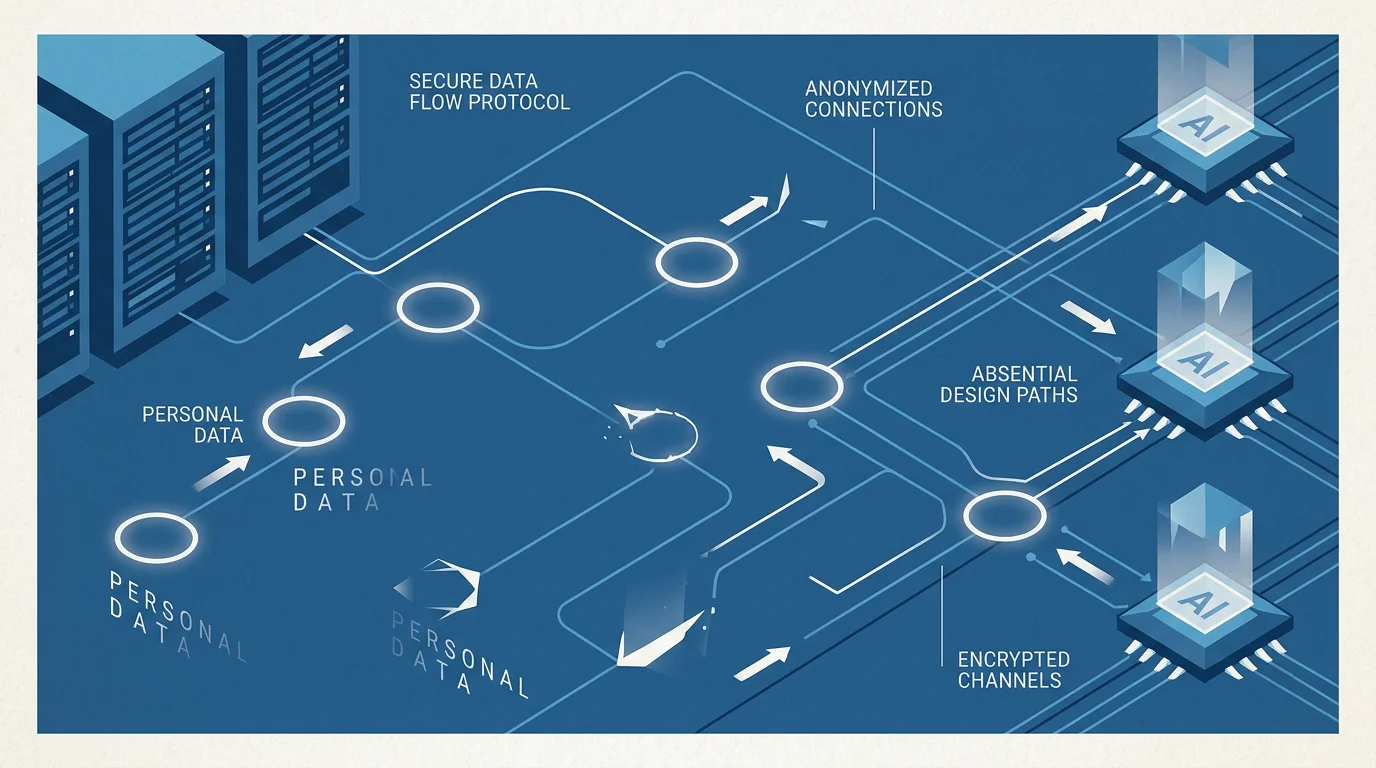
From data protection to data absence: a paradigm shift
The conventional security mindset asks a defensive question: how do we keep attackers away from the data? The Zero Data Protocol asks a structural one: why does this data exist in our perimeter at all? That shift moves the discipline from data protection toward data minimization at the architectural root.
This matters because regulation is moving in the same direction. Privacy analysts noted that, heading into 2026, data minimization has shifted from an abstract principle to a central operational challenge, with scrutiny applied not only to retention but to the point of collection itself. Modern AI platforms are frequently architected to gather expansive datasets by default, even when narrower data would suffice. A zero-data design answers that obligation by construction rather than by policy.
The practical benefit is durability. Policies change, staff turn over, and configurations drift. A system that was never built to depend on personal data does not regress when a control lapses. The safeguard is the architecture, not the vigilance of any single team.
ZDP compared to adjacent privacy concepts
Several terms sound similar but solve different problems. Zero-party data still collects information, simply with explicit consent. Zero data retention deletes information after use, which means it was collected and stored first. Zero-knowledge proofs verify a claim without revealing underlying data, yet the data typically still exists elsewhere. The table below clarifies where a zero-data architecture sits.
| Approach | Is personal data collected? | Is it stored? | Core focus |
|---|---|---|---|
| Zero Data Protocol | No, by default | No, never | Eliminating data dependency at the protocol level |
| Zero-party data | Yes, with consent | Yes | Transparent collection and relationship |
| Zero data retention | Yes | Temporarily | Deletion after processing |
| Zero-knowledge proofs | Yes, elsewhere | Yes, elsewhere | Verification without disclosure |
Read across the rows and the distinction is clear. The other models manage data that has already entered the system. Our protocol is designed so that, wherever feasible, the data never enters in the first place. That is the difference between reducing risk and removing its source.
How a zero-data architecture reduces your attack surface
Imagine an enterprise IT architect designing a new AI service. The default path is to log interactions, build user profiles, and retain everything for future model training. Each of those decisions creates a record that must then be secured, audited, and eventually disclosed if breached.
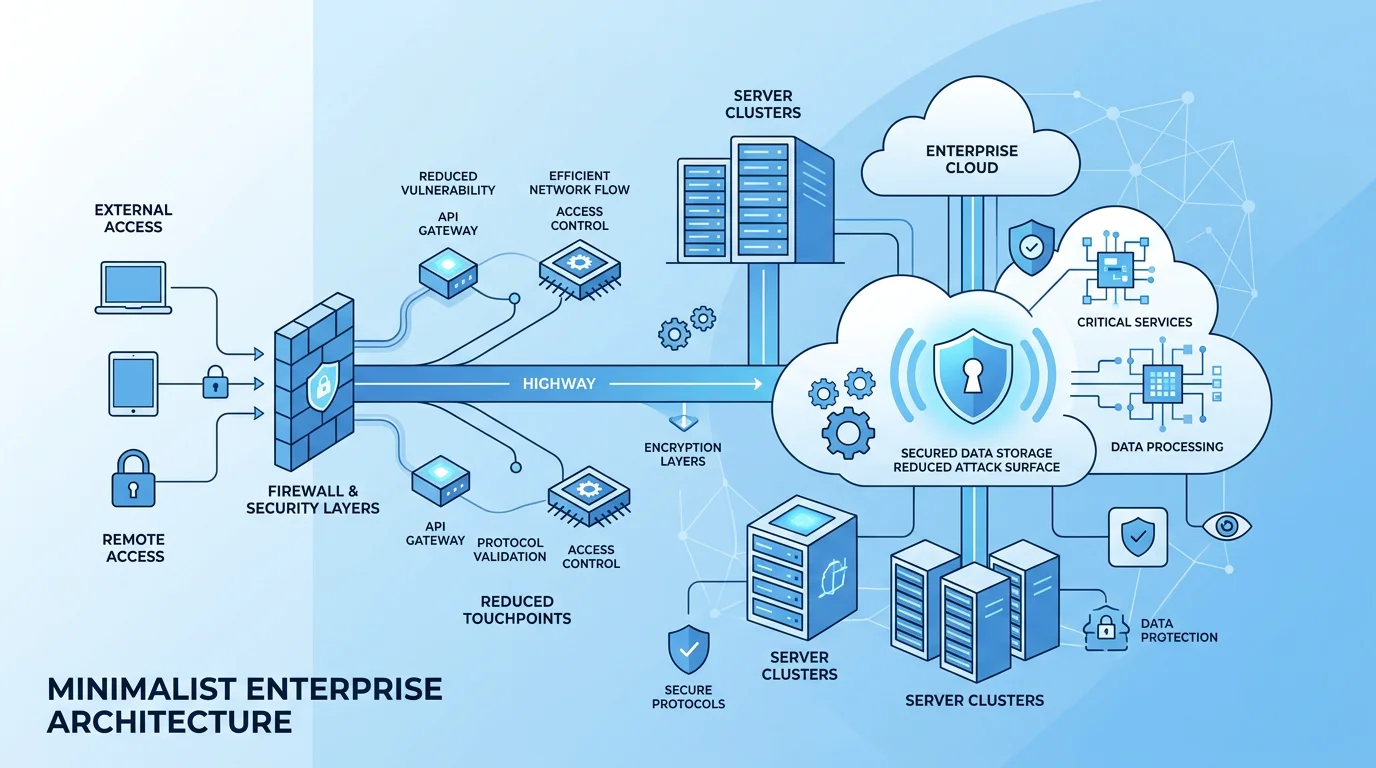
A zero-data approach rewrites those defaults. Interactions are processed without persistent identifiers, profiles are not assembled, and training pipelines are designed to function without retaining personal records. The result is a smaller surface for attackers and a lighter burden for governance teams. The 2025 figures showed that strong data security fundamentals remain essential precisely because AI now acts as both a threat vector and a defensive tool.
This is where privacy by design becomes concrete rather than aspirational. For AI security and risk teams, the value proposition is direct: a vulnerability cannot expose information that was never collected. Reducing what an exploit can reach is often more sustainable than continually hardening the walls around a growing data lake.
Where a zero-data protocol fits your roadmap
The architecture is best understood as a discipline applied early. It belongs in the design reviews where AI infrastructure architects decide what a system will and will not depend upon. Retrofitting it onto a platform already saturated with personal data is far harder than embedding it from the first diagram.
For governance teams focused on long-term sovereignty, the appeal is coherence. A system whose integrity does not rest on hoarded data ages more gracefully through regulatory shifts and ownership changes. The objective is not to add another control layer, but to remove a category of risk from the blueprint entirely.
Conclusion
The economics are difficult to ignore. With breaches still costing organizations 4.44 million dollars on average and AI widening the exposure, the safest data remains the data you never collected. The Zero Data Protocol reframes security as an architectural choice made before collection, turning the absence of personal data into a deliberate structural advantage rather than a gap to be defended. For enterprise architects and risk teams, that shift means fewer records to protect, a smaller attack surface, and systems whose resilience is built in rather than bolted on. To explore how a protocol-level, data-absent design could fit your infrastructure, learn more about our Zero Data Protocol.
Frequently Asked Questions
Is the Zero Data Protocol a compliance framework?
No. It is a foundational architecture, not a consent system or a regulatory checklist. By removing data dependency at the protocol level, our approach addresses obligations such as data minimization structurally, before collection occurs.
How is ZDP different from zero data retention?
Zero data retention deletes personal information after it has been collected and used. A zero-data architecture is designed so that, wherever possible, the information is never collected or stored at all.
Does eliminating data collection limit what a system can do?
Under this model, the absence of data is treated as a designed feature rather than a constraint. Systems are architected to operate without relying on personal data, which is the principle we call structural sovereignty.