
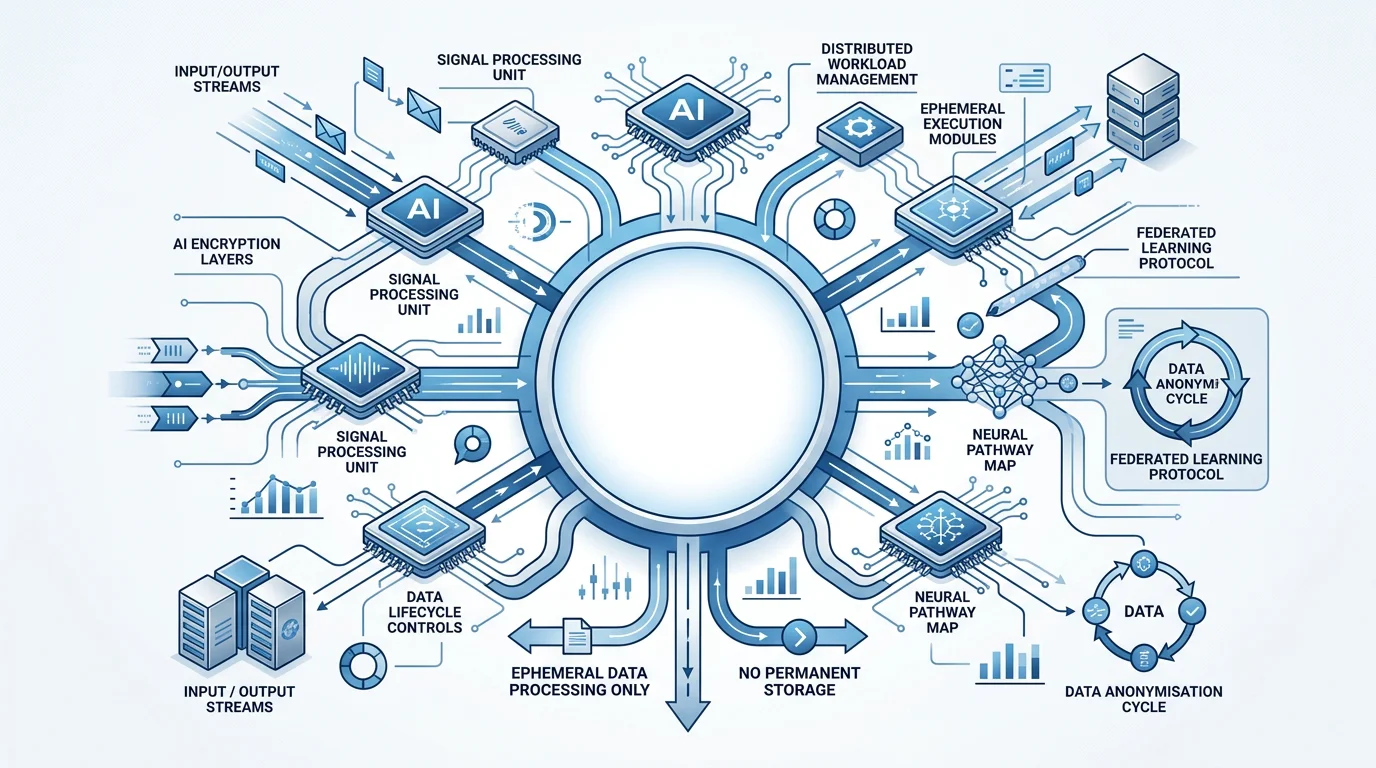
What Is Zero AI? Understanding Zero-Data AI Architecture
What is zero AI? Learn how zero-data architecture removes personal data dependency to reduce risk in modern AI and cybersecurity systems.
 Written by Lajos NAGY
 What if the most secure personal data were the data a system never collected in the first place? This is the premise behind the concept of Zero AI, a design direction gaining attention among enterprise architects and security teams. Instead of defending information after it accumulates, this approach asks whether the data needs to exist at all. Our Zero Data Protocol overview frames this shift as a structural rethink of how intelligent systems relate to personal information.
The stakes have rarely been higher. Recent breach research reports that the average cost of a data breach in the United States has hit an all-time high of USD 10.22 million in 2026, driven by high containment costs and strict regulatory ecosystems. In that environment, every record retained becomes a standing liability rather than an asset.
What Zero AI Actually Means
So what is zero AI in practical terms? The phrase describes a family of "zero" principles applied to artificial intelligence: zero data, zero trust, zero knowledge, and zero unnecessary collection. It is a direction rather than a single product. The common thread is subtraction, removing dependencies that create risk instead of layering more controls on top of them.
The term is sometimes confused with unrelated tools. Some readers searching for it are looking for AI content detectors, autonomous agent frameworks, or model-naming conventions. In an enterprise security context, however, the meaningful interpretation is architectural. It concerns systems designed to function without relying on personal data whenever possible, so that the absence of data becomes a deliberate feature rather than a gap.
Why Zero-Data Thinking Matters in 2026
The financial logic is straightforward. According to security research, the global average cost of a data breach fell to $4.44 million in 2026, yet the average breach lifecycle remains 241 days, giving attackers nearly eight months of dwell time. Long dwell times matter only when there is sensitive data to exfiltrate. Remove the data, and the exposure window collapses.
Artificial intelligence has intensified the problem from both directions. IBM-based analysis found that shadow AI was a factor in 20% of breaches and added an average of $670,000 to those incidents, and 65% of breaches involving shadow AI exposed personally identifiable information. When employees feed personal data into unsanctioned tools, the accumulated information becomes the very thing attackers target.
This is the paradox that zero-data AI addresses. Traditional security spends heavily to protect what has been collected. A zero-data posture asks a prior question: why was it collected at all?
The Core Principles of Zero-Data AI
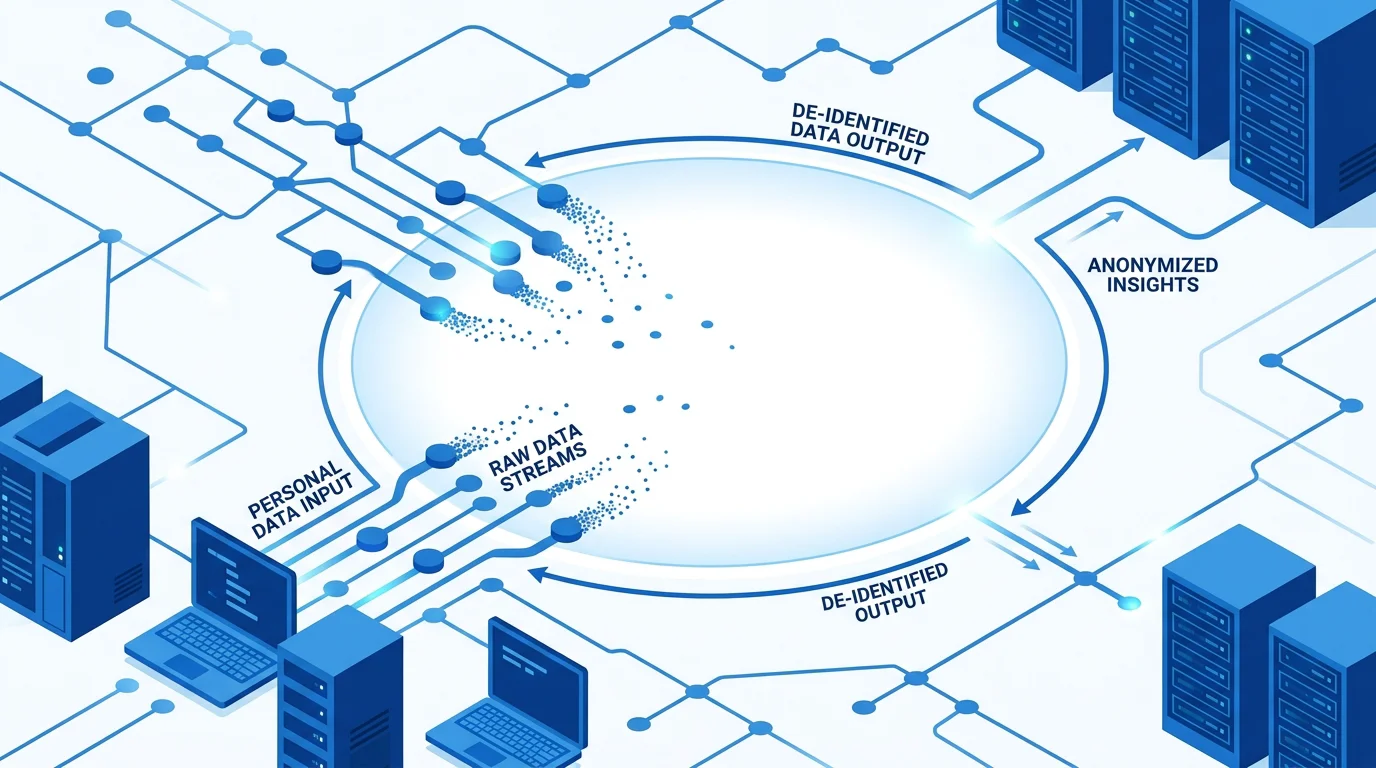
A structural approach to zero-data architecture rests on a small set of disciplined defaults. Each one removes a category of risk at the source rather than mitigating it downstream.
- Zero collection: personal data is not gathered by default, so there is nothing to leak from the outset.
- Zero retention: nothing is stored, cached, or archived, which eliminates the standing repositories attackers prize.
- Zero exploitation: data is never monetized, analyzed, or repurposed, closing the door on secondary misuse.
- Structural sovereignty: systems are engineered so that the lack of data is not a functional limitation.
These principles reframe privacy engineering. Data minimization typically reduces what is kept. A zero-data posture goes further, treating the absence of data as an intentional architectural property. We explore this foundation in depth in our micro-segmentation guide, which examines how tight structural boundaries contain the impact of any single failure.
Zero AI Versus Related Concepts
Because the vocabulary overlaps, precise distinctions help. Several established ideas sound similar but operate at different points in the data lifecycle.
| Concept | What it addresses | Data handling |
|---|---|---|
| Zero-party data | Information users intentionally share | Still collected and stored |
| Zero data retention | Deleting data after processing | Data is still collected first |
| Zero-knowledge proofs | Verifying facts without disclosure | Underlying data still exists somewhere |
| Zero Data Protocol (our approach) | Eliminating dependency by design | No collection, retention, or exploitation |
The pattern is clear. Most techniques manage personal data more responsibly after it enters the system. A zero-data protocol aims to prevent that dependency from forming in the first place, which is a categorically different starting point.
How the Absence of Data Reduces Risk

Consider a common enterprise failure mode. A 2026 security report notes that 68% of organizations have experienced data leaks linked to AI tool usage, yet only 23% have formal security policies in place. The gap between adoption and governance is exactly where zero-data thinking earns its value.
When a system holds no personal data, an intrusion cannot expose what is not there. This is why the movement frames itself around reducing what vulnerabilities can reveal rather than merely reducing the chance of a vulnerability. The same underlying dataset also shows that 97% of AI-related breaches occurred at organizations without AI access controls, and 63% of organizations still lack any AI governance policy. Structural sovereignty treats these governance gaps as evidence that controls alone are insufficient.
The economic case reinforces the point. Widespread adoption of security AI and automation saved organizations an average of $1.9 million per breach. Removing the data entirely pushes that logic to its conclusion: the exposure that never exists costs nothing to contain.
Designing Systems Without Data Dependency
Adopting a zero-data mindset is an architectural discipline, not a single toggle. It begins with a candid audit of assumptions. For each data field a system requests, teams should ask whether the function truly requires personal information or merely inherited the habit of collecting it.
From there, the work is structural. Engineers redesign flows so verification, personalization, and analytics operate on abstractions rather than raw identity. The objective is a system where the lack of a central data store is not a compromise but the intended state. This is the paradigm we build around, treating protocol-level design as the place where risk is either created or eliminated.
For governance teams, the appeal is durability. A system that never depends on personal data does not inherit new obligations each time regulations tighten. Its integrity comes from its structure, not from ongoing compliance patchwork.
Conclusion
The central insight of Zero AI is disarmingly simple. With US breach costs at a record $10.22 million and long detection windows persisting into 2026, the safest personal data is the data a system never collects, stores, or exploits. Rather than fortifying ever-larger repositories, forward-looking architects are questioning whether those repositories should exist at all. That shift turns the absence of data from a perceived weakness into a designed strength. Our protocol-level architecture is built precisely for teams who want risk removed at the source rather than managed after the fact. To explore how a zero-data foundation could reshape your systems, discover our Zero Data Protocol architecture.
Frequently Asked Questions
Is Zero AI a product or a philosophy?
It is primarily a design philosophy centered on removing personal data dependency. Specific implementations, such as our Zero Data Protocol, translate that philosophy into a concrete architectural framework rather than a consumer application.
How is zero-data AI different from data minimization?
Data minimization reduces the amount of personal data collected and kept. A zero-data approach aims to eliminate the dependency entirely, so systems are engineered to operate without relying on personal data whenever possible.
Does removing personal data limit what AI systems can do?
Not by design. Structural sovereignty means systems are architected so that the absence of data is not a functional limitation, allowing verification and personalization to work through abstractions instead of stored identity.
Continue reading
What Is ZDP? The Zero Data Protocol for Secure AI Systems
ZDP, the Zero Data Protocol, eliminates personal-data dependency by design. Learn how this architecture reduces breach risk for modern AI systems.
What Is Micro-Segmentation? Zero Trust Breach Containment
Micro-segmentation limits lateral movement and contains breaches. Learn how it strengthens zero trust security across cloud and hybrid environments.