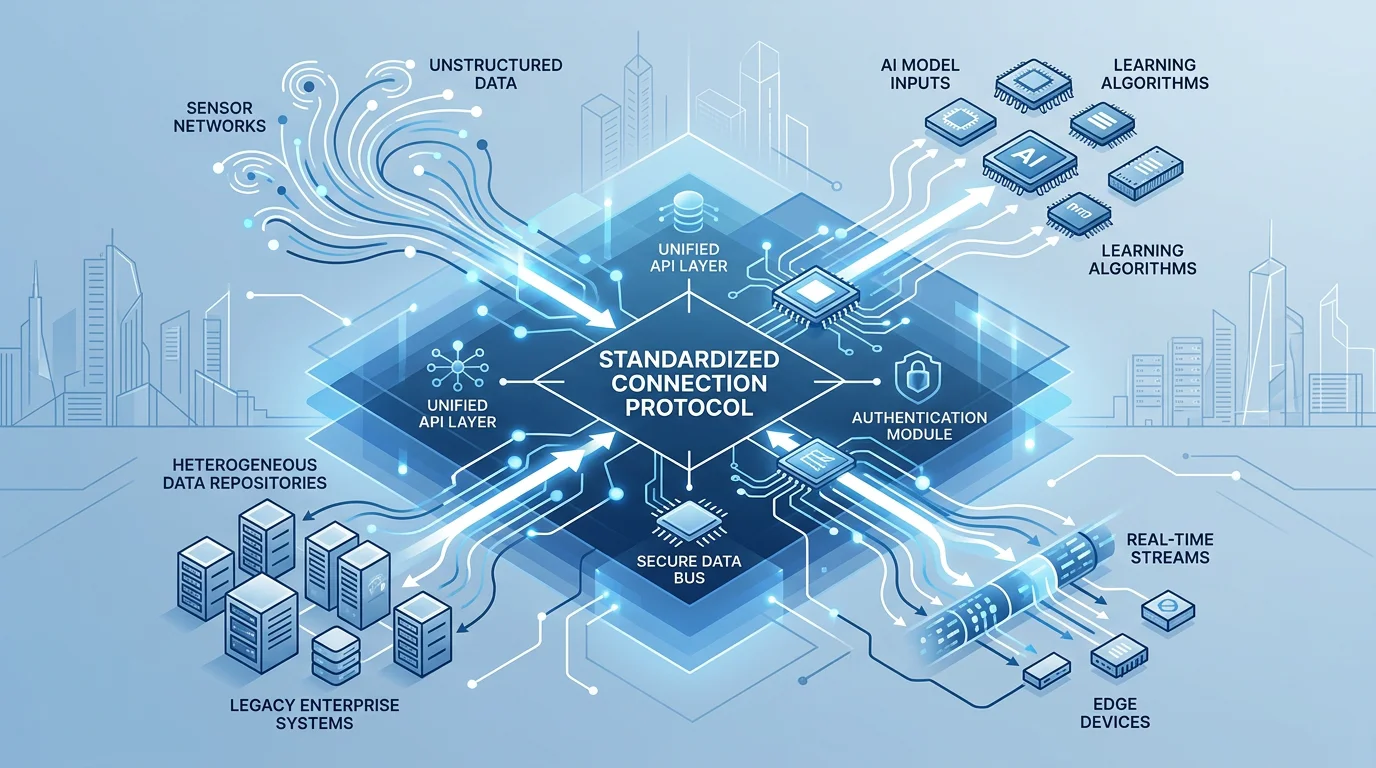


Artificial intelligence now sits inside almost every large organization, yet only a small fraction extract durable value from it. The gap is rarely the model itself. It is the foundation beneath it. Many teams discover, too late, that their infrastructure was never designed for autonomous systems, which is exactly why our guide to building an AI-ready network exists. Making artificial intelligence business-ready begins with structure, security and governance, not with the newest tool.
The pressure to move quickly is real, but speed without foundations produces stalled pilots and unmanaged risk. According to Deloitte research, 42% of companies believe their strategy is highly prepared for AI, yet they feel far less prepared on infrastructure, data, risk and talent. That imbalance defines the work ahead.
What Business-Ready AI Actually Means
To understand how to make ai business-ready, you must separate two very different milestones: adoption and readiness. Adoption means employees use tools. Readiness means your systems, data and governance are structured so AI produces reliable, safe and repeatable outcomes.
Adoption is now nearly universal. Readiness is not. Deloitte also notes that improving productivity and efficiency top the list of benefits achieved so far, with roughly two-thirds of organizations reporting gains, while revenue growth remains largely aspirational. A business-ready posture closes that distance by embedding enterprise AI readiness into architecture rather than treating it as an afterthought.
Start With the Data Foundation, Not the Model
The single most common cause of AI failure is not the algorithm. It is the data underneath it. Fragmented systems, duplicated records and inconsistent definitions prevent even capable models from producing trustworthy results.
Gartner predicts that through 2026, organizations will abandon 60% of AI projects unsupported by AI-ready data.
That warning is not abstract. In the same Gartner survey, 63% of organizations either did not have, or were unsure they had, the right data management practices for AI. Building a resilient data foundation therefore precedes any serious deployment. Modular, interoperable architecture is central to this, and our Agent Data Protocol explainer shows how standardizing the way agents exchange information reduces integration risk from the start.
Governance and Risk Are Now Prerequisites
As AI moves from experimentation into production, governance becomes the difference between scaling and stalling. Autonomous systems widen the attack surface, increase the volume of sensitive data in motion, and raise the stakes of every decision the system makes.
AI governance is not a compliance checkbox. It defines where humans stay in control, how automated decisions are audited, and which records are retained. Crucially, the more personal data a system can reach, the more it can expose when something goes wrong. Reducing that risk exposure at the architectural level is far more effective than protecting data after it has already been collected and stored.
Design AI Without Unnecessary Personal Data
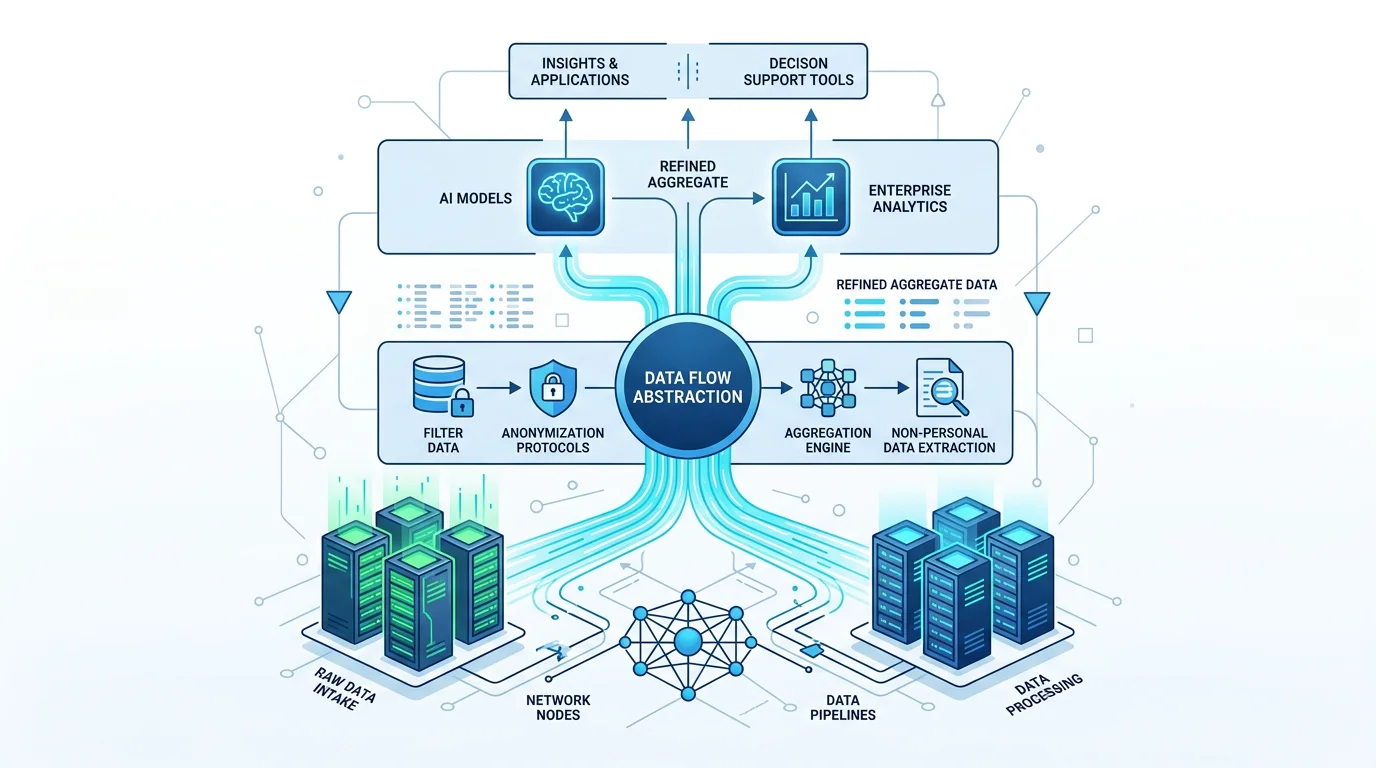
Here is a differentiating principle that most readiness frameworks overlook: the safest data is the data you never collect. Traditional approaches assume personal data must exist somewhere, then invest heavily in protecting it. A structural approach removes the dependency itself.
This matters because Gartner also stresses that data governance for AI must address legal and ethical risk directly, in close collaboration with legal and business leaders. When systems are designed so the absence of personal data is not a limitation, entire categories of risk simply disappear. This is the essence of data minimization practiced at the protocol level.
Our own approach rests on three structural commitments: no collection of personal data by default, no retention through storing or caching, and no exploitation through analysis or repurposing. The following comparison shows why this posture strengthens business readiness.
| Approach | Personal data collected | Retention | Exposure if breached |
|---|---|---|---|
| Protect after collection | Extensive | Long-term | High |
| Data minimization | Reduced | Limited | Moderate |
| Our Zero Data approach | None by default | None | Structurally minimal |
Positioning the absence of data as a designed feature, what we describe as structural sovereignty, means a lack of data never becomes an operational constraint. It becomes an advantage.
From Pilots to Production: Closing the Value Gap
Most organizations are stuck between broad usage and genuine transformation. A 2026 enterprise survey from Publicis Sapient found that 73% of respondents use AI regularly or across most processes, yet only 10% say AI is core to how their business operates.
The same research reported that more than one in five leaders identify the way their organization runs as the primary barrier to AI success. In other words, the constraint is now operational, not technical. Achieving scalable AI requires redesigning workflows and adopting flexible architectures that evolve as the technology does. Our composable systems blueprint outlines how resilient, modular design supports that continuous evolution without repeated rebuilds.
A Practical Roadmap to Readiness
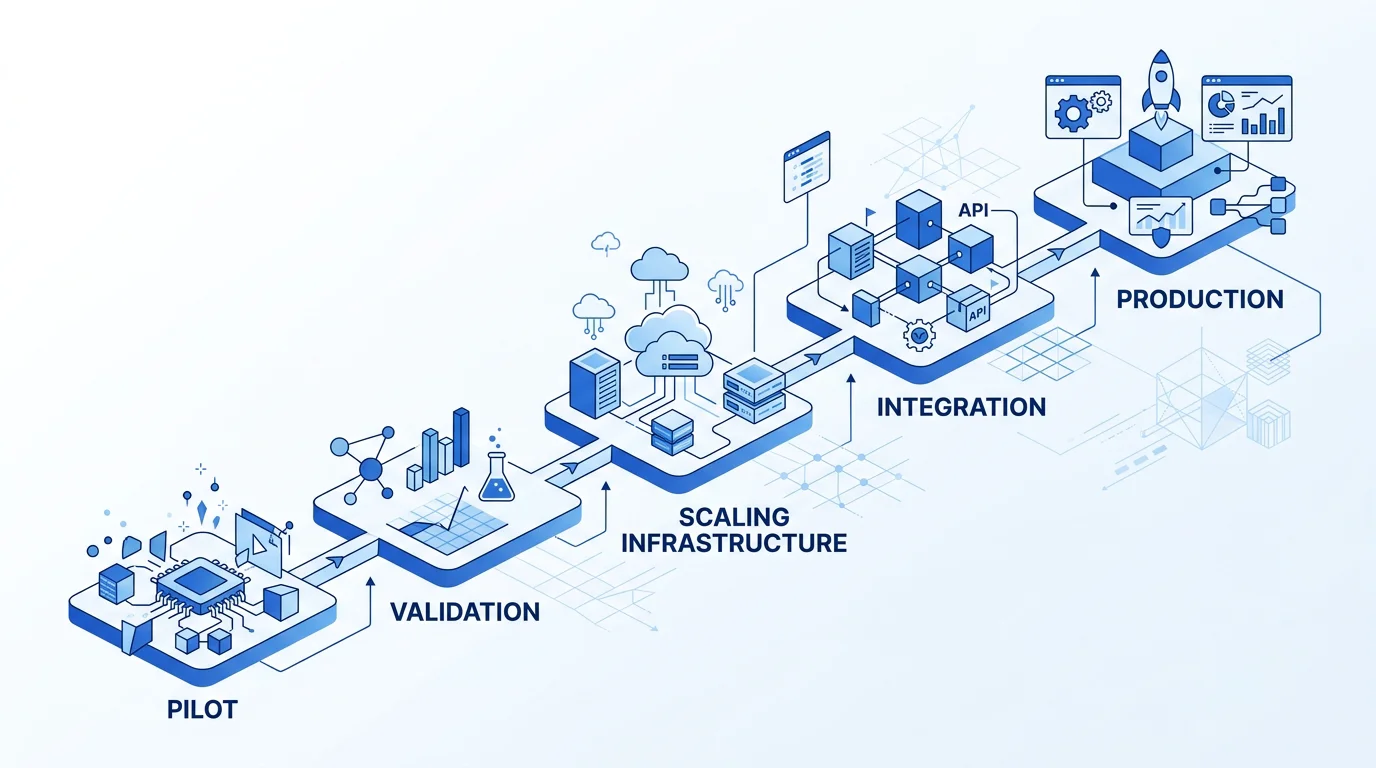
Readiness is a sequence, not a single project. The following steps translate the principles above into concrete action.
- Assign ownership. Decide who evaluates tools, approves use cases, manages risk and measures value.
- Assess your data foundation. Map where core data lives, resolve duplication, and confirm real-time availability before building.
- Minimize dependency. Design systems so they operate without unnecessary personal data, reducing exposure by default.
- Establish governance. Define human oversight, audit trails and retention rules for every autonomous decision.
- Test on low-stakes use cases. Prove value on contained problems before committing to mission-critical production deployment.
- Measure outcomes. Track defined business metrics, not tool logins, and revisit initiatives regularly.
Each step compounds. Together they convert isolated experiments into systems the whole enterprise can trust.
Conclusion
The evidence is consistent: adoption is easy, readiness is rare, and the projects that fail almost always fail on foundations rather than models. With Gartner projecting that 60% of AI initiatives lacking AI-ready data will be abandoned through 2026, the priority is clear. Invest in structured data, disciplined governance and architecture that limits what any system can expose. The organizations that treat business-ready AI as an engineering discipline, not a race for tools, will be the ones that capture lasting value. By removing the need to collect, store or exploit personal data in the first place, we help you reduce risk structurally rather than defensively. To build on that foundation, explore our Zero Data architecture approach and design AI that is ready by design.
Frequently Asked Questions
What is the difference between AI adoption and AI readiness?
Adoption means people use AI tools. Readiness means your data, security and governance are structured so AI produces reliable, safe and repeatable results. Adoption is now common, but genuine readiness remains uncommon.
Why do so many enterprise AI projects fail?
Most failures trace back to data, not algorithms. Gartner predicts that through 2026, 60% of AI projects without AI-ready data will be abandoned, usually because of fragmentation, poor governance and weak integration.
How does reducing personal data improve AI readiness?
Every piece of personal data a system can reach is data it can expose. By designing systems that operate without unnecessary personal data, our Zero Data approach removes entire risk categories and simplifies governance from the start.