
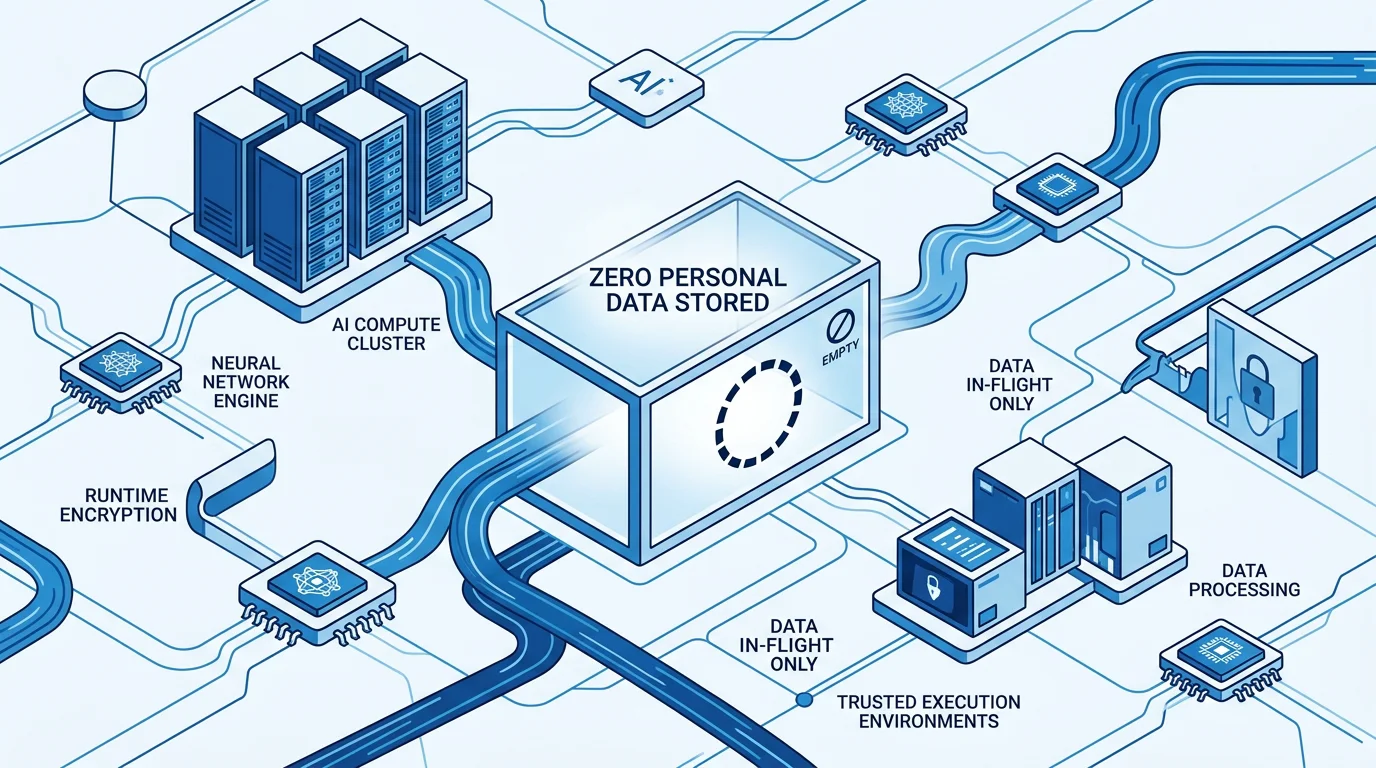
Zero Data Architecture: Building AI Without Personal Data
Zero data is a design approach that removes personal-data dependency from systems. Learn how zero data architecture reduces AI security risk.
 Written by Lajos NAGY
 What if the safest personal record were the one that never existed? Most digital systems still assume that personal information must be gathered, stored, and processed somewhere. That assumption is now the single largest source of exposure in an AI-driven era. A zero data approach inverts the logic entirely: instead of protecting information after collection, it prevents unnecessary collection from happening at all. To understand the architectural foundation behind this shift, see What Is ZDP? The Zero Data Protocol for Secure AI Systems.
The stakes are structural, not cosmetic. As artificial intelligence embeds itself into every data flow, each stored attribute becomes a potential liability. According to the Cisco 2026 benchmark, 90% of organizations report that their privacy programs have broadened in scope specifically because of AI. Designing for the absence of data addresses that pressure at its root rather than at its edges.
What a zero data approach actually means
The phrase zero data is used loosely across the industry, but its most rigorous meaning is architectural. A zero data architecture is one in which systems are designed to function without depending on personal information wherever that is technically possible. The goal is not to hide data or encrypt it more effectively. The goal is to remove the structural need for it.
This distinction matters. Traditional security assumes data exists and builds walls around it. A zero data model treats the absence of data as a designed feature rather than a limitation. When a system holds nothing sensitive, there is nothing for an attacker to exfiltrate, nothing for a vendor to monetize, and nothing for a regulator to scrutinize. The attack surface shrinks because the target itself is gone.
Why the concept matters now
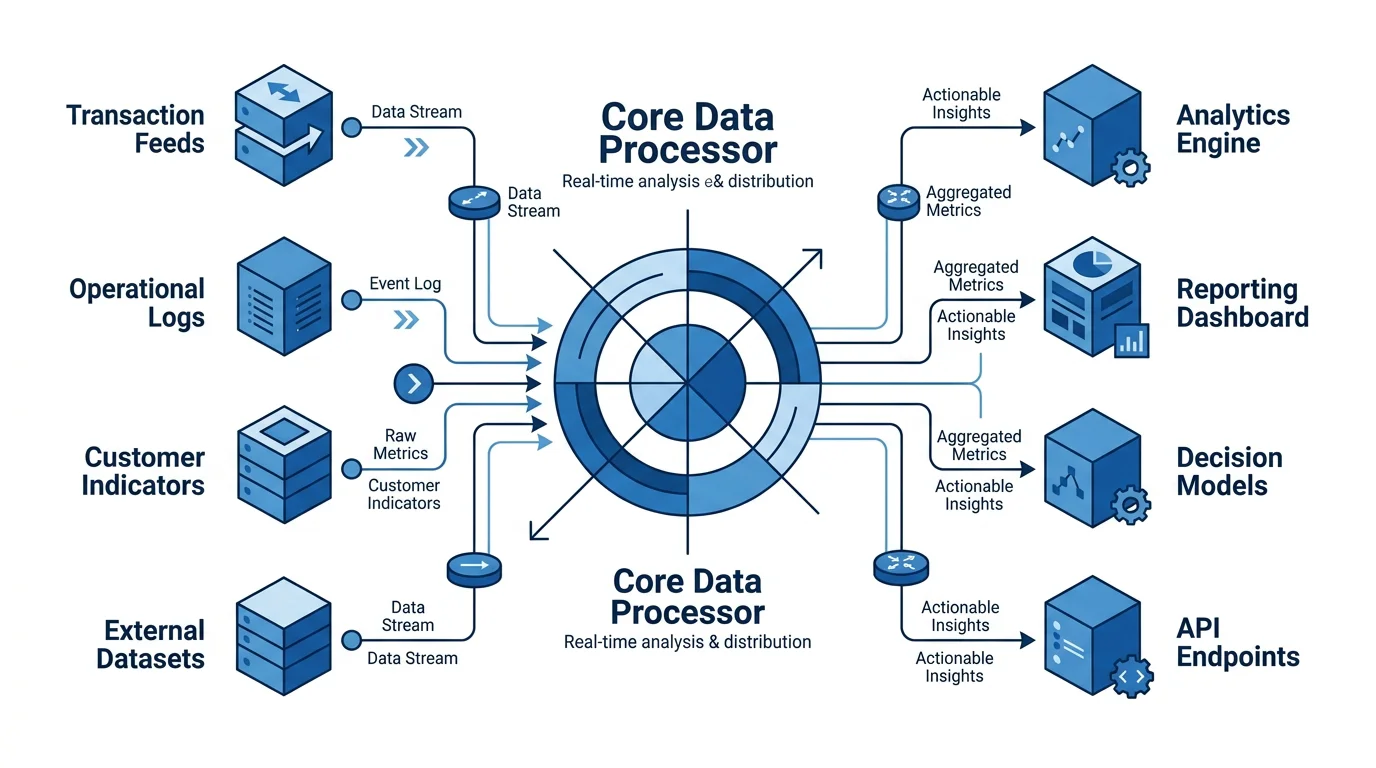
Consider the arithmetic of a breach. In 2026, the average cost of a data breach in the United States reached roughly $10.22 million, the highest of any region, according to Folio3 research. Every one of those incidents required data to exist in the first place. Reduce the data footprint toward zero and you reduce both the probability and the blast radius of exposure.
Artificial intelligence intensifies the problem. Models trained on massive datasets can surface personal information in unexpected ways, and enterprises are acutely aware of the risk. The same 2026 benchmark found that 70% of organizations acknowledge risk exposure from the use of proprietary or customer data in AI training. When exposure scales with the volume of information held, the most defensible strategy is to hold less. To see how this principle applies to model design specifically, read What Is Zero AI? Understanding Zero-Data AI Architecture.
Zero data compared with adjacent concepts
Several similar-sounding terms circulate in the market, and conflating them causes confusion during procurement. Each addresses a different point in the data lifecycle. The table below clarifies where a structural zero data model sits relative to the alternatives.
| Approach | What it does | Data still exists? |
|---|---|---|
| Zero-party data | Information a customer intentionally shares | Yes, deliberately collected |
| Zero data retention | Data is processed then deleted within seconds | Yes, transiently |
| Zero-knowledge proofs | Verification without revealing the underlying value | Yes, but concealed |
| Structural zero data (ZDP) | Systems designed to not depend on personal data at all | No, by design |
The difference is fundamental. Retention models and anonymization still assume data flows through the system; they simply manage what happens afterward. Anonymization in particular carries residual danger, because re-identification attacks on stripped datasets are a well-documented failure mode. A structural approach removes the category of risk rather than mitigating it after the fact.
The pillars of a zero data architecture
A disciplined zero data design typically rests on three commitments that operate together rather than in isolation:
- Zero Collection: personal information is not gathered by default, so the question of protecting it never arises.
- Zero Retention: nothing is stored, cached, or archived, eliminating the persistent record that breaches rely upon.
- Zero Exploitation: information is never monetized, analyzed, or repurposed, closing the door on downstream abuse.
These principles reinforce a broader security discipline. When you combine data absence with breach-containment practices such as micro-segmentation, the result is a system where even a successful intrusion finds little of value to compromise. Reducing what a vulnerability can expose is often more effective than trying to eliminate every vulnerability.
Structural sovereignty as the differentiator
The most compelling shift is philosophical. A major trend across the industry in 2026 is the move away from "collect everything" toward gathering only what is strictly necessary, a change that Assurtiv describes as a strategic risk-reduction approach rather than a mere compliance exercise. A zero data model takes that logic to its endpoint.
We call the outcome structural sovereignty: designing systems so that the lack of data is never a functional limitation. Ownership and control follow automatically when there is nothing to lose custody of. This is not a consumer product, a consent-management layer, or a backup tool. It is a foundational architecture for AI, cloud, and digital infrastructure where independence is built into the substrate rather than bolted on.
How regulation reinforces the case
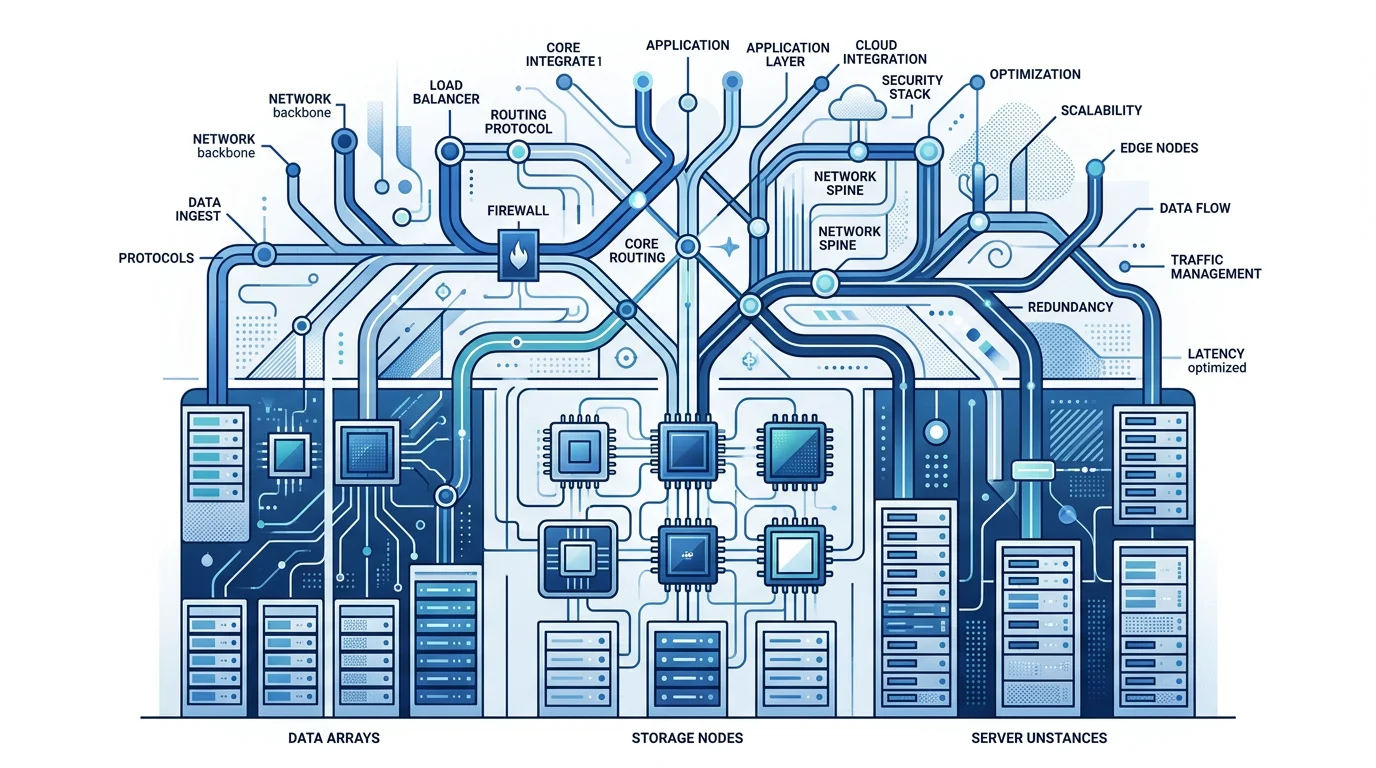
Legal pressure is converging with architectural logic. Since 2018, GDPR regulators have issued approximately €7.1 billion in fines, with data minimization written directly into the law as a core obligation. As StationX reports, the EU AI Act reaches full applicability in August 2026, adding AI-specific obligations with penalties reaching up to 7% of global turnover.
Frameworks worldwide, from Brazil's LGPD to India's DPDPA, share the same principle of purpose limitation and minimization. A system that structurally holds no personal data satisfies these requirements not through documentation and controls, but through its very design. Compliance becomes a byproduct of the architecture rather than an ongoing operational burden.
Moving from theory to practice
Adopting a zero data mindset begins with a single question asked of every feature: does this genuinely require personal information, or has collection simply become a habit? Architects who interrogate each data point routinely discover that much of what systems store exists out of convention rather than necessity.
The practical path involves mapping every dependency on personal data, challenging each one, and redesigning flows so that functionality is preserved while the underlying information requirement disappears. This is demanding work, but it produces systems that are structurally simpler, cheaper to audit, and far more resilient. The absence you engineer today is the breach you never have to report tomorrow.
Conclusion
The economics are decisive. With breaches averaging over $10 million in the United States and 90% of privacy programs expanding under the weight of AI, the most durable defense is to design systems that depend on nothing sensitive in the first place. A zero data architecture converts the absence of personal information from a perceived weakness into a deliberate source of strength. It shifts the conversation from how to protect data toward how to render it unnecessary. Because our protocol embeds this discipline at the structural level rather than treating it as a feature to configure, your systems inherit sovereignty by design rather than by effort. To take the next step, explore our Zero Data Protocol and see how structural data absence changes your risk equation.
Frequently Asked Questions
Is a zero data approach the same as zero data retention?
No. Zero data retention deletes information shortly after processing, but the data still flows through the system transiently. A structural zero data model, such as our Zero Data Protocol, is designed so that personal information is never depended upon in the first place.
Does removing personal data limit what a system can do?
Not when the architecture is designed correctly. The principle of structural sovereignty ensures that the absence of data is treated as a feature, with functionality preserved through designs that do not require personal information to operate.
How does a zero data model help with regulatory compliance?
Regulations such as GDPR and the EU AI Act center on data minimization and purpose limitation. A system that structurally holds no personal data satisfies these obligations through its design rather than through added controls, reducing ongoing compliance effort.
Continue reading
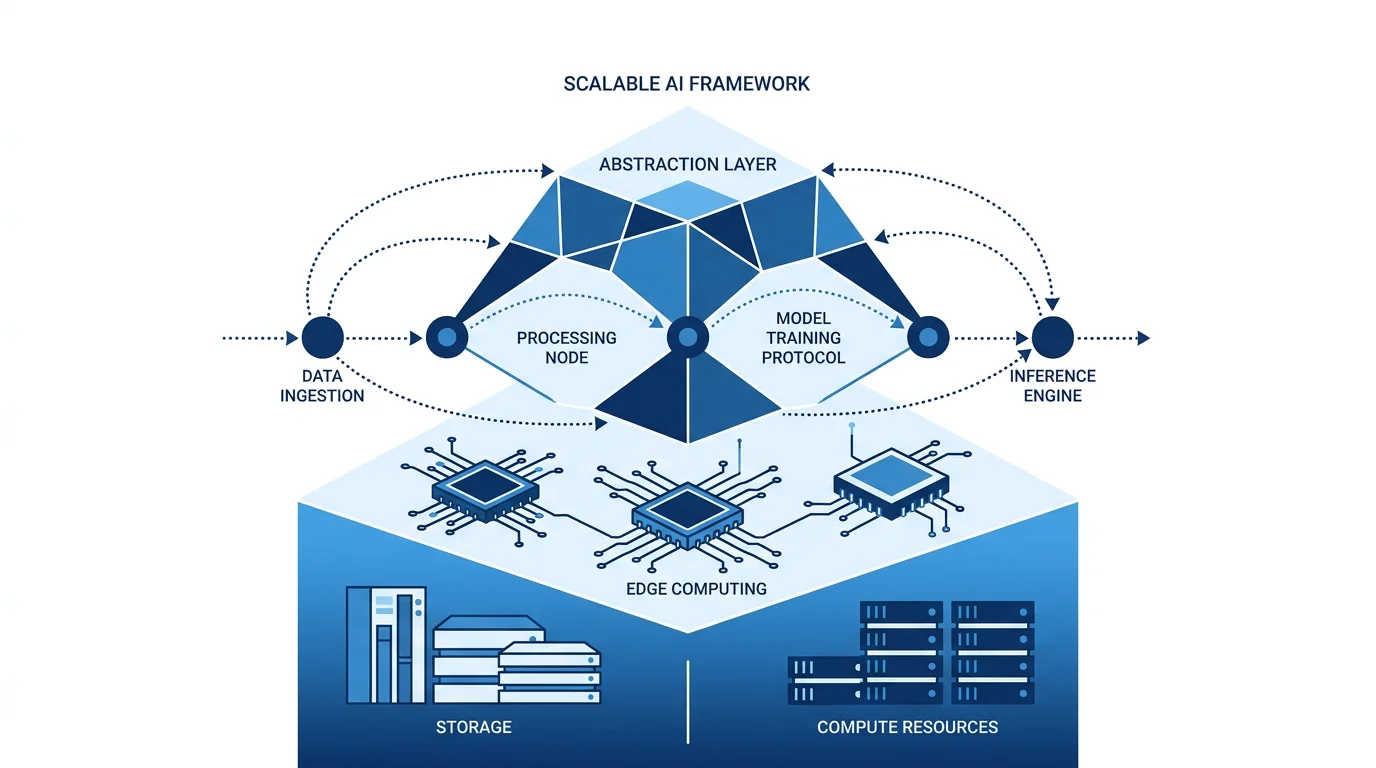
What Is ZDP? The Zero Data Protocol for Secure AI Systems
ZDP, the Zero Data Protocol, eliminates personal-data dependency by design. Learn how this architecture reduces breach risk for modern AI systems.
What Is Zero AI? Understanding Zero-Data AI Architecture
What is zero AI? Learn how zero-data architecture removes personal data dependency to reduce risk in modern AI and cybersecurity systems.