
Composable Systems: A Blueprint for Resilient Enterprise IT
Learn how composable systems replace rigid monoliths with modular, API-first design, and why data-minimal architecture is now the enterprise standard.
 Written by Lajos NAGY
 Enterprise software is undergoing a structural reset. When business priorities shift monthly rather than yearly, a single tightly coupled platform becomes a liability rather than an asset. The answer taking hold across IT leadership is a modular, API-first approach to enterprise architecture, one that treats every capability as a replaceable building block. Designing for this level of adaptability begins with an AI-ready network architecture that can absorb new components without friction.
The economics reinforce the trend. Legacy platforms increasingly struggle to keep pace with dynamic, data-intensive technologies, and organizations that cling to them pay a measurable price in downtime, technical debt, and slower delivery. Understanding how modular architecture works, and where its real risks lie, is now essential for any team responsible for the long-term integrity of its digital systems.
What Composable Systems Actually Mean
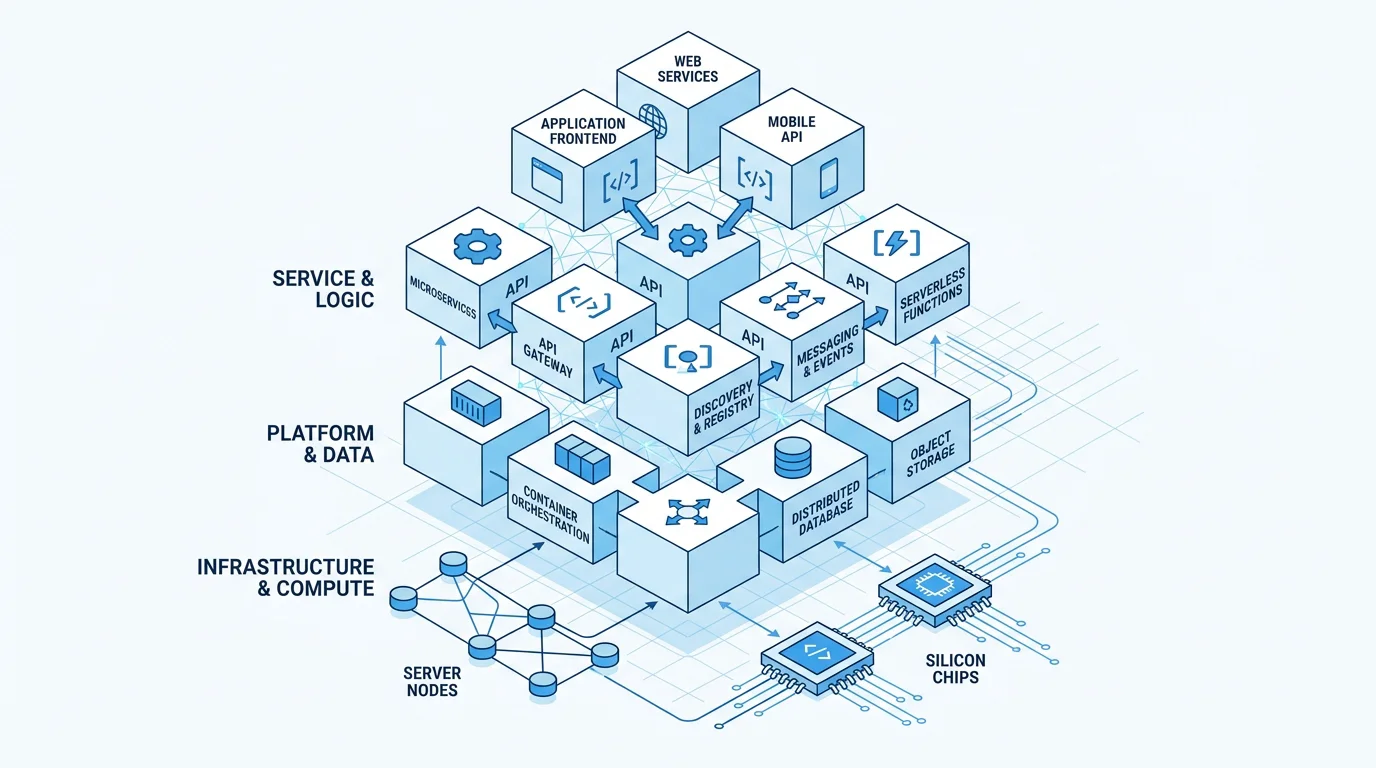
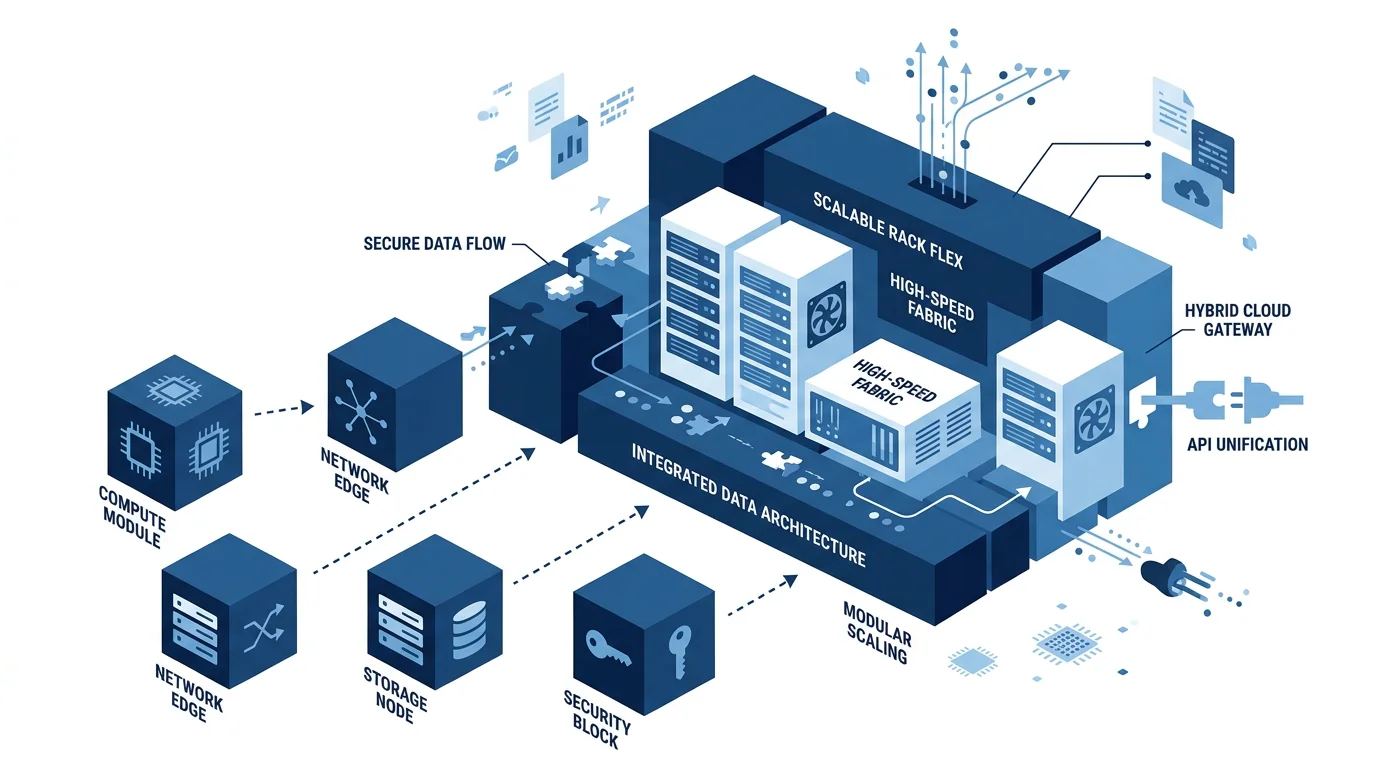
At its core, the idea is simple. Composable systems are built from smaller, independent capabilities rather than one large application, where each part performs a specific job and connects to others through well-defined interfaces. This is a system design principle concerned with the inter-relationships of components: a highly composable design provides parts that can be selected and assembled in various combinations to satisfy specific requirements.
The essential features that make a component composable are that it is self-contained and independently deployable. It is widely held that such architectures are more trustworthy than non-composable ones, because it is easier to evaluate their individual parts. That property matters enormously when you are reasoning about security, governance, and long-term maintainability.
Analysts frequently frame four principles behind the approach: modularity (the system is made of distinct pieces), autonomy (you can change one piece without breaking the whole), orchestration (the pieces communicate and share data cleanly), and discovery (you can find and reuse available components easily). Together, these principles turn loose collections of tools into something an organization can actually govern and scale.
The Market Shift Behind Modular Architecture
This is not a fringe experiment. According to Mordor Intelligence, the composable infrastructure market reached 9.89 billion dollars in 2026 and is projected to climb to 21.87 billion dollars by 2031, expanding at a 17.21 percent compound annual growth rate as enterprises pivot away from monolithic data-center stacks.
Other analysts track an even steeper curve. The Business Research Company estimates the market will grow from 10.66 billion dollars in 2025 to 14.09 billion dollars in 2026, attributing the momentum to wider adoption of software-defined infrastructure and expansion across the BFSI, telecom, healthcare, and government sectors. The precise figures differ by methodology, yet every credible source points in the same direction: rapid, sustained growth driven by AI workloads and hybrid-cloud demand.
How the Architecture Evolved
To understand where this approach comes from, it helps to trace two decades of change. In the early 2000s, enterprise systems were dominated by monolithic applications where every component was tightly coupled. The first wave of modernization, service-oriented architecture, broke monoliths into services but often produced heavyweight, hard-to-maintain systems where the promise of agility rarely materialized.
The second wave brought microservices, applying those principles with containers and cloud-native deployment. This enabled team autonomy and independent scaling, yet it introduced real complexity in distributed communication and operations. Composable architecture represents a third wave, building on microservices while addressing their coordination overhead through disciplined, API-first design. For teams building next-generation platforms, this discipline pairs naturally with a Zero Data Architecture that keeps modular services from accumulating unnecessary personal data.
Composable Versus Monolithic: A Direct Comparison
The practical differences become clear when the two models are placed side by side. The comparison below focuses on the criteria that most influence enterprise outcomes.
| Criterion | Monolithic Architecture | Composable Architecture |
|---|---|---|
| Change velocity | Slow; changes ripple across the stack | High; components change independently |
| Scalability | Whole system scales together | Each module scales on its own |
| Resilience | A single fault can halt everything | Failures are contained per component |
| Vendor flexibility | Locked to one vendor's roadmap | Best-of-breed components, swappable |
| Data exposure | Data concentrated and hard to isolate | Domains isolatable; exposure minimizable by design |
The final row is decisive and frequently overlooked. Because a modular design lets teams isolate or move specific data domains without system-wide rework, composability creates the structural conditions to minimize what any single component can hold or expose. That property is where architecture and security meet.
The Security Dimension of Composability
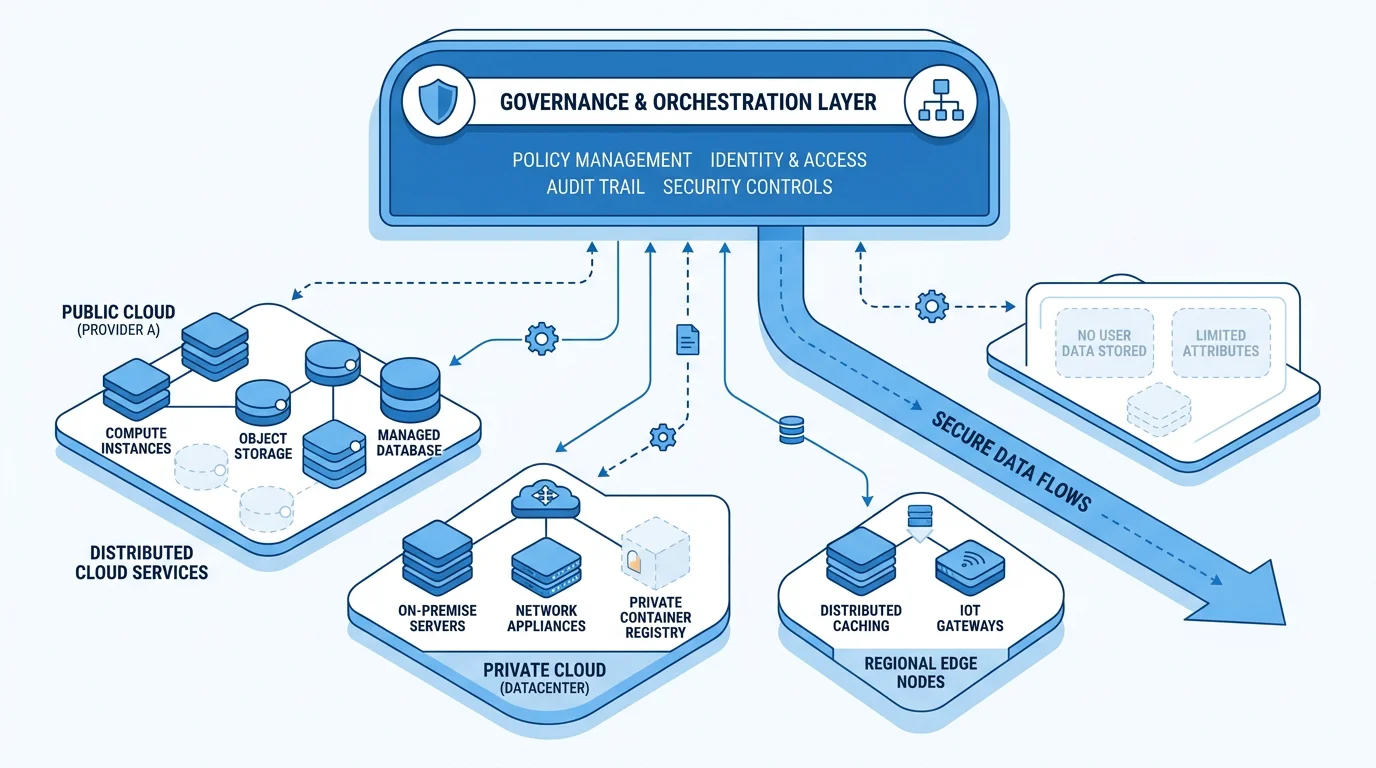
Flexibility carries a cost if it is treated carelessly. Every additional service is a potential point of failure, and orchestration is not automatic. Yet the same modularity that introduces surface area also enables far tighter containment. When capabilities are decoupled, a compromise in one component does not automatically cascade across the entire estate, which is the operating premise behind micro-segmentation for zero trust breach containment.
The financial stakes justify the attention. According to DevOps.com, the average organization loses roughly 1.5 million dollars to IT downtime each year, and unplanned outages cost even more. Cloud-native, modular design lets teams avoid the majority of those losses by ensuring that services do not all scale, deploy, and fail together.
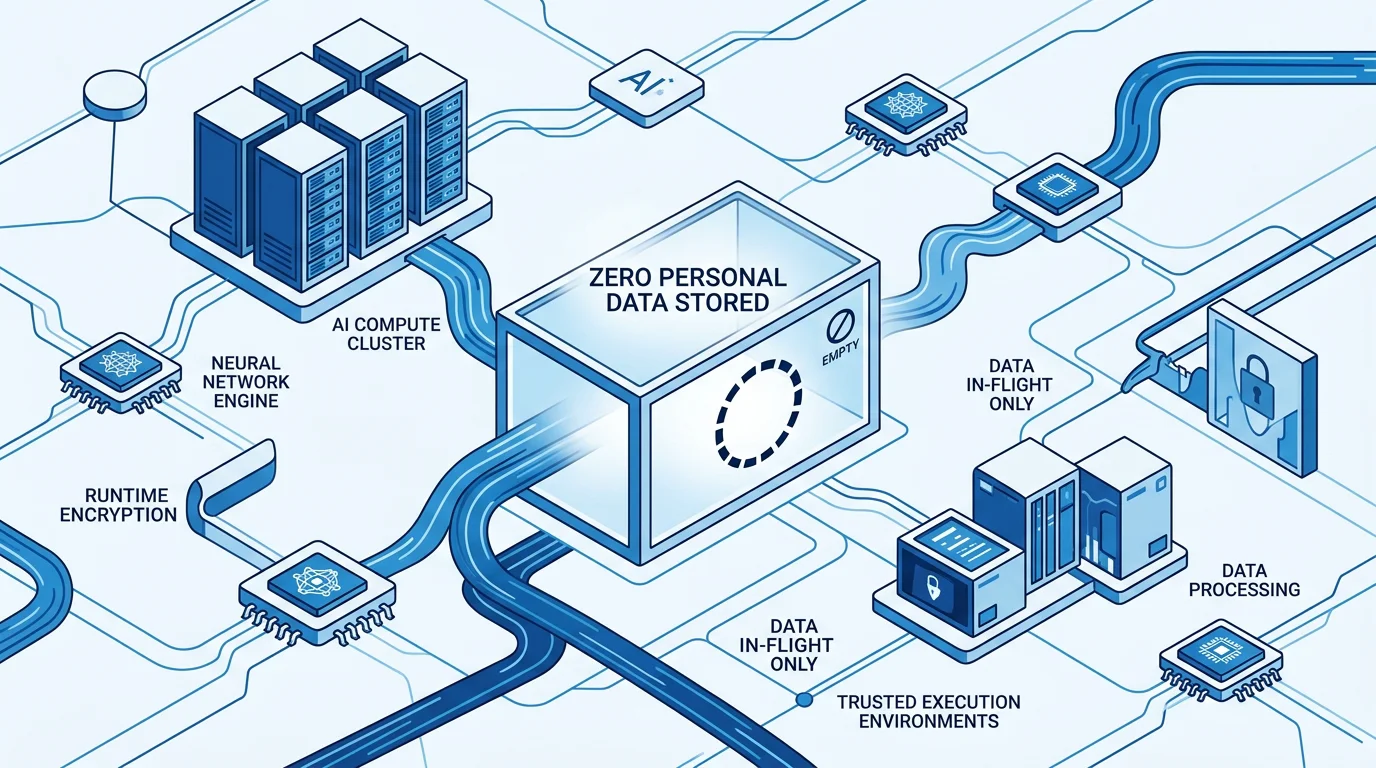
There is a deeper structural insight here. The most defensible component is the one that never holds sensitive data in the first place. Rather than protecting data after it is collected, forward-looking architects are designing modules so that personal data is never collected, retained, or exploited by default. This principle of structural sovereignty, treating the absence of data as a deliberate feature, reduces exactly what a vulnerability can expose. It is a natural extension of composability into the security domain.
Common Adoption Challenges
Adopting a modular approach is rarely frictionless. Most enterprises are not starting from a blank slate; they carry a mix of ERPs, legacy platforms, and older systems that often lack modern APIs and produce messy, siloed data. Bridging that gap takes deliberate cleanup before new components can run smoothly.
Cost discipline is another motivator. According to Forrester research cited by Infojini, roughly 42 percent of cloud spend is wasted on idle pipelines, duplicated storage, and fragmented governance. Composability counters this by introducing modular cost control: you scale what you need and retire what you do not. The discipline of paying only for active, well-defined components is a direct antidote to sprawl.
The final trap is cultural rather than technical. Teams accustomed to monolithic tools sometimes rebuild a monolith inside a modular platform, stitching too many workflows into one oversized component. The remedy is to think small: build focused, purpose-built modules that solve one problem well, then design them to share data while staying independent. Composable does not mean chaotic; it demands governance, version control, and clear domain boundaries.
Building for Change, Not Just for Today
The direction of travel is unambiguous. With the composable infrastructure market approaching 10 billion dollars in 2026 and analysts projecting sustained double-digit growth, modular architecture has moved from experiment to expectation. The organizations that benefit most are those that treat composability as a discipline, small, well-governed components, clean APIs, and clear ownership, rather than a license for uncontrolled sprawl.
The most durable advantage, however, comes from pairing that flexibility with structural restraint. Systems designed so that they never depend on collecting or storing personal data reduce their attack surface at the foundation, turning the absence of data into a lasting form of resilience. That is precisely the guarantee our protocol-level approach is built to deliver, without adding a compliance layer on top of an already fragile stack. To see how this philosophy reshapes system design, explore our composable zero-data AI architecture.
Frequently Asked Questions
How do composable systems differ from microservices?
Microservices are a foundational building block, but composability adds discipline on top. It emphasizes reusable, independently deployable components governed through a catalog and clear domain boundaries, avoiding the "distributed monolith" where services must still deploy and fail together.
Are composable systems more secure than monolithic ones?
They can be, when governed well. Decoupling capabilities contains failures and lets you isolate data domains. Security improves further when components are designed to avoid holding personal data at all, which is the principle behind our Zero Data Architecture.
What is the biggest risk when adopting composability?
The most common pitfall is recreating a monolith inside a modular platform by building one oversized component. Poor orchestration and weak governance turn flexibility into complexity, so version control and clear boundaries are essential from the start.
Continue reading

Building an AI-Ready Network: Architecture for the AI Era
Learn how an AI-ready network supports demanding AI workloads with low latency, embedded security, and modern architecture built for scale.
Zero Data Architecture: Building AI Without Personal Data
Zero data is a design approach that removes personal-data dependency from systems. Learn how zero data architecture reduces AI security risk.