
In 2026, a single data breach costs United States organizations an average of $10.22 million, an all-time high for any country. Behind that figure sits a simple structural truth: the more personal and confidential information you hold, the more you stand to lose. Reducing the footprint of your sensitive data is no longer a compliance afterthought. It is a design decision that shapes risk, cost, and trust. To explore this at the architecture level, you may consult AI Data Protection: Reducing Exposure Through Data Minimization.
The instinct for years was to defend data by protecting it harder. Yet according to verified breach statistics, costs keep climbing even in technically mature environments. The alternative angle is structural: hold less, and there is less to defend. This principle sits at the center of an emerging framework known as the Zero Data Protocol, built on Zero Collection, Zero Retention, and Zero Exploitation.
What a sensitive data footprint actually is
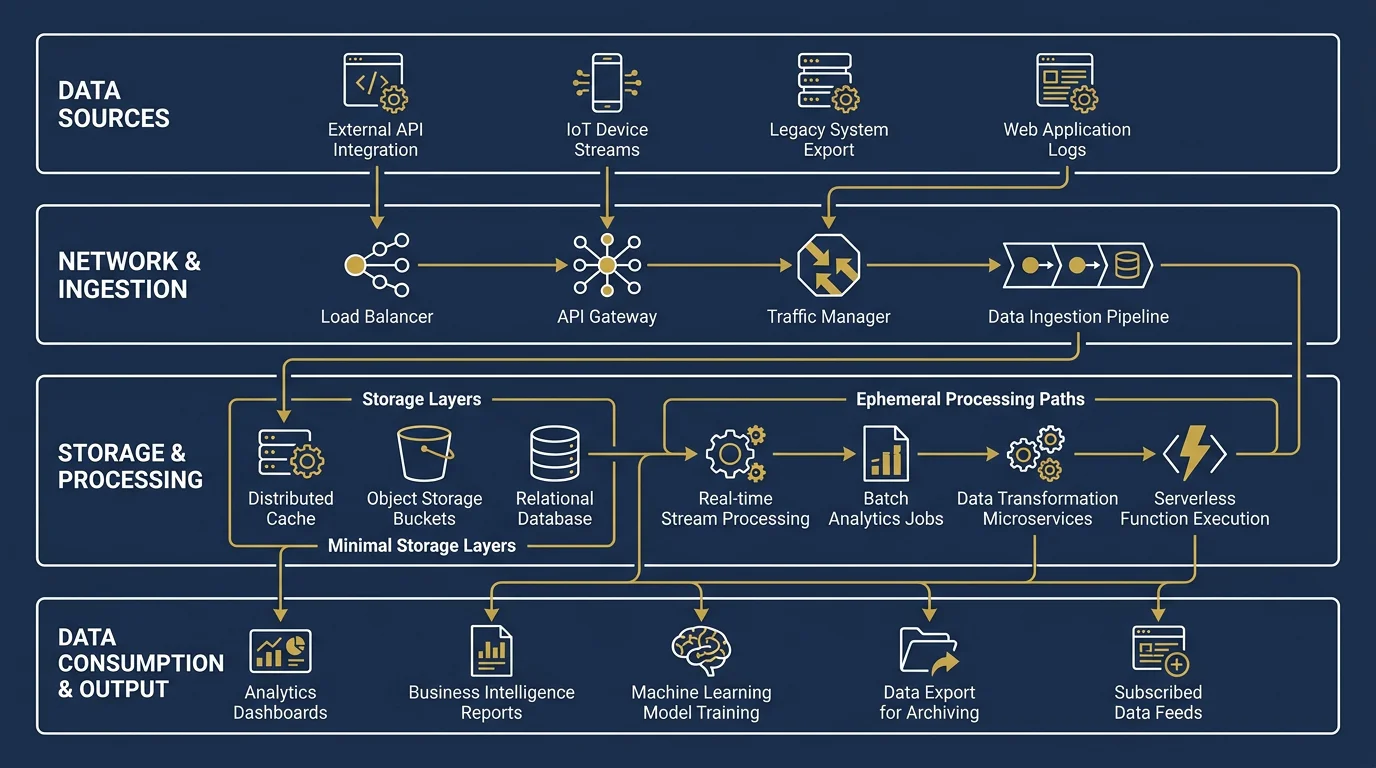
Your sensitive data footprint is the complete trail of personal, confidential, and regulated information your organization gathers, stores, and processes across every system, log, backup, and third-party service. It includes structured records in databases and, more often, unstructured content scattered across files, messages, and collaboration tools.
This footprint is rarely mapped in full. It grows quietly through duplicated records, forgotten archives, and data retained "just in case." Much of it becomes redundant, obsolete, or trivial over time, yet it continues to sit inside your environment. Each additional record can become a liability when it no longer serves a justified legal, contractual, or operational purpose.
Understanding this distinction matters. A data footprint is not simply the data you actively use. It includes data actively used, duplicated, archived, backed up, or retained beyond its original purpose.
Why the footprint keeps expanding
Why does sensitive information accumulate faster than teams can govern it? Part of the answer is economic. Data has been treated as a resource to hoard, on the assumption that value emerges later. The result is sprawling storage and a widening gap between what is collected and what is genuinely needed.
Artificial intelligence intensifies the pattern. Systems now infer, profile, and correlate far more than users knowingly provide, turning fragmented traces into detailed profiles. According to the 2026 Verizon DBIR analysis, third-party breaches jumped 60% and ransomware appeared in nearly half of confirmed incidents, both amplified by AI-assisted attacks and persistent oversharing of sensitive data.
Every integration, vendor, and new model can expand personal-data dependency unless its data flows, permissions, and retention rules are tightly constrained. Managing that dependency is central to Third-Party AI Risk: An Enterprise Guide for 2026, and it is a reason the footprint rarely shrinks on its own.
The real cost of an unchecked data footprint
Consider what a larger footprint actually buys you in risk terms. Breach cost often increases with the volume and sensitivity of the data involved, although sector, jurisdiction, response time, and incident type also matter. Industry analysis notes that very large incidents involving tens of millions of records can reach hundreds of millions of dollars in impact, which is why data minimization guidance now recommends collecting only necessary information and purging it when it is no longer needed.
The exposure is not only financial. A sensitive data footprint that persists across breached databases, data broker listings, and dark web marketplaces becomes reconnaissance material. Attackers correlate leaked credentials, employee details, and historical records to craft convincing intrusions long before any technical alert is raised.
Globally, the average breach now sits around $4.88 million, according to recent breach statistics, with healthcare organizations facing costs closer to $11 million because of the sensitivity of patient data. The pattern is consistent: sensitivity and volume drive cost, so reducing both reduces expected loss.
Zero Data Protocol: reducing exposure by design
What if reducing unnecessary collection were one of the most durable ways to reduce future exposure? This is the premise of the Zero Data Protocol (ZDP), an emerging independent framework rather than a regulation, certification, or product. It reframes trust as an architectural outcome instead of a promise written into a consent banner.
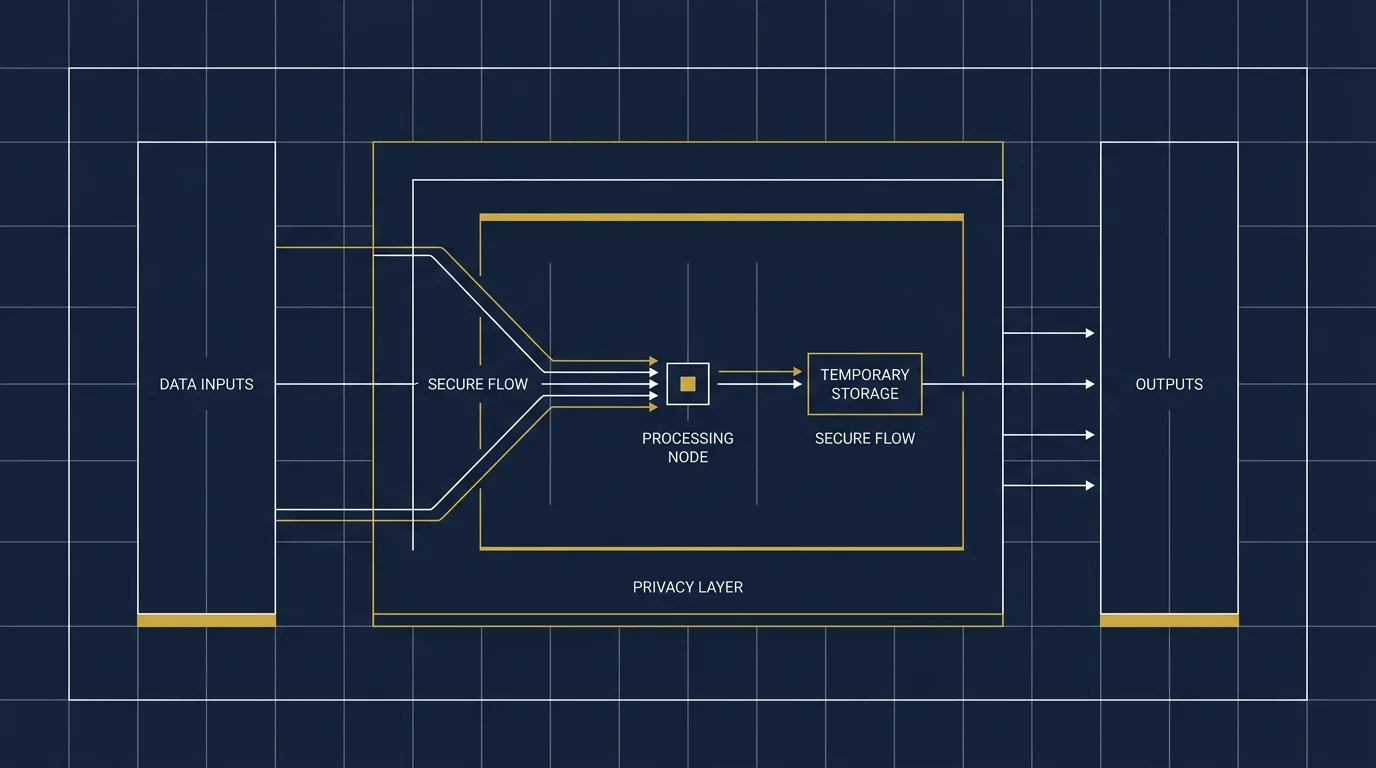
The framework rests on three structural principles. Zero Collection means gathering personal data only when strictly necessary. Zero Retention means limiting long-term storage when retention serves no active purpose. Zero Exploitation means deriving value from system function rather than from profiling or behavioral targeting.
The intent is not to promise zero risk or automatic compliance, which no framework can deliver. Instead, the aim is to reduce unnecessary dependency on personal data so that exposure and future target surface may shrink, while certain forms of legal and operational liability may also be reduced. When less sensitive information exists, there is less to breach, less to retain, and less to govern. We connect privacy, cybersecurity, and AI governance into a single direction rather than treating them as separate obligations.

How different approaches to the footprint compare
Organizations manage sensitive data in different ways, and the approaches are not mutually exclusive. The table below contrasts three common directions, including our structural approach, on the dimensions that most influence exposure over time.
Approach | Core mechanism | Personal data dependency | Effect on footprint over time |
|---|---|---|---|
Consent-first model | Notices and permissions govern collection | High | Tends to grow with each new consent |
Governance and minimization tooling | Classifies, retains, and deletes existing data | Moderate | Reduces sprawl after collection |
Zero Data Protocol — structural data reduction | Reduces unnecessary collection, retention and exploitation by design | Reduced where architecture allows | Limits unnecessary growth at the source |
Governance tooling remains useful and addresses data that already exists. A structural approach works earlier, questioning whether the data needs to exist at all. The two are complementary, and combining them limits both existing sprawl and future accumulation.
Practical steps to reduce your sensitive data footprint
Start by mapping what you hold. Analyze metadata such as creation and last-access dates to identify when information stops being necessary. This exercise usually reveals large volumes of redundant records that add cost and risk without adding value.
From there, several measures compound:
Collect less by default. Apply privacy-by-design so data is minimized from the outset rather than trimmed later.
Limit retention. Define retention schedules and enforce deletion once data crosses defined thresholds, an approach detailed in our Data Retention and Deletion Policy guidance.
Reduce exploitation. Avoid profiling, behavioral targeting, and unnecessary identity dependency where system function does not require them.
Contain AI-driven inference. Constrain what models infer and store, a concern examined in Generative AI Security Risks.
Each step lowers exposure, but none eliminates risk entirely. Residual data, legal retention obligations, and third-party dependencies persist, so these measures reduce and manage risk rather than remove it.
Acknowledging the residual risks
No framework delivers a zero attack surface or guaranteed security. Some data must be collected and retained for legal, contractual, or operational reasons. Backups, logs, and vendor systems continue to hold information beyond your direct control, and long-lived traces can persist outside traditional security tooling.
The honest goal is proportionality. By reducing what you collect, retain, and exploit, you shrink both the likelihood and the impact of exposure. Structural reduction may also simplify governance, because there is less regulated data to map, audit, and defend. That is a meaningful improvement, not a guarantee.
Turning your data footprint into an advantage
The size of your sensitive data footprint is one of the few risk variables you can genuinely control. Breach impact, regulatory exposure, and the value of data available to attackers often increase with the volume and sensitivity of what you hold. Begin by mapping your data, retiring what is redundant, and questioning each new collection at the point of design. Treat data minimization as an architectural discipline rather than a periodic cleanup. Organizations that retain less unnecessary personal data will not become invulnerable, but they may present a smaller target, reduce parts of their governance burden, and strengthen trust through architecture rather than promises alone.
Take action with Zero Data Protocol
If reducing exposure is your priority, the most durable lever is architecture. Rather than defending ever-larger stores of personal information, you can design systems that depend on less of it from the start, connecting privacy, cybersecurity, and AI governance into one coherent direction.
Zero Data Protocol is an emerging structural framework for designing digital systems with minimal dependency on personal data with minimal dependency on personal data, organized around Zero Collection, Zero Retention, and Zero Exploitation. To understand the framework and how a minimal-data architecture can reduce unnecessary exposure, limit persistent personal-data dependency, and simplify parts of governance, explore the Zero Data Protocol framework and its principles for designing trust into your systems.
Frequently Asked Questions
What is a sensitive data footprint?
It is the total set of personal, confidential, and regulated information your organization collects, stores, and processes across all systems and third parties. This includes active records as well as forgotten archives, backups, and traces that persist outside daily visibility. The larger it is, the greater your exposure.
Why does reducing it lower risk?
Breach impact often increases with the volume and sensitivity of the data involved. Holding less unnecessary personal data can reduce the amount exposed and limit the material available for misuse. This may reduce the potential consequences of an incident, while complementary security, legal, and governance controls remain necessary.
Is data minimization the same as the Zero Data Protocol?
They are related but distinct. Data minimization limits collection, processing, and retention to what is necessary. Zero Data Protocol extends this direction into a broader architectural framework focused on reducing unnecessary personal-data dependency through Zero Collection, Zero Retention, and Zero Exploitation.
Can reducing my footprint guarantee compliance or security?
No. No framework provides automatic compliance, zero risk, or a nonexistent attack surface. Reducing what you collect and retain lowers exposure and may simplify governance, but residual data, legal obligations, and third-party dependencies still require active management.
Where should an organization begin?
Start by mapping what you already hold and identifying redundant or obsolete records. Then define retention schedules, enforce deletion, and apply privacy-by-design to new collection. Our Data Retention and Deletion Policy guidance offers a practical starting structure for these steps.