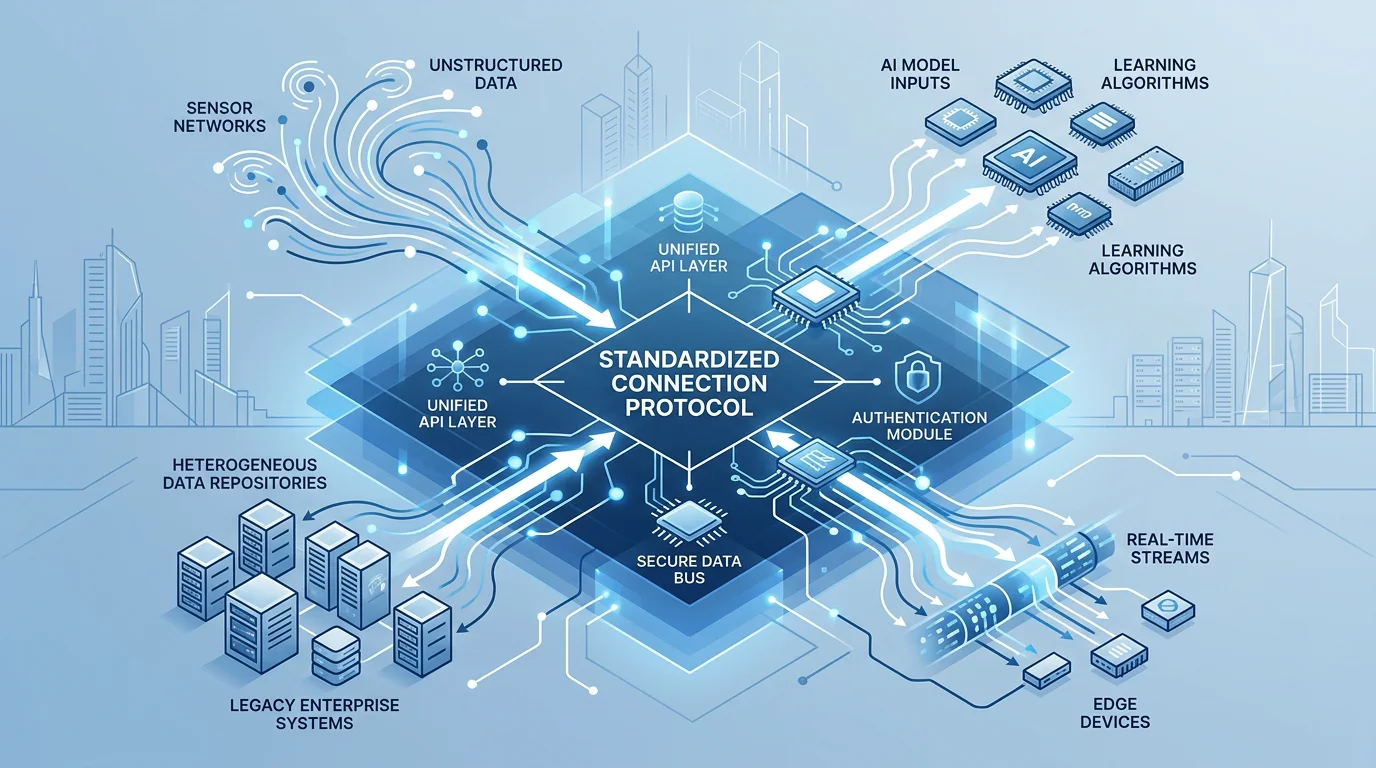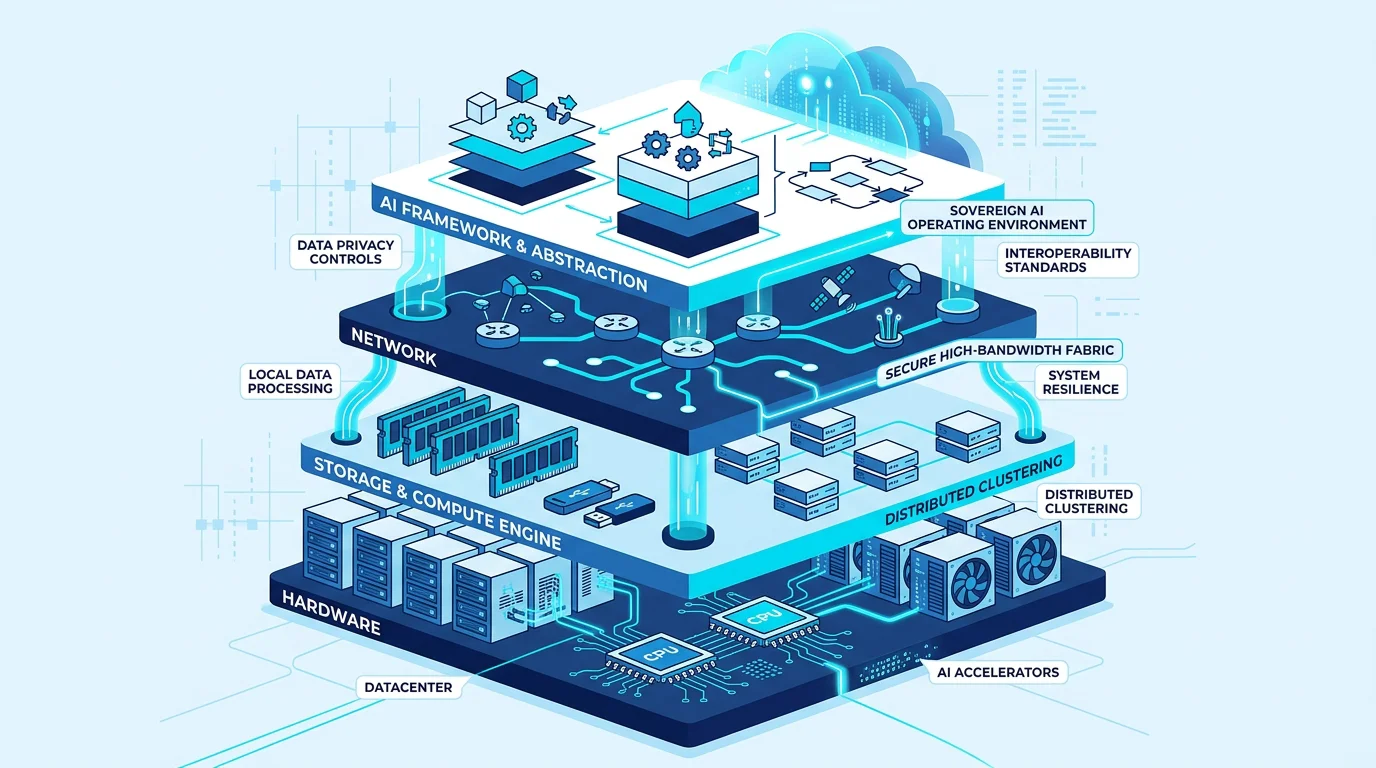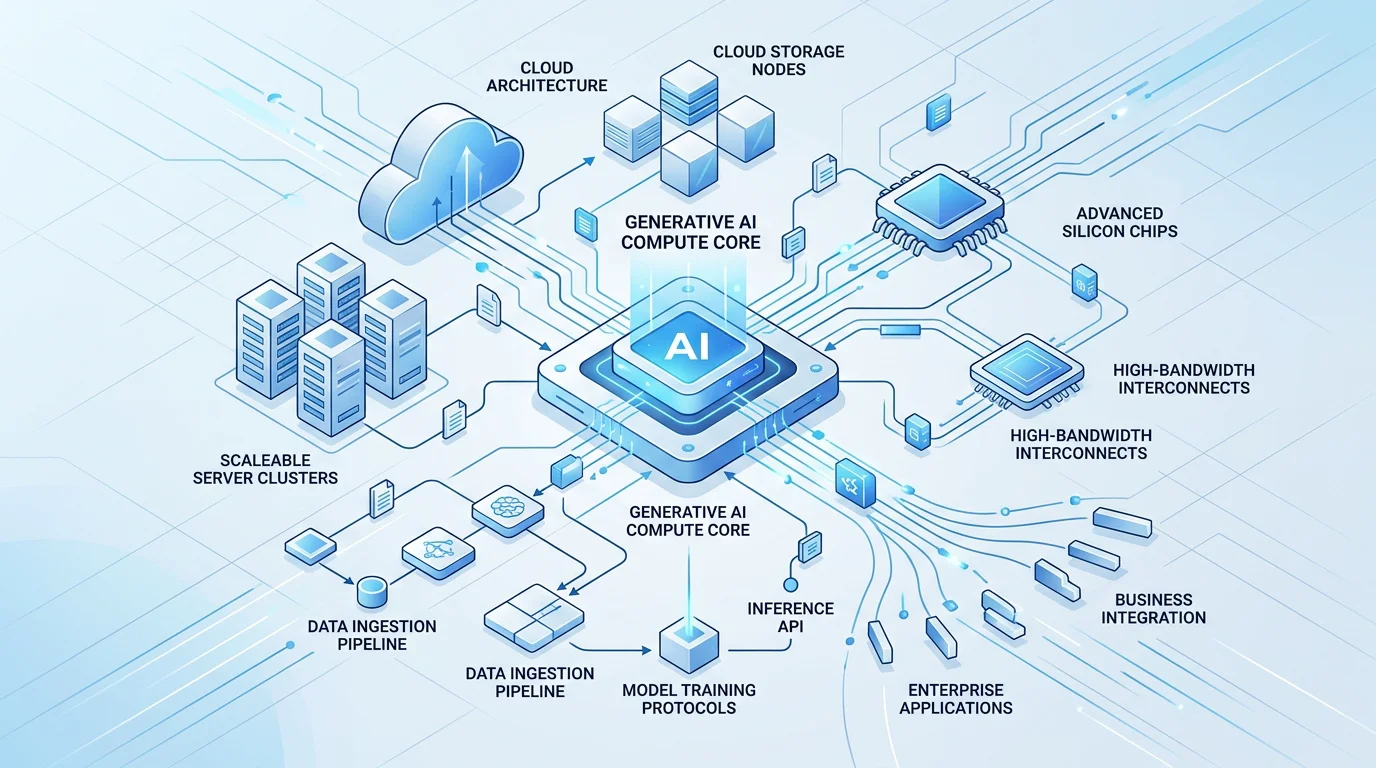

Security teams entered 2026 confronting a paradox. The same generative AI systems that accelerate coding, drafting, and analysis have become among the fastest-growing entry points for attackers. As models query internal databases, call backend services, and trigger automated workflows, the security risks of generative AI widen an attack surface that legacy controls were never designed to contain. Understanding how autonomous systems exchange information is part of that challenge, which is why our explainer on the Agent Data Protocol is relevant reading for architects designing these pipelines.
The concern is not hypothetical. In a 2026 industry survey, an ExtraHop report found that 55% of respondents named AI agents and generative AI applications a top attack surface concern, ahead of public cloud and third-party integrations. The lesson is clear: as adoption scales, the gap between what these systems can do and how well they are secured becomes the defining exposure.
Why Generative AI Reshapes Enterprise Risk
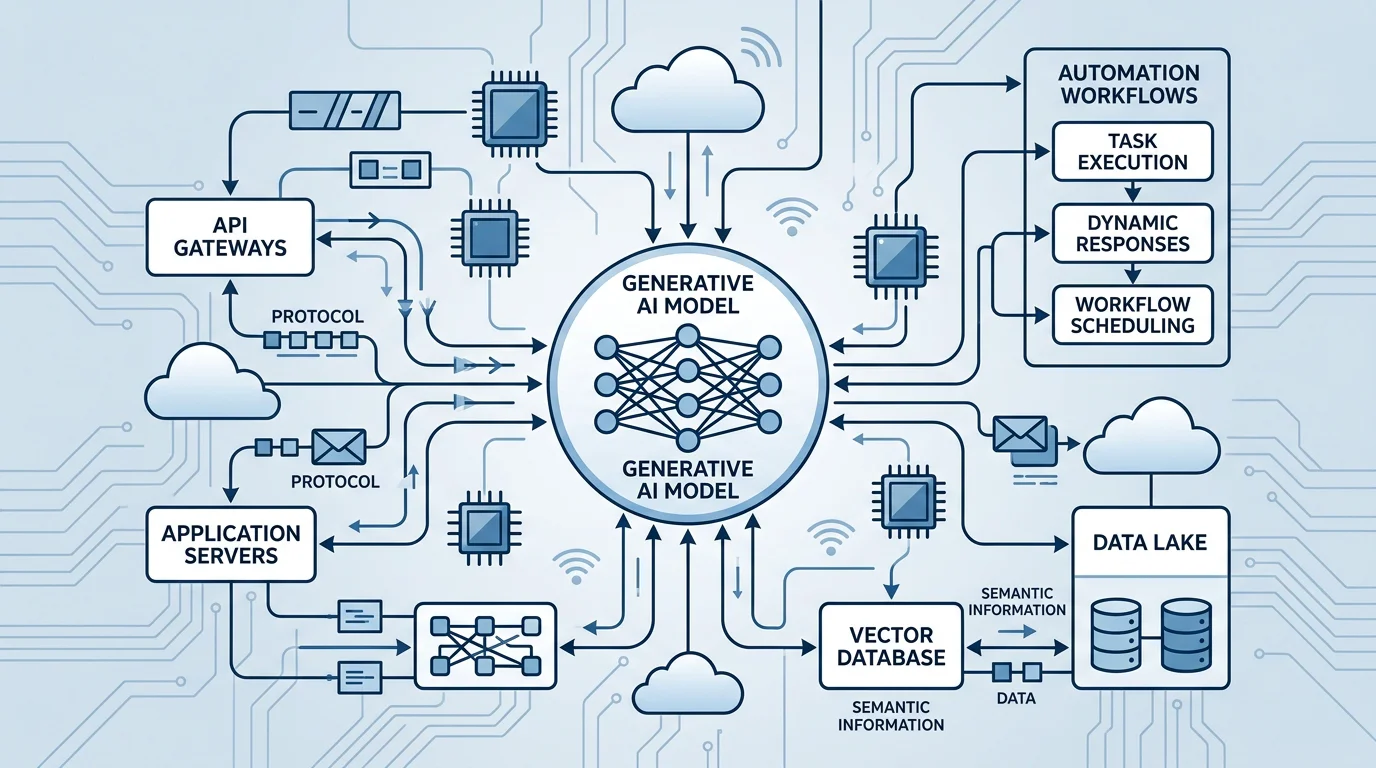
Traditional applications execute fixed code paths. Generative models do not. They interpret natural language dynamically and generate outputs probabilistically, which makes their behavior harder to predict and constrain. When you consider the full scope of generative AI security risks, three structural traits explain why they resist conventional defenses.
First, models rarely operate in isolation. They connect to enterprise data stores, APIs, and automation systems, so a single compromise can propagate across dependent services. Second, they are trained or fine-tuned on large and diverse datasets, creating intellectual property and regulatory exposure. Third, they respond to language rather than rigid input schemas, which means an attacker can manipulate behavior without exploiting a coding flaw. Web application firewalls, endpoint protection, and API gateways were not built to inspect how a model interprets a prompt.
The Threats You Should Prioritize
Several risk categories consistently surface across enterprise deployments. Understanding each one is the foundation of any credible AI risk management framework.
- Prompt injection: attackers embed malicious instructions inside input text to override system directives, extract hidden context, or coax the model into unsafe actions. Because it exploits language rather than code, guardrails must inspect intent, not just syntax.
- Data leakage: models connected to internal knowledge bases can surface confidential documents, source code, or regulated records in response to cleverly structured queries.
- Model and data poisoning: tampering with training data or retrieval sources skews outputs, sometimes through hidden triggers that activate only under specific conditions.
- Insecure AI-generated code: generated snippets can reproduce insecure patterns, outdated dependencies, or exploitable flaws that slip into production without review.
- Shadow AI: employees paste sensitive information into unsanctioned public tools, bypassing enterprise controls entirely.
Data Leakage and Shadow AI: The Quiet Majority
Consider a familiar scenario. A support agent pastes a customer complaint, including account numbers, into a public chatbot to draft a reply. That data may be stored indefinitely and used to train future models, contravening privacy obligations that restrict secondary use of personal data. Multiply this across thousands of employees, and the exposure becomes systemic.
The scale is documented. According to an AI security research report, 68% of organizations have experienced data leaks linked to AI tool usage, yet only 23% have formal security policies governing that usage. The same report notes that the global average data breach cost reached 4.88 million dollars in 2024, a figure that climbs further when AI systems extend attacker dwell times. Strict access controls, output validation, and segmentation of sensitive datasets are essential, but they address symptoms rather than the underlying dependency on stored data.
When Attackers Weaponize Generative AI
The risk runs in both directions. Generative AI is not only a target; it is also a tool that lowers the barrier to entry for threat actors. Phishing campaigns that once relied on volume now produce convincing, personalized lures at scale, free of the typos that awareness training taught staff to spot.
Deepfakes escalate the danger further. As documented in the Huntress threat guide, a 2024 case in Hong Kong saw a finance employee deceived by deepfaked colleagues during a video call into wiring roughly 25 million dollars to fraudsters. Synthetic voice and video collapse the trust signals that organizations have long relied upon, which means verification of high-value actions can no longer assume that a familiar face or voice is authentic.
Rethinking Exposure: Removing Data Dependency by Design
Most defensive playbooks share an assumption: personal data must exist somewhere, so the task is to protect it. That assumption is worth challenging. Every record collected, cached, or retained becomes something a vulnerability can eventually expose. If the data is never gathered in the first place, an entire class of leakage, poisoning, and misuse scenarios simply cannot occur.
This is the principle behind a structural approach to data minimization. Rather than protecting collected data after the fact, we design systems to operate without relying on personal data wherever possible, treating the absence of data as a feature rather than a limitation. Governance teams focused on long-term integrity will find the reasoning aligned with our guide to sovereign AI, which frames data control as an architectural property rather than a compliance afterthought. When exposure is designed out, the residual risk that remains is dramatically smaller.
The urgency is reinforced by forecasts of rising incident frequency. In one 2026 analysis, reported research found that around 44% of organizations have experienced at least one negative security outcome tied to generative AI misuse. As agentic systems proliferate and act with greater autonomy, the value of reducing what any single compromise can reveal grows accordingly.
Building a Layered Mitigation Strategy
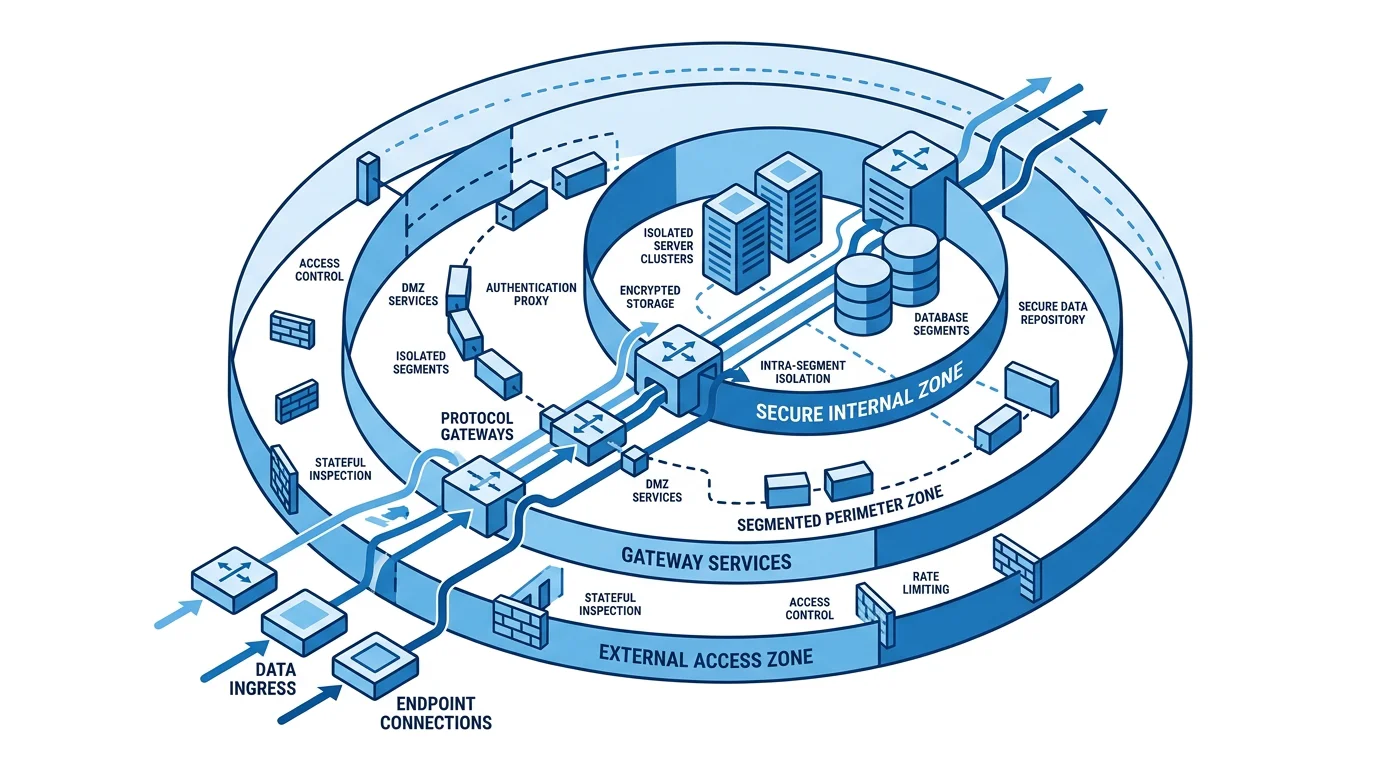
No single control is sufficient. Effective mitigation coordinates governance, application, data, and infrastructure layers. At the governance level, define approved use cases, data handling standards, and review processes, and train employees to curb shadow AI. At the application layer, apply prompt validation and output filtering, and subject AI-generated code to the same secure development lifecycle as human-written code. At the infrastructure layer, protect inference endpoints with authentication, rate limiting, and traffic inspection.
Network design also matters. Isolating workloads limits how far an attacker can move after an initial foothold, a discipline explored in our breakdown of micro-segmentation. Controlling which systems may communicate at all, without amassing intrusive telemetry, is addressed in our approach to network access control. The table below contrasts three broad strategies and where residual exposure remains.
| Approach | Primary focus | Residual data exposure |
|---|---|---|
| Traditional data protection | Encrypting and guarding data already collected | High: full datasets remain a target |
| Data minimization policies | Reducing how much data is gathered and kept | Moderate: retained data still exposes risk |
| Zero Data Protocol architecture | Eliminating personal-data dependency by design | Lowest: absence of data removes the target |
Turning Awareness Into Architecture
The generative AI security risks facing enterprises in 2026 are real, but they are manageable. Prompt injection, data leakage, poisoning, insecure code, and synthetic-media fraud all demand AI-specific controls layered across governance, applications, and infrastructure. The organizations that fare best will treat generative AI as mission-critical infrastructure requiring dedicated security architecture, and they will question the assumption that vast stores of personal data must exist at all. When you reduce what a vulnerability can expose, you shrink the consequences of every incident that follows. Begin with a clear inventory of where your models touch sensitive data, then design that exposure down.
Take action with Zero Data Protocol
If the recurring theme across these threats is that stored personal data becomes a liability the moment it exists, then the most durable defense is structural. You cannot leak, poison, or exploit data that was never collected, retained, or repurposed in the first place.
Zero Data Protocol is a protocol-level architecture that eliminates personal-data dependency by design, built on Zero Collection, Zero Retention, and Zero Exploitation. Instead of protecting data after the fact, we help you build AI, cloud, and infrastructure systems where the absence of data is an engineered feature. Explore the Zero Data Protocol architecture to see how structural sovereignty reduces what any vulnerability can ever expose.
Frequently Asked Questions
What are the most critical generative AI security risks for enterprises?
The most pressing risks include prompt injection, data leakage, model and data poisoning, insecure AI-generated code, and shadow AI. Attackers also weaponize the technology to produce phishing and deepfakes at scale. Each affects both application behavior and infrastructure.
How is prompt injection different from traditional attacks?
Prompt injection exploits how a model interprets natural language rather than a flaw in code. An attacker embeds hidden instructions in input text to override system directives or extract sensitive context. Defending against it requires inspecting intent and constraining model behavior, not just validating syntax.
Can generative AI systems leak confidential company data?
Yes. When connected to internal knowledge bases or trained on sensitive information, models can surface confidential documents or regulated records through carefully structured queries. Strict access controls, output validation, and minimizing the data the system can reach all reduce this exposure.
How can reducing data collection lower generative AI risk?
Every record retained is something a vulnerability can eventually expose. By designing systems to operate without personal data wherever possible, our Zero Data Protocol architecture removes entire categories of leakage and misuse before they can occur. The absence of data becomes a structural advantage.
What steps mitigate generative AI security risks most effectively?
Adopt a layered strategy spanning governance policies, prompt and output validation, secure code review, and protected inference endpoints. Add network segmentation to contain lateral movement, and minimize the sensitive data your models can access. No single control is sufficient on its own.