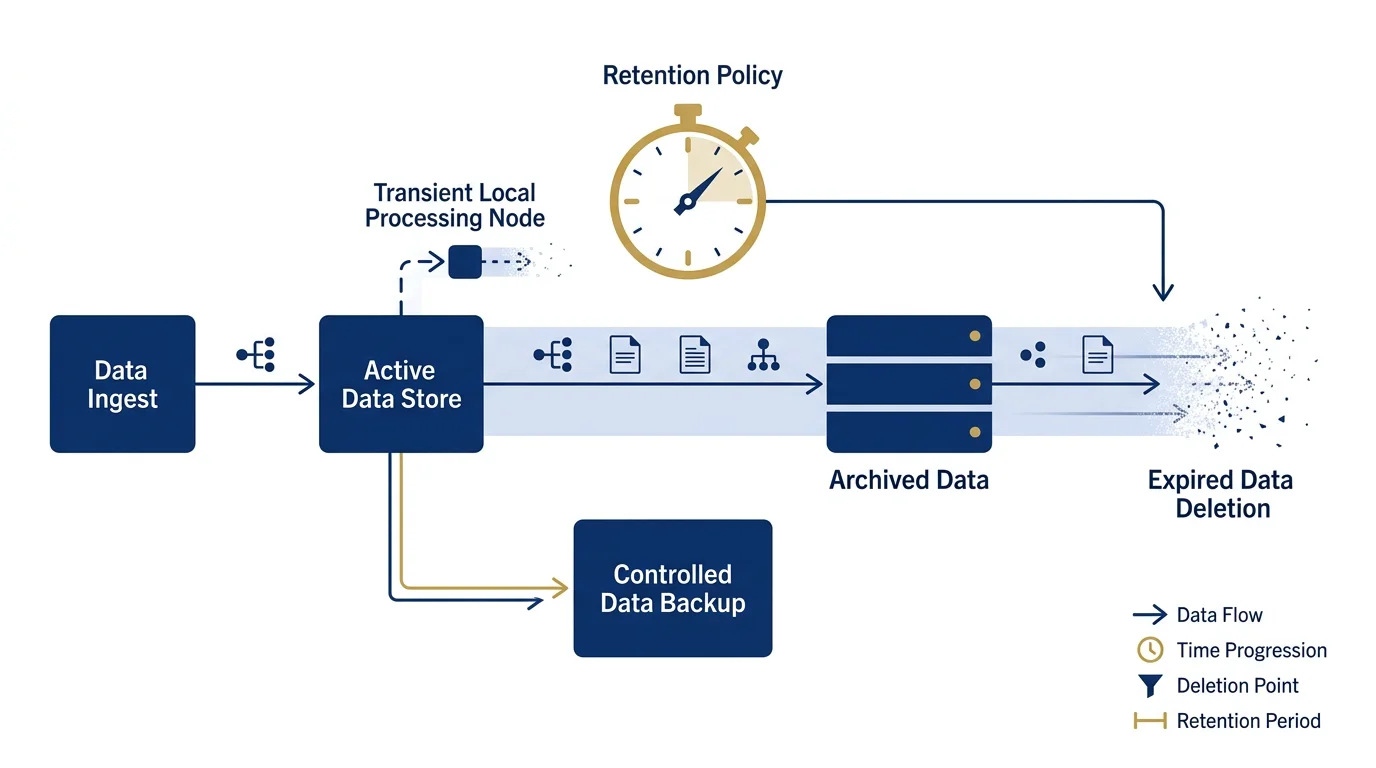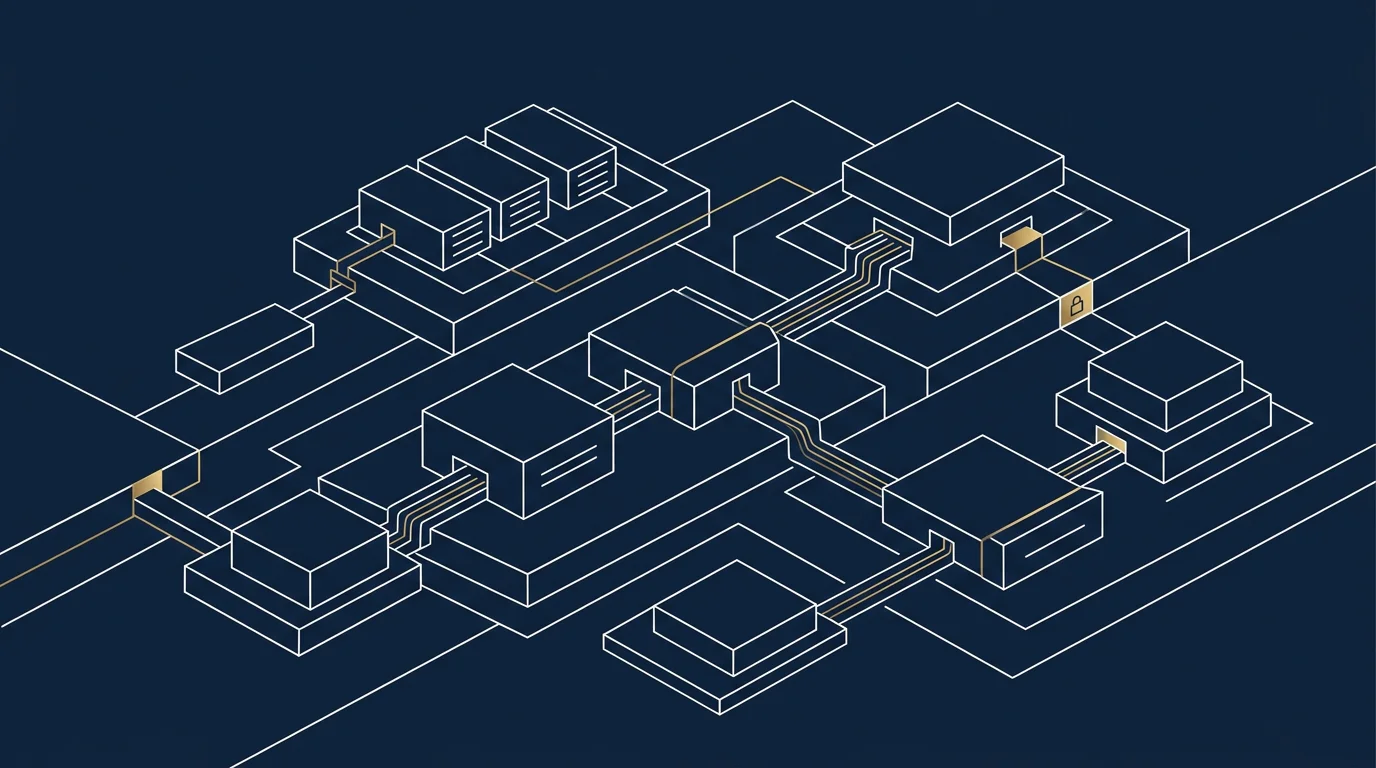

In 2026, recent industry reporting places the average global cost of a data breach at around five million dollars, while incidents involving unsanctioned AI tools have increased sharply. As artificial intelligence moves from experimentation into core workflows, the information feeding these systems has become a high value target. The safest response is rarely more surveillance; it is often less accumulated data. One practical starting point is a clear data retention and deletion policy that limits what is stored in the first place.
Strong protection of the data behind AI systems is no longer a niche concern for security teams alone. According to IBM research, the proportion of incidents tied to shadow AI more than doubled year over year to 43 percent, while most organizations still lacked governance processes to contain it. That gap between adoption and control now defines the challenge.
What AI data protection actually means
The practice known as ai data protection safeguards the information that AI systems use, generate, store and depend on across their lifecycle. It spans training data, prompts, outputs, embeddings, logs, vector stores and recovery copies. The goal is not only privacy but also integrity, availability and recoverability.
Traditional software works with well defined inputs and outputs. AI systems go much further, ingesting documents, emails, chats, structured records and user feedback. This expands the number of places where sensitive or regulated information can be exposed, copied or transformed. The term also carries a second meaning: using machine learning to improve protection itself, through anomaly detection and faster recovery. Most organizations increasingly need both senses at once.
It is worth distinguishing related concepts. Data privacy concerns lawful and ethical handling of personal information. AI security covers the full stack, including models and infrastructure. Protecting AI relevant data sits between them, focused on confidentiality, governance and resilience of the information itself.
Why AI reshapes the risk landscape
Why does artificial intelligence raise the stakes so quickly? Scale and opacity are the core reasons. Many AI systems depend on large or diverse datasets and can be difficult to interpret, so individuals and organizations often lose track of what is collected, where it travels and how it might be corrected or removed.
The financial picture reinforces the point. According to Morgan Lewis analysis of the 2025 IBM findings, customer personal data was the most commonly compromised information type, appearing in 53 percent of incidents, while attackers used AI in 16 percent of breaches. Separately, an IBM press release reported that 13 percent of organizations experienced breaches of AI models or applications, and 97 percent of those lacked proper AI access controls.
These figures point to a structural weakness rather than a single flaw. When systems accumulate more sensitive information than they need, every new dataset becomes a future liability. Reducing what is held is therefore a risk lever, not merely a compliance formality. For teams evaluating exposure introduced by copilots and assistants, understanding the specific generative AI security risks is a useful next step.
The data types AI touches, and why each matters
A mature program covers far more than training datasets. A modern AI environment involves many information types, each with its own risk profile. Overlooking any single category can undermine the whole effort.
Training and fine-tuning data can embed sensitive business or customer records that shape model behavior.
Prompts and inference data may contain trade secrets, credentials or personal context supplied by users.
Outputs and generated content can reveal sensitive information or spread inaccuracies downstream.
Logs and telemetry capture prompts, responses and access patterns that require retention controls.
Embeddings and vector stores can preserve meaning and expose source content even in abstracted form.
In many enterprise deployments, unstructured content such as documents, tickets and messages becomes the source material for retrieval systems, copilots and agents. That makes classification and data mapping essential before any AI system is allowed to reach it.
Collect less, retain less, exploit less
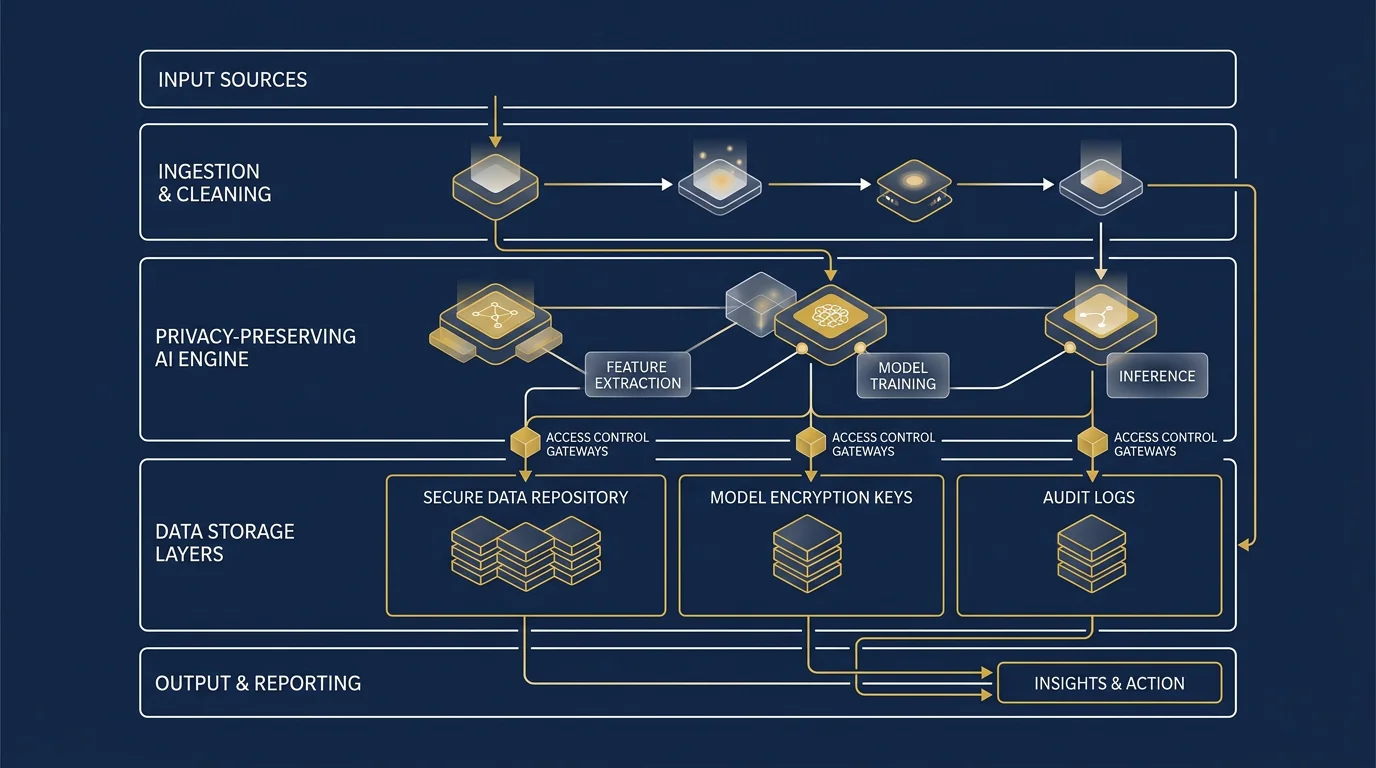
Consider a different starting assumption: personal data that is not unnecessarily collected or persistently retained creates less future exposure. This is the direction we advocate through the Zero Data Protocol, an emerging independent framework built on three principles, Zero Collection, Zero Retention and Zero Exploitation. It is not a regulation, certification or guarantee; it is a structural approach to designing systems that depend on less personal information.
The logic is straightforward. Less collection means fewer sensitive fields to govern. Less retention means less exposure and fewer future targets. Less exploitation means avoiding unnecessary profiling, behavioral targeting and identity dependency. Value is meant to come from system function rather than from the extraction of user data. To explore how this translates into design decisions, see our guidance on zero-data architecture (build AI without personal data).
We should be candid about limits. This approach reduces exposure and may simplify governance, but it does not remove all risk, deliver automatic compliance or eliminate the attack surface entirely. Some data is genuinely necessary, and residual obligations around integrity, availability and recovery still apply. The framework is a direction of travel, not a universal solution.
Building governance and controls that hold up
Where should a team begin in practice? Inventory comes first. You cannot govern AI you cannot see, so identify every internal application, third-party tool, copilot, agent and retrieval pipeline touching your data. Only then can you classify what should be allowed, restricted, masked or blocked.
Access should follow least privilege. Models, agents and connectors should reach only the information they truly need, particularly in retrieval pipelines and cross-system integrations. Sensitive fields can be redacted, tokenized or filtered from retrieval results to limit oversharing. Prompts, outputs and logs deserve the same scrutiny as training data, because each can become a sensitive record.
Vendor ecosystems deserve particular attention. According to a 2025 Reco review of Verizon findings, third-party involvement in breaches doubled year over year, often through trusted integrations rather than direct exploits. Contracts should prevent vendors from training models on your data without explicit consent, and disclosures should clarify how personal information is used. For a structured view of these dependencies, our overview of third-party AI risk for enterprise security may help.
Aligning with the regulatory direction
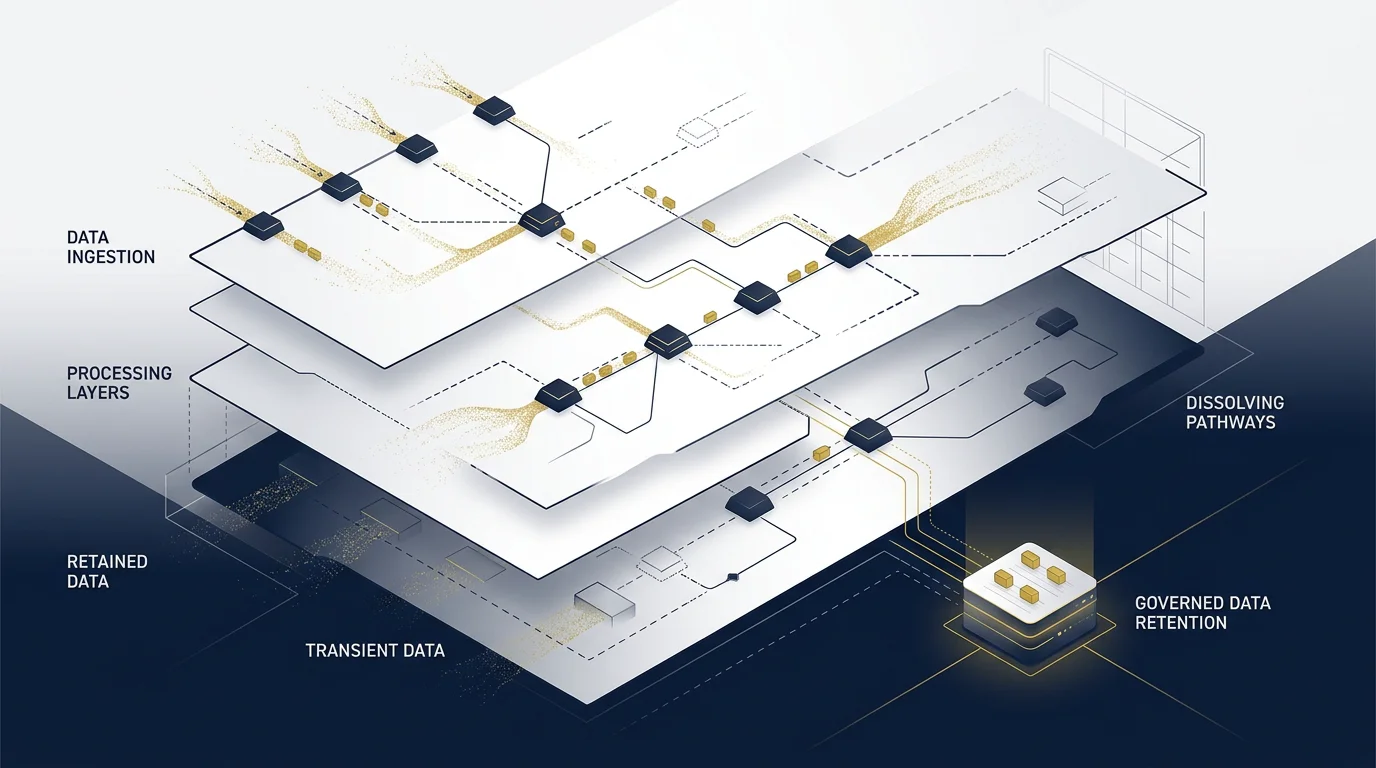
Regulators have made clear that AI is not exempt from established privacy obligations. Principles such as data minimization, transparency and storage limitation, long central to European rules, apply directly to AI systems. New frameworks continue to formalize expectations around impact assessments, high-risk applications and automated decision-making.
Comparing broad approaches clarifies where a reduction mindset fits.
Approach | Primary focus | Effect on retained personal data |
|---|---|---|
Consent-based model | Obtaining permission to collect and process | Data still accumulates; burden shifts to notices |
Post-hoc security controls | Protecting data already stored | Exposure persists as long as data is held |
Zero Data Protocol — structural data reduction | Reducing dependency on personal data by design | Less unnecessary personal data collected and retained, reducing persistent exposure |
These approaches operate at different layers and should be treated as complementary rather than interchangeable. No single approach is sufficient on its own. Consent and security controls remain necessary, but designing for less data addresses the root cause that the other two manage after the fact. Mapping your practices to recognized guidance, such as risk management frameworks and application security recommendations, strengthens whichever combination you adopt.
Bringing it together
Effective protection of the data behind AI is less about accumulating defenses and more about narrowing what must be defended. Inventory your AI systems, classify what they touch, enforce least privilege and treat vector stores and logs as production assets. Then question every dataset you hold: if it is not strictly necessary, retaining it may enlarge your exposure, governance burden and potential liability. Reducing collection, retention and exploitation will not remove all risk, but it consistently lowers exposure and can make governance more manageable. In a year when incident costs and ungoverned AI both continue to climb, restraint has become a security strategy in its own right.
Take action with Zero Data Protocol
If your organization is weighing how much personal data its AI systems truly need, the direction you set now will shape your exposure for years. The instinct to collect everything is exactly the instinct worth challenging.
Zero Data Protocol offers a structural framework built on Zero Collection, Zero Retention and Zero Exploitation, connecting privacy, cybersecurity, AI governance and system design into one direction. Rather than relying solely on consent banners or after-the-fact controls, we help you frame trust as an architectural outcome of needing less personal data. Explore our zero-data protocol framework to see how designing for minimal data dependency can reduce unnecessary exposure and may simplify parts of governance.
Frequently Asked Questions
What is the difference between AI data protection and data privacy?
Data privacy concerns the lawful and ethical handling of personal information, focusing on rights and consent. Protecting the data behind AI is broader, covering the confidentiality, integrity, availability and recoverability of all information AI systems use and generate, from prompts to vector stores.
Does collecting less data really reduce security risk?
Reducing collection and retention lowers exposure because there is simply less sensitive information to be stolen, leaked or misused. It does not eliminate risk entirely, since some data remains necessary and security, legal and operational obligations still apply. However, it can reduce a major source of exposure by limiting unnecessary personal-data collection and retention.
How does the Zero Data Protocol relate to compliance?
Zero Data Protocol is an emerging independent framework, not a regulation, certification or guarantee of compliance. Its principles of Zero Collection, Zero Retention and Zero Exploitation align with widely recognized ideas like data minimization, which may simplify governance, but you remain responsible for meeting the specific laws that apply to you.
What are the most overlooked data types in AI systems?
Prompts, outputs, logs and embeddings are frequently underestimated. User inputs can contain credentials or trade secrets, and even abstracted vector representations may preserve sensitive source content, so each should be governed and monitored like production data.
How should we handle third-party AI vendors?
Assess how each vendor collects, stores and uses your data, and use contractual safeguards preventing them from training models on your information without explicit consent. Because third-party involvement in breaches has risen sharply, transparency clauses and least-privilege access for connectors are essential.