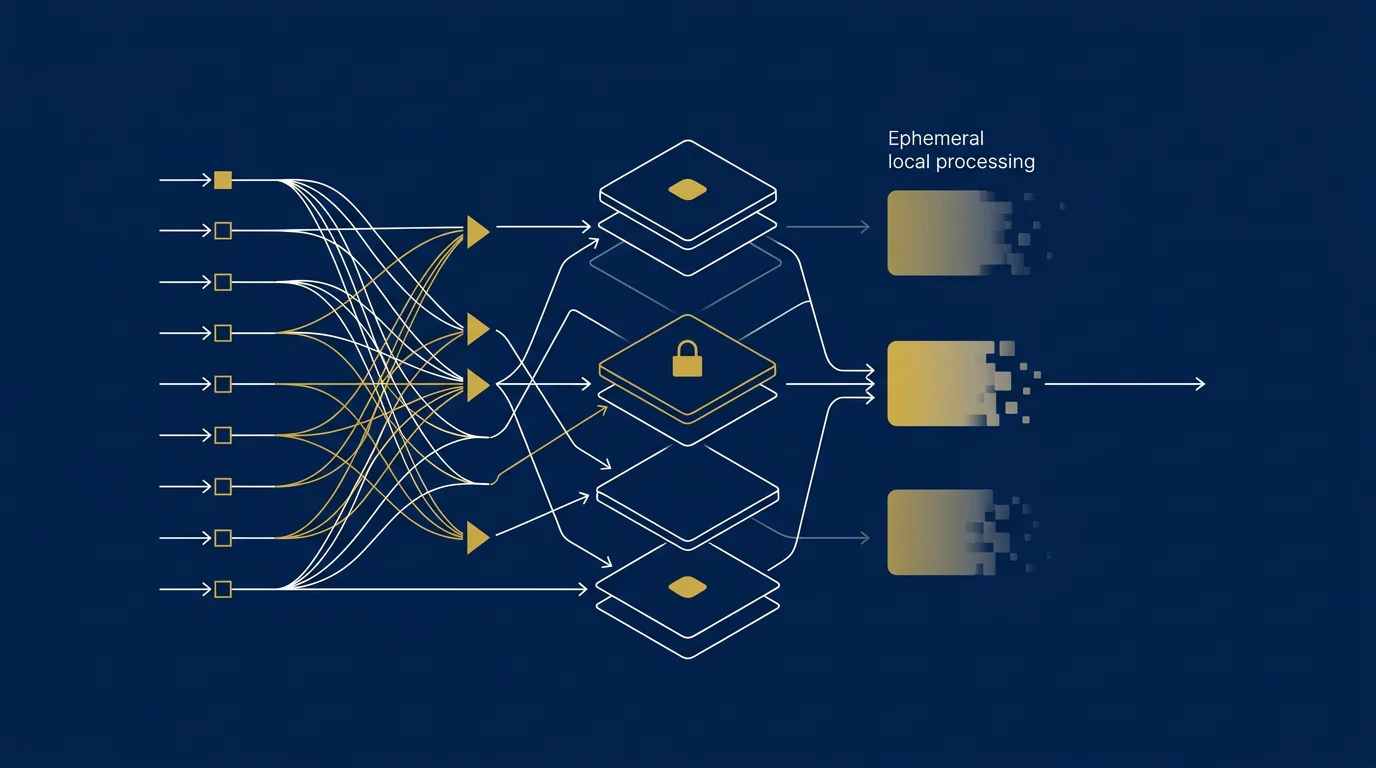

By 2026, adoption of generative tools has moved from experiment to infrastructure, yet trust has not followed at the same pace. A striking signal captures the tension: most consumers now regard automated data processing as a genuine threat to their personal information. That gap between capability and confidence is where the privacy risks of generative AI take root. Before mitigation, it helps to understand why these systems behave differently from earlier software. Our overview of Generative AI security risks frames the landscape for enterprise teams.
The core issue is structural. Generative models learn from vast datasets and interact conversationally, which encourages users to share more than they intend. According to Usercentrics data, 57% of global consumers view the use of AI in collecting and processing personal data as a significant threat to their privacy. When systems retain and reuse what people disclose, exposure compounds quietly over time.
Why the privacy pitfalls of genai differ from ordinary software
Traditional applications store data in predictable places. Generative systems do something less transparent: they absorb inputs, encode patterns, and can reproduce fragments later. The Congressional Research Service notes that privacy concerns about how individual data is used to develop and deploy generative models are not entirely new, but the scale, scope, and capacity of these technologies present fresh challenges for policymakers.
Several characteristics make these tools especially sensitive from a privacy standpoint:
- Model memorization: training data can be unintentionally reproduced in outputs, exposing personal details.
- Conversational oversharing: interactive, human-like exchanges lower user guard and invite disclosure of sensitive personal data.
- Opaque retention: it is often unclear what inputs, behavior, and analytics are recorded, retained, or shared with third parties.
- Repurposed inputs: user prompts may become training data without meaningful consent.
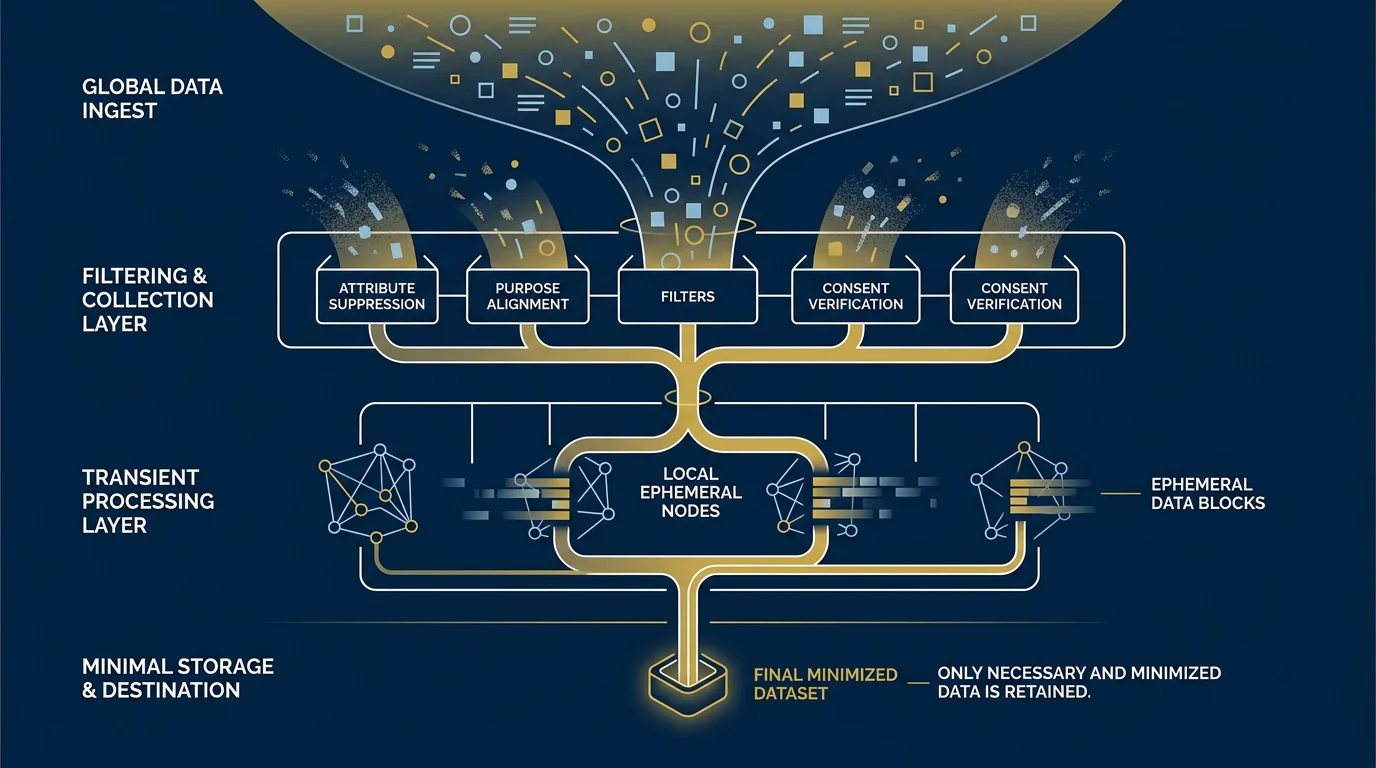
The lesson from primary research is consistent: the safest information is the information a system never collects. Designing for that principle from the start changes the risk equation entirely.
Data leakage and the enterprise exposure problem
Consider a familiar scenario: an employee pastes confidential code or client records into a public chatbot to save time. That single action can move regulated data outside organizational control. High-profile incidents have made this concrete. Academic analysis published on ScienceDirect cites Samsung's data exposure caused by employee misuse of a chatbot as a stark reminder of the pitfalls of deploying generative tools without appropriate safeguards.
The same survey work reports that 46% of business and cybersecurity leaders worry that generative AI could enhance adversarial capabilities, while 20% fear it could lead to data leaks that expose sensitive information. These are not fringe anxieties; they reflect how quickly unmanaged tools spread inside organizations. Assessing exposure introduced by outside vendors is now essential, which is why we detail Third-party AI risk for security teams evaluating external models.
Profiling, inference, and the erosion of user control
Privacy harm is not limited to leaks. It also arises from inference: the ability of systems to derive traits, behaviors, and predictions that individuals never disclosed. Prolonged conversational interaction generates rich behavioral signals, and once monetization pressures arrive, personal data tends to flow toward targeted advertising and profiling.
Regulatory frameworks already recognize this. Under the GDPR, individuals hold the right not to be subject to decisions based solely on automated processing, including profiling, where those decisions carry legal or similarly significant effects. Several US state laws extend rights to opt out of processing for profiling purposes. Yet consent-based controls struggle against systems designed around extraction. This is where reducing dependency on identity matters: when personal data is not functionally necessary, users should remain free not to provide it, a principle we describe as Human Freedom Choice. Our analysis of Network access control without surveillance shows how access can be governed without accumulating behavioral records.
Retention: the liability that grows while you sleep
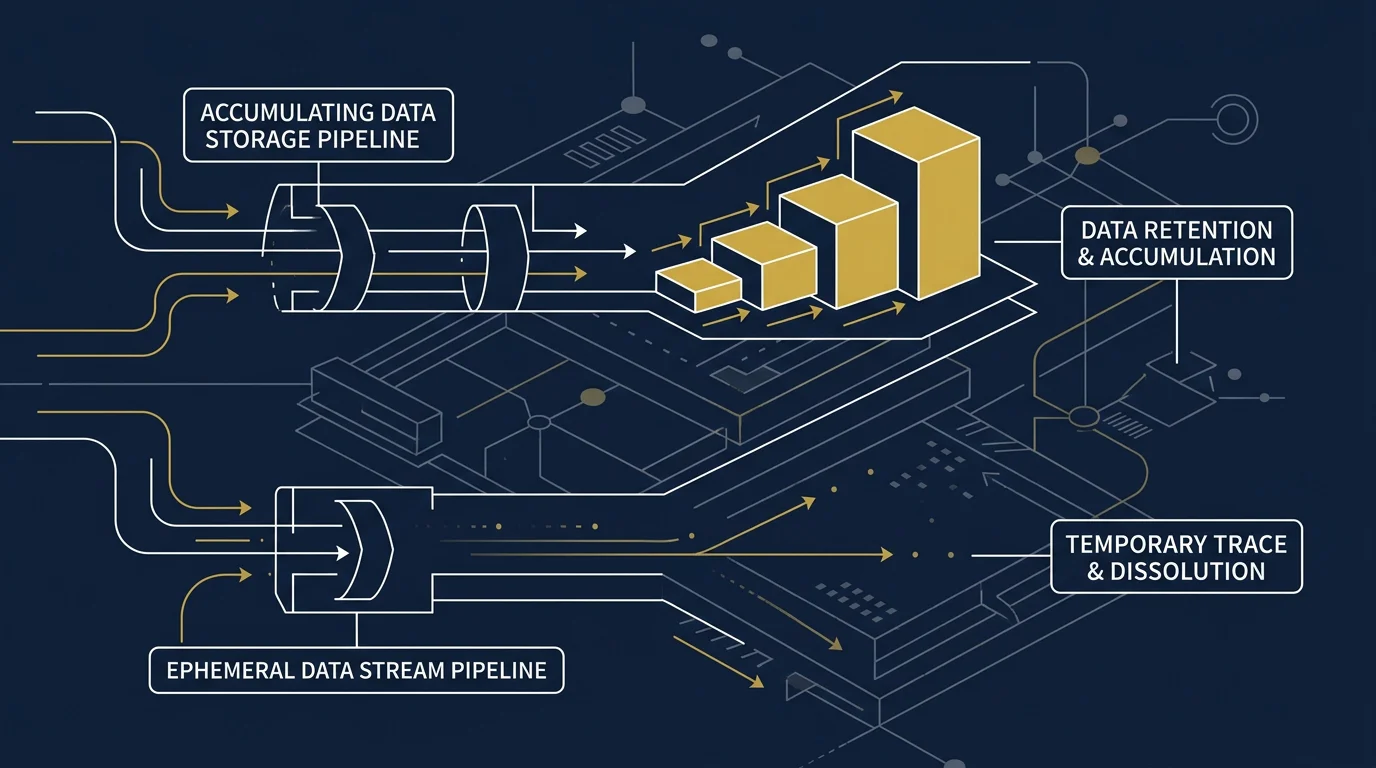
Every dataset held is a future target. Removing personally identifiable information from large language models is largely untested, which complicates responses to deletion requests within regulated timeframes. Meanwhile, exposure accumulates: the more you retain, the larger your attack surface and your regulatory liability become.
Independent reporting underlines the operational gap. According to figures compiled by Practical DevSecOps, 68% of organizations have experienced data leaks linked to AI tool usage, yet only 23% have formal security policies in place. That imbalance between adoption and control is precisely what minimal retention addresses. Storing less does not eliminate risk, but it shrinks the consequences of any single failure.
Governance versus architecture: complementary, not interchangeable
Two approaches dominate current practice. Governance-led programs rely on policies, documentation, model versioning, and consent mechanisms. Architecture-led approaches reduce the amount of personal data the system depends on in the first place. Both are useful, but they operate at different layers, and confusing performance shortcuts with genuine protection is a common error, as we explain in Zero-copy data vs zero data protocol.
The table below compares how each lens handles the central pressures of generative systems. Zero Data Protocol (ZDP) is presented as an emerging independent framework, not a regulation, certification, product, or guarantee.
| Dimension | Consent and policy controls | Standard governance tooling | Zero Data Protocol approach |
|---|---|---|---|
| Primary lever | User permission | Documentation and oversight | Structural reduction of data dependency |
| Handling of retention | Deletion on request | Retention schedules | Retain less by default (Zero Retention) |
| Exposure surface | Depends on collection | Managed but present | Minimized: no data collected is no data to protect |
| Profiling risk | Opt-out based | Reviewed | Avoided where identity is not necessary |
| Residual risk | Remains | Remains | Reduced, never eliminated |
Our framework rests on three linked commitments, Zero Collection, Zero Retention, and Zero Exploitation, connecting privacy, cybersecurity, AI governance, and system design into one direction. It complements governance work rather than replacing it, and it makes no claim of automatic compliance or guaranteed security.
Practical safeguards you can apply now
What does responsible deployment look like in practice? The measures below draw on established guidance and reduce the most common exposures without stalling innovation.
- Prefer enterprise agreements that offer contractual protection over public consumer tools for regulated work.
- Apply data minimization by default, collecting only what a function genuinely requires.
- Deidentify and anonymize inputs before they reach a model wherever feasible.
- Validate outputs with human review, since these systems evaluate similarity, not factual accuracy.
- Set clear retention and deletion rules for interaction data, and test whether deletion is actually achievable.
- Train users on why conversational tools invite oversharing and how to recognize it.
None of these steps delivers zero risk. They lower the probability and the impact of failure, which is the realistic goal of any mature privacy program.
Turning privacy pitfalls into design decisions
The privacy challenges of generative AI are not accidents of a young technology; they follow directly from architectures that collect, retain, and reuse personal data. Governance, consent, and documentation remain necessary, but they treat symptoms. The more durable answer is to reduce dependency on personal data before a single record is stored, so that leaks, memorization, and profiling have less to exploit. Treat every dataset as a liability, question whether identity is truly required, and design for restraint. Residual risk will persist, yet systems built to need less are systems that expose less.
Take action with Zero Data Protocol
If the exposures described above concern your team, the practical question is where to intervene. Reducing what your systems collect and keep is often more effective than adding another layer of policy on top of an extraction-heavy design. That shift is where we can help you think structurally rather than reactively.
We developed the Zero Data Protocol as a structural approach built on Zero Collection, Zero Retention, and Zero Exploitation, connecting privacy, cybersecurity, AI governance, and system design into one direction. It is an emerging independent framework, not a certification or guarantee, and residual risk always remains. To explore minimal-data architecture and reduce your dependency on personal data, learn more about our Zero Data Protocol framework.
Frequently Asked Questions
What is the biggest privacy risk of generative AI?
There is no single risk, but data leakage and model memorization rank among the most damaging. Sensitive inputs can be reproduced in outputs or moved outside organizational control. Reducing what systems collect and retain limits both exposures.
Can generative AI systems expose personal data they were trained on?
Yes. If governance is weak, models can unintentionally reproduce personal information present in training datasets. Identifying and removing that data afterward is largely untested, which is why prevention through data minimization matters.
Does consent solve the privacy problems of generative AI?
Consent helps but is incomplete against systems designed around extraction and inference. Profiling can derive traits users never disclosed. Reducing dependency on personal data addresses the problem at the architectural level rather than relying only on permission.
How does a zero-data approach reduce these pitfalls?
By collecting, retaining, and exploiting less personal data, the exposure surface shrinks. Our Zero Data Protocol framework applies Zero Collection, Zero Retention, and Zero Exploitation. It reduces risk and liability but does not eliminate them entirely.
Are current regulations enough to protect users?
Regulations such as the GDPR grant important rights, including protection against certain automated decisions and profiling. However, enforcement and technical realities lag behind adoption. Combining legal compliance with minimal-data architecture provides stronger, more durable protection.