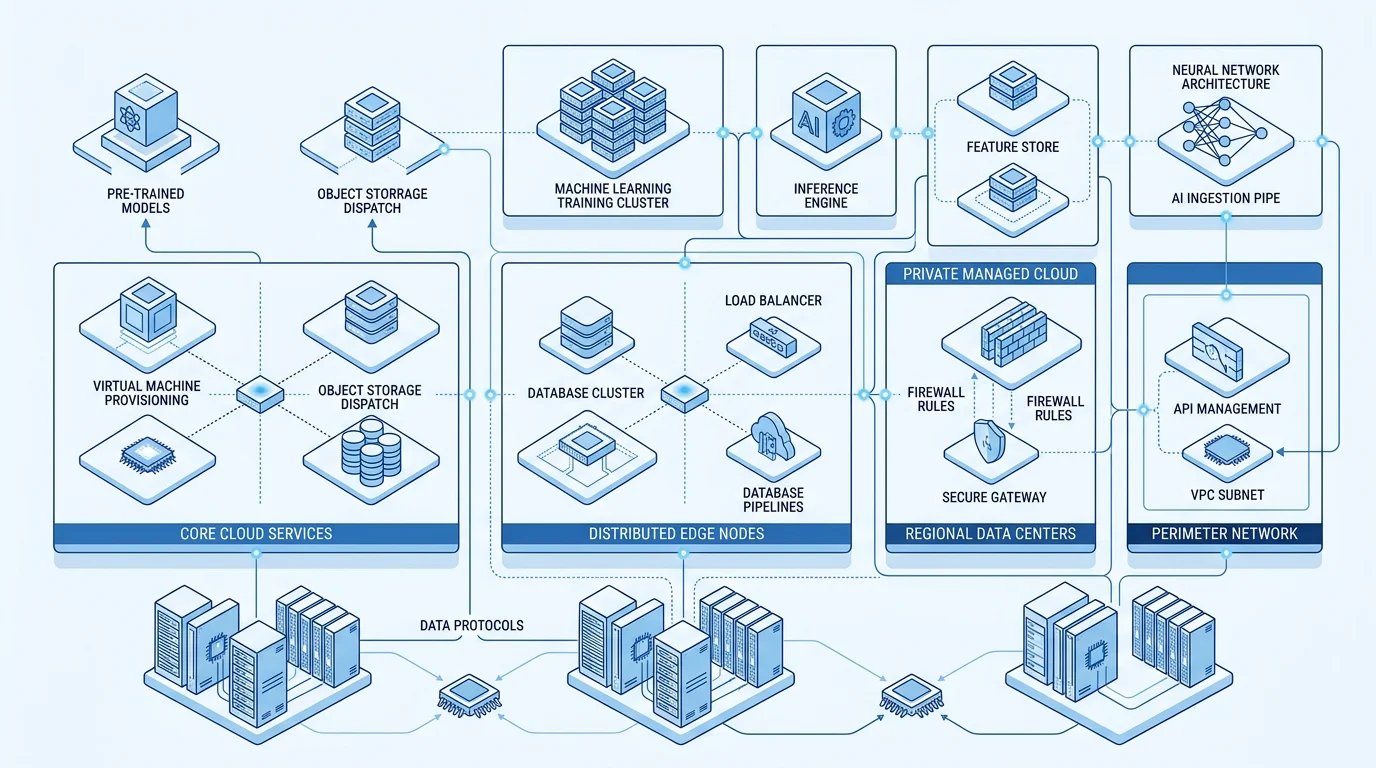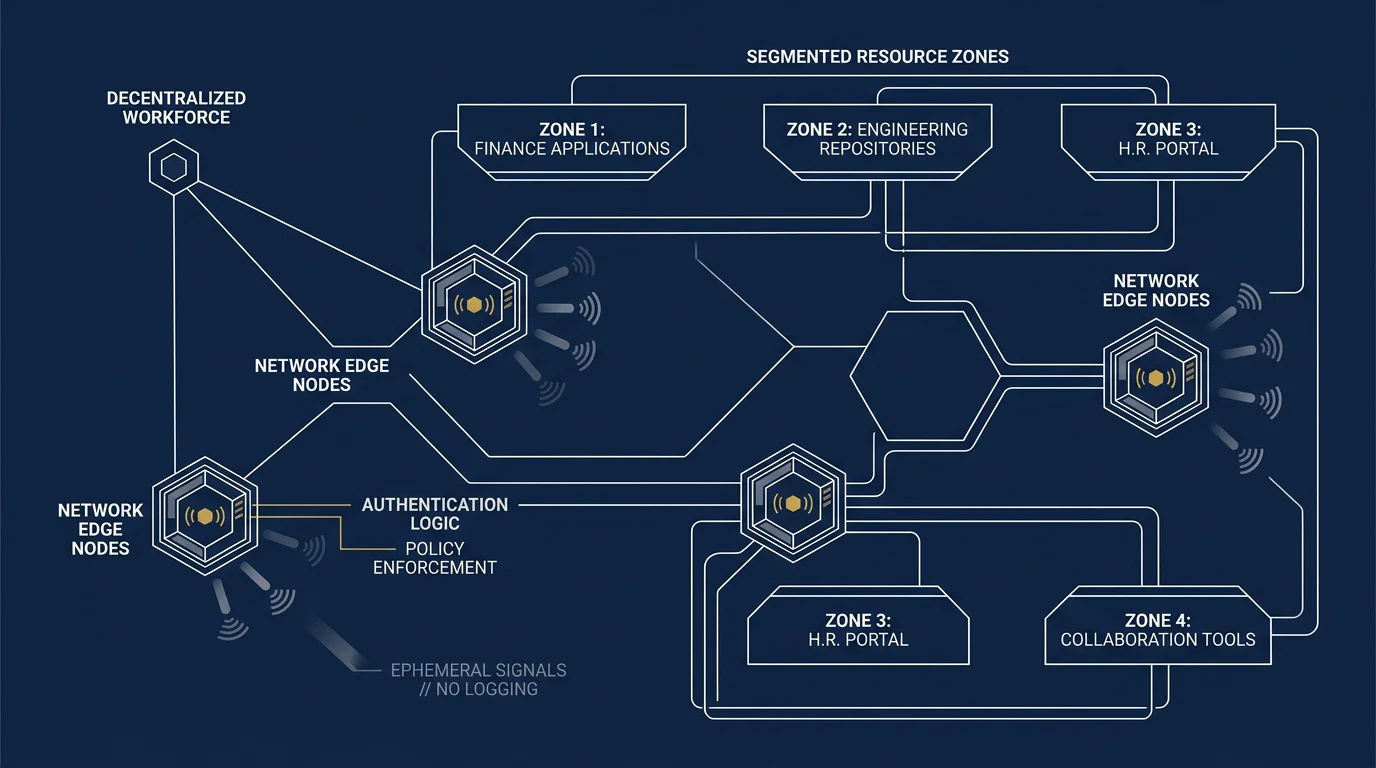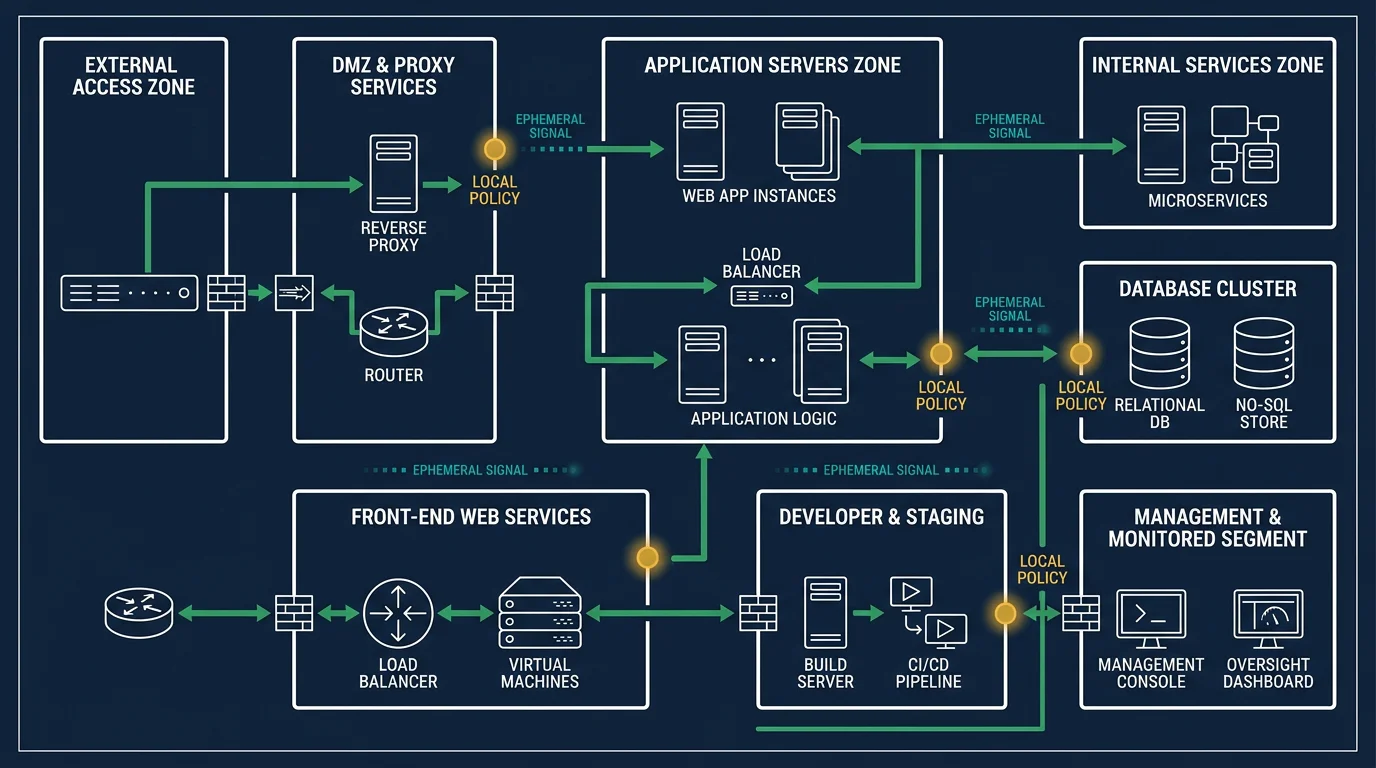

How much of the security posture that enterprises describe as complete actually exists only on paper? Recent industry surveys suggest that 82 percent of organizations view zero-trust network access as essential, yet only 17 percent have fully implemented it. Within that gap sits the practice of dividing a network into isolated zones, a discipline that limits how far an intruder can travel. When you pair it with disciplined containment such as micro-segmentation for zero-trust breach containment, the blast radius of any single compromise shrinks considerably.
That execution gap matters because the financial stakes are measurable. According to a 2026 zero-trust report, organizations that adopted zero trust reduced breach costs by an average of 1.76 million dollars per incident. Yet many of the architectures that deliver these gains quietly accumulate persistent records of who connected, from which device, and at what time. The question worth asking is whether strong isolation truly requires that data trail at all.
Defining segmentation and why it matters
In practical terms, network segmentation is the architectural practice of dividing a larger network into smaller subnets or zones, each governed by its own access policy. Firewalls, switches, routers, and virtual controls sit at the boundaries and decide which traffic may cross. The purpose is not only performance and cleaner monitoring, but containment: if one zone is compromised, the intruder cannot roam freely into the rest of the estate.
The value becomes obvious when you consider how attackers behave once inside. Perimeter defenses assume that everything within the walls is trustworthy, an assumption that repeated breaches have discredited. By breaking the estate into defended sections, you convert a single flat surface into a series of controlled compartments. This directly reduces the attack surface and constrains lateral movement, which is the mechanism attackers rely on to reach high-value assets after an initial foothold.
Segmentation, microsegmentation, and network access control
These three terms are related but distinct, and conflating them leads to muddled architecture. Traditional segmentation operates at the level of subnets and zones, typically enforced through VLANs and access control lists. Microsegmentation takes a far more granular approach, applying policy to individual workloads or applications so that even servers in the same zone cannot communicate freely. The finer the grain, the smaller the space an intruder can occupy.
Network access control, by contrast, governs which devices and users may join the network in the first place. It commonly relies on identity and access management, single sign-on, and device posture checks. The distinction matters because each layer answers a different question: segmentation asks where traffic may travel, microsegmentation asks which workload may speak to which, and access control asks who may enter. If you are rethinking that admission layer, our approach to network access control without surveillance shows how entry decisions can be made without building a permanent record of every actor.
Where conventional deployments create persistent profiles
Consider what a typical zero-trust segmentation stack stores in the course of a working day. Continuous verification generates identity logs. Device posture engines retain hardware fingerprints. Behavioral analytics accumulate telemetry about normal patterns so that anomalies can be flagged. Each of these is defensible on its own, but together they form persistent profiles of people, devices, and behavior that outlive the sessions they describe.
That accumulation is itself a liability. According to an analysis of the 2025 IBM breach data, organizations with ungoverned shadow artificial intelligence in their environments paid roughly 670,000 dollars more per breach on average, a reminder that data which exists can be exposed. The principle is uncomfortable but simple: a segmentation program designed to reduce risk can, through its own telemetry, enlarge the very exposure it was meant to shrink. Data minimization is therefore not a privacy afterthought but a security control in its own right.
A zero data aligned segmentation model
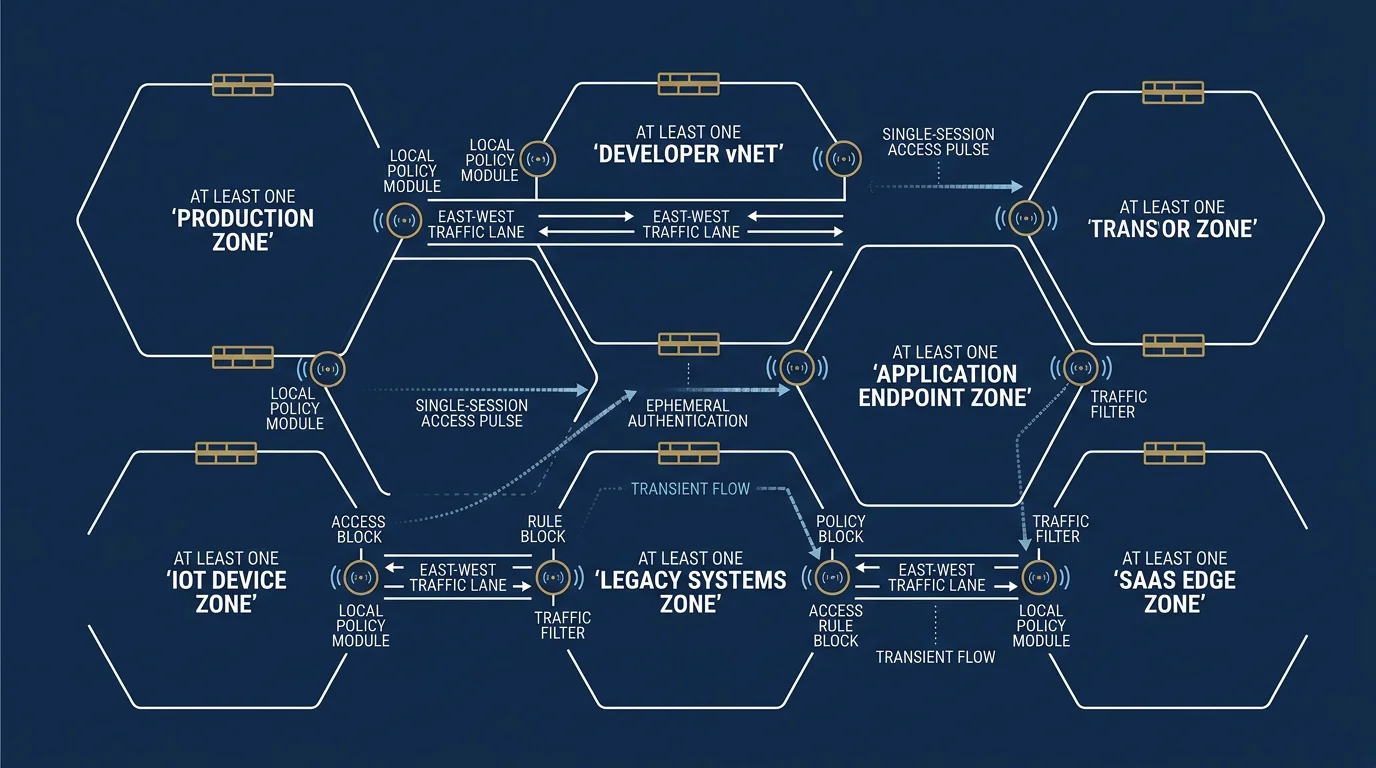
A model aligned with the Zero Data Protocol does not replace segmentation; it reshapes how segmentation authorizes and remembers. The starting point is least privilege enforced through local or ephemeral authorization: access decisions are made at the zone boundary, for the duration of a session, and are not stored as a lasting profile once the session ends. Metadata is kept to the minimum required to make the decision, and nothing is retained for repurposing.
This mirrors the three principles that define the protocol we advocate. Zero Collection means no personal data is gathered by default. Zero Retention means nothing is cached or archived beyond immediate need. Zero Exploitation means that whatever transient signals exist are never analyzed, monetized, or repurposed. The table below contrasts common approaches against this discipline.
| Approach | Persistent identity and telemetry retention | Dependency on stored personal data | Primary containment mechanism |
|---|---|---|---|
| Traditional VLAN segmentation | Moderate, through logs and addressing schemes | Low to moderate | Zone and subnet boundaries |
| Microsegmentation | High, through workload and identity mapping | Moderate | Per-workload policy |
| Identity-centric access control | High, through continuous verification profiles | High | User and device authentication |
| Zero Data Protocol aligned model | Minimal, ephemeral by design | None by default | Least privilege with local, session-bound authorization |
The intention is structural rather than cosmetic. Where most designs assume that identity and telemetry data must exist somewhere, this model treats the absence of that data as a deliberate feature. If you are extending these ideas to machine workloads, our guidance on building an AI-ready network applies the same logic to autonomous agents and model endpoints.
Architecture steps for a lean implementation
Moving from principle to practice requires a disciplined sequence. The following steps keep the data footprint small while preserving strong containment.
- Map your critical assets and traffic flows first, identifying which systems genuinely need to communicate and which do not.
- Define zones around those flows, then apply least privilege so that default communication between zones is denied rather than permitted.
- Enforce authorization locally at each boundary, granting access for the session and discarding the decision context afterward.
- Reduce metadata to the minimum needed for a decision, and set retention windows to zero wherever no operational or legal requirement demands otherwise.
- Instrument monitoring on aggregate, non-identifying signals where possible, so that anomaly detection does not require permanent behavioral profiles.
- Test containment regularly with attack simulations, and adjust policy rather than widening data collection.
The broader context supports this restraint. The zero-trust network access market is projected to grow from 4.84 billion dollars in 2026 to 26.50 billion dollars by 2034, which means the tooling to enforce granular policy without heavy central profiling is maturing quickly.
Practical use cases across the enterprise
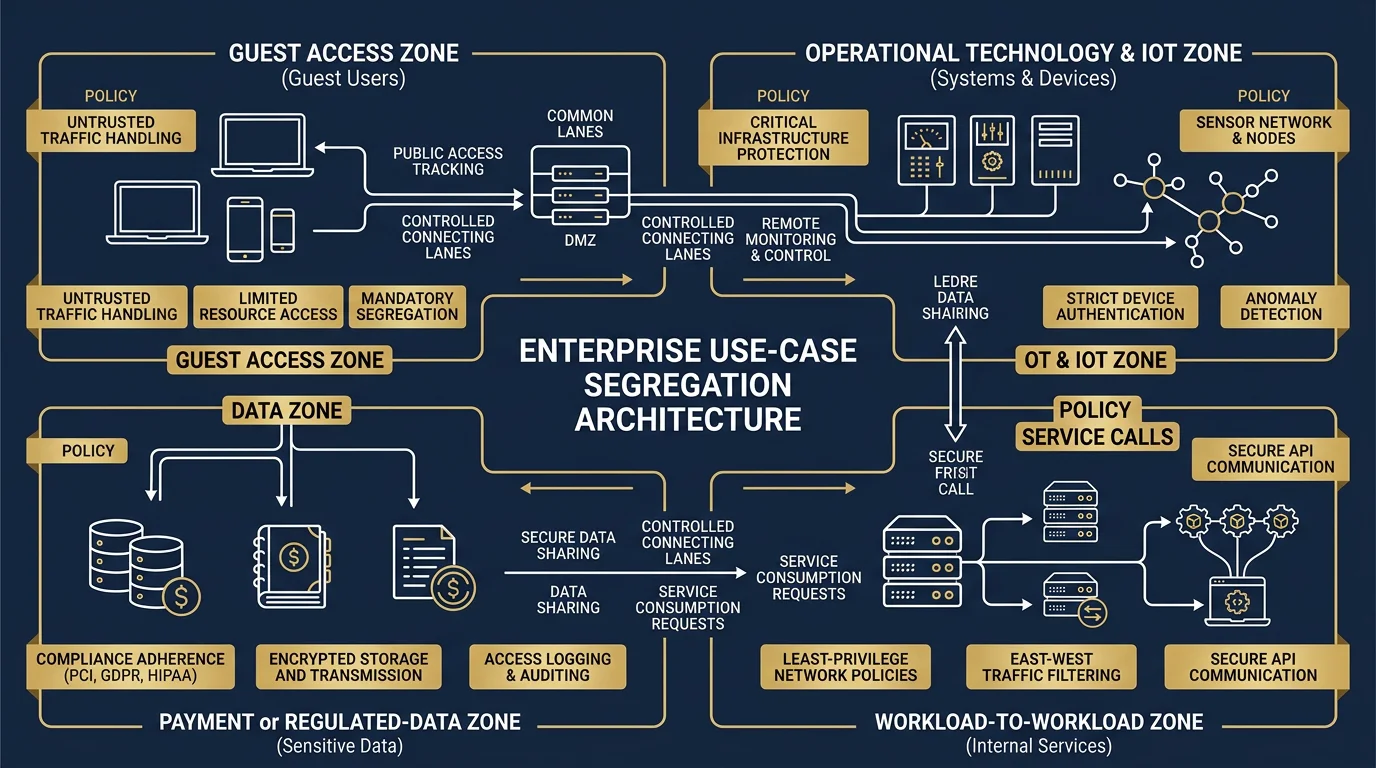
Guest connectivity is the clearest example. A visitor who logs in enters a zone that reaches the internet and nothing else, without the organization needing to build a lasting record of that individual. Regulated environments follow the same pattern: cardholder data or patient records can sit in an isolated zone with strictly minimal traffic permitted, satisfying standards such as PCI DSS while keeping the surrounding telemetry lean.
Operational technology and connected devices benefit similarly. Isolating industrial control systems and sensors from the corporate data network limits the reach of any single compromise, which is precisely the failure mode that segmentation exists to prevent. In each case, the containment value is preserved even as the volume of retained personal data falls toward zero. The design objective is to make lack of data a source of resilience rather than a limitation.
Limitations you should acknowledge
Honesty about scope protects credibility. A zero data aligned model does not replace segmentation, nor is it an established industry standard; it is a design discipline layered onto proven segmentation practice. Some environments carry genuine legal obligations to retain certain records, and those obligations take precedence over minimization. In such cases, the goal is to retain the least that compliance requires, held in the most isolated zone available.
There are also operational trade-offs. Behavioral analytics that depend on long-term profiles may need to be re-engineered around aggregate or ephemeral signals, and this can reduce certain detection capabilities. Adoption maturity remains uneven across the sector, and according to a Gartner 2024 survey, of the 63 percent of organizations that had fully or partially implemented zero trust, 35 percent reported failures that disrupted the rollout. A leaner data posture should therefore be introduced incrementally, not as a single disruptive replacement.
An implementation checklist
Use the following checklist to review an existing or planned segmentation program against a minimal-data standard.
- Have you documented which zones exist and why each boundary is justified by a real traffic flow?
- Is default inter-zone communication denied, with exceptions granted explicitly?
- Are authorization decisions made locally and bound to a session rather than stored as durable profiles?
- Have you set retention to zero for every signal not required by operation or law?
- Do your monitoring tools rely on aggregate signals rather than permanent behavioral records where feasible?
- Have you confirmed that no personal data is collected, cached, or repurposed beyond documented need?
- Do you test containment through simulated attacks at regular intervals?
For teams that want to align these controls with a wider structural approach, our material on zero data architecture for AI without personal data extends the same reasoning across cloud and AI infrastructure.
Bringing it together
Effective segmentation of the enterprise network and disciplined data minimization are not competing priorities; they reinforce one another. Containment limits how far an intruder can travel, and a lean data posture limits what any breach can expose. Begin by mapping flows, deny by default, authorize locally, and retain only what is genuinely required. Treat every persistent identity, device, or telemetry profile as a liability to be justified rather than a default to be assumed. Done well, you gain the resilience of strong isolation without inheriting the exposure that comes from remembering everything.
Take action with Zero Data Protocol
If your segmentation roadmap has quietly become a data-accumulation program, it may be time to reconsider the foundations rather than the tooling alone. The reader need here is clear: strong containment without a growing archive of personal and behavioral records that a future breach could expose.
We designed the Zero Data Protocol structural architecture to remove the assumption that personal data must exist somewhere in your systems. Built on Zero Collection, Zero Retention, and Zero Exploitation, it treats the absence of data as a deliberate design feature, so that lack of a profile becomes a source of resilience rather than a constraint. Explore how a protocol-level approach can complement your existing segmentation discipline.
Frequently Asked Questions
Is network segmentation the same as microsegmentation?
No. Segmentation divides a network into zones or subnets, while microsegmentation applies policy at the level of individual workloads or applications. Microsegmentation is finer-grained and typically layered on top of broader segmentation rather than replacing it.
Does effective segmentation require persistent identity profiles?
Not necessarily. Many deployments accumulate identity, device, and telemetry profiles, but authorization can instead be made locally and bound to a session. This preserves containment while avoiding durable records that outlive the sessions they describe.
Can I reduce retained data without weakening containment?
Yes, in most cases. Containment depends on denying unnecessary traffic and enforcing least privilege, not on storing behavioral history. Where analytics rely on long-term profiles, you can often re-engineer them around aggregate or ephemeral signals.
How does the Zero Data Protocol relate to segmentation?
It is a design discipline, not a replacement for segmentation and not an industry standard. Our approach applies Zero Collection, Zero Retention, and Zero Exploitation so that segmentation authorizes access without building unnecessary personal-data stores.
What are the main limitations of a minimal-data approach?
Some environments face legal retention obligations that take precedence, and certain analytics that depend on long-term profiles may need redesign. The approach should be adopted incrementally alongside proven segmentation practice rather than as a single disruptive change.