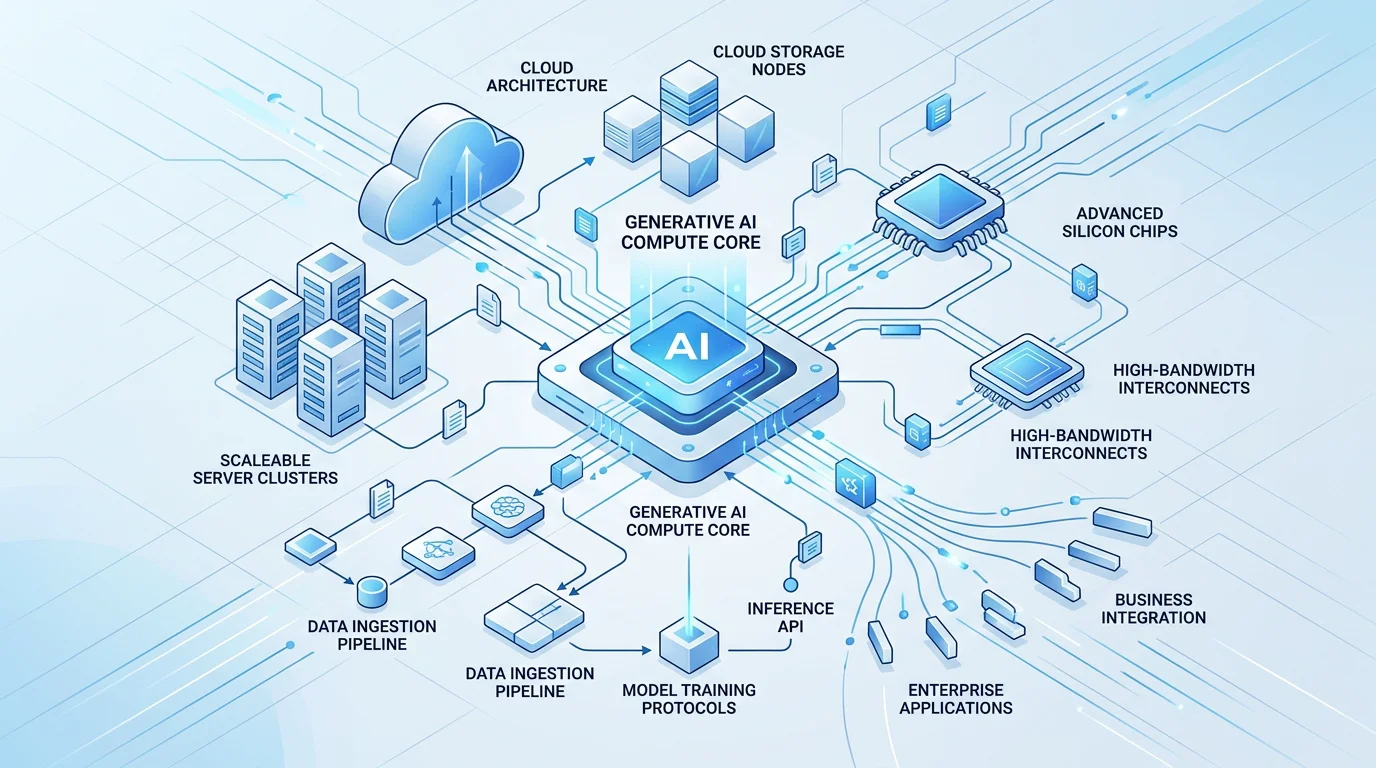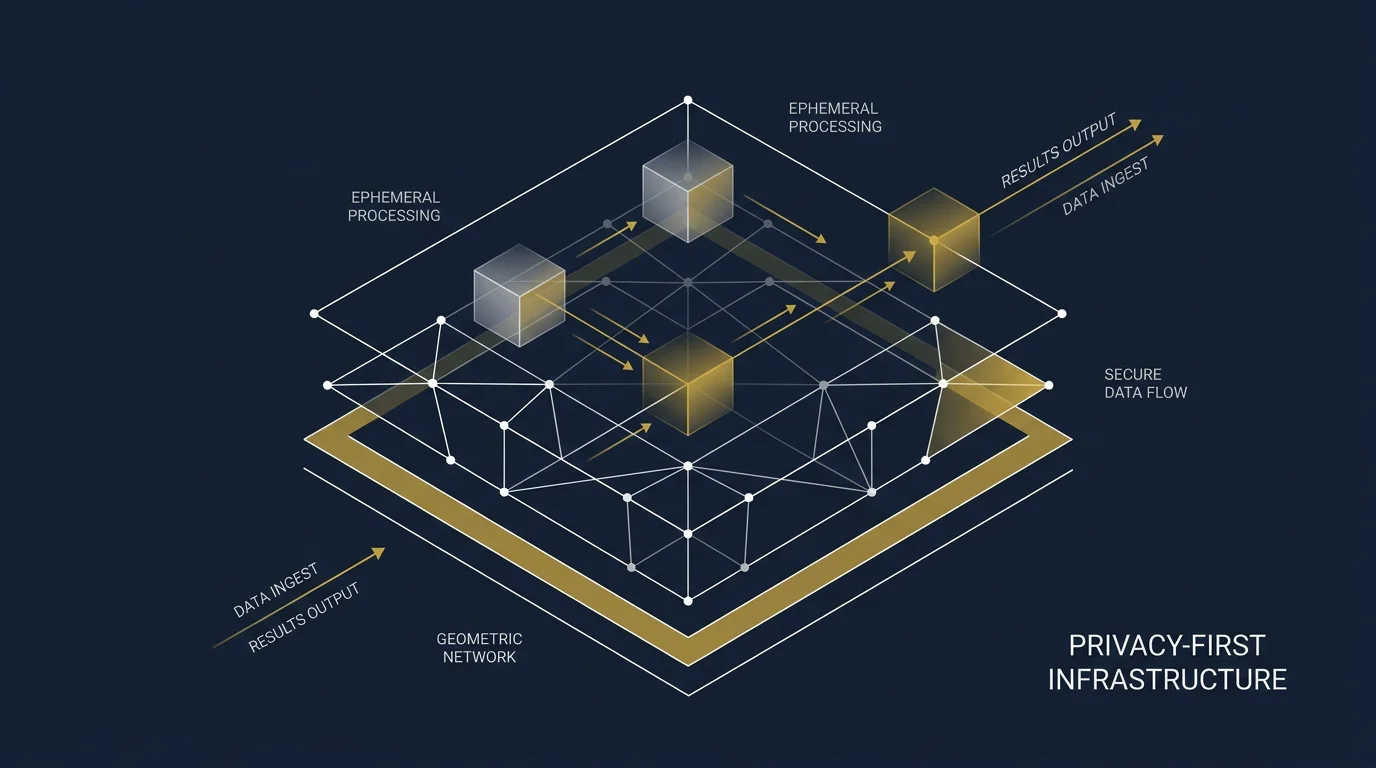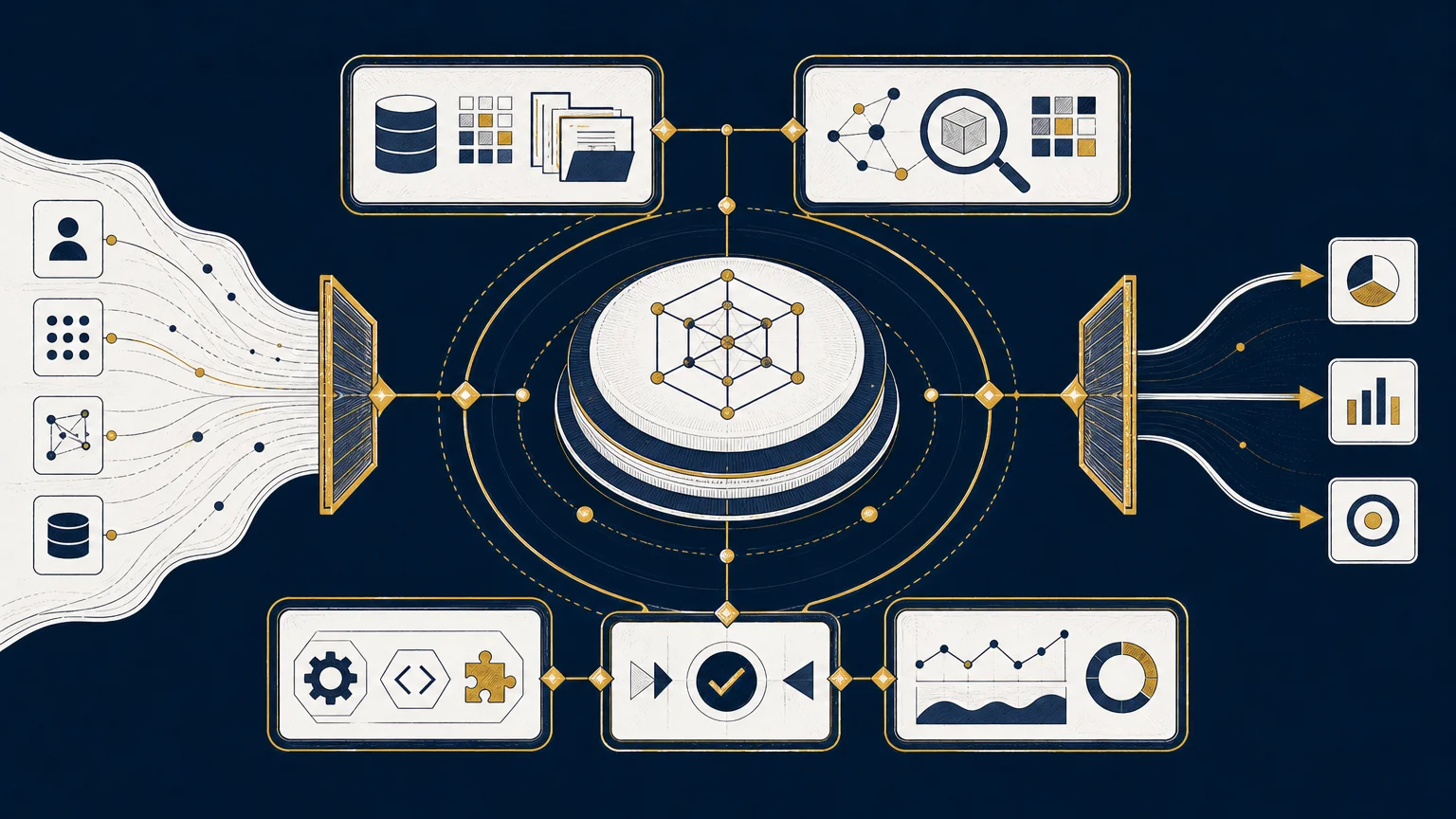

What happens when an LLM receives untrusted content, accesses sensitive systems, and produces an answer that another system treats as an instruction? That question sits at the center of mitigating LLM risks. Our discussion of generative AI security risks starts from the same principle: security depends on architecture, not only on model instructions.
LLM applications create risk across prompts, training data, retrieval systems, plugins, APIs, outputs, memory, and human workflows. In 2026, current research continues to describe these risks as interconnected rather than isolated technical defects. A layered response therefore needs security engineering, privacy controls, governance, testing, and accountable human oversight.
Which LLM risks should security teams address first?
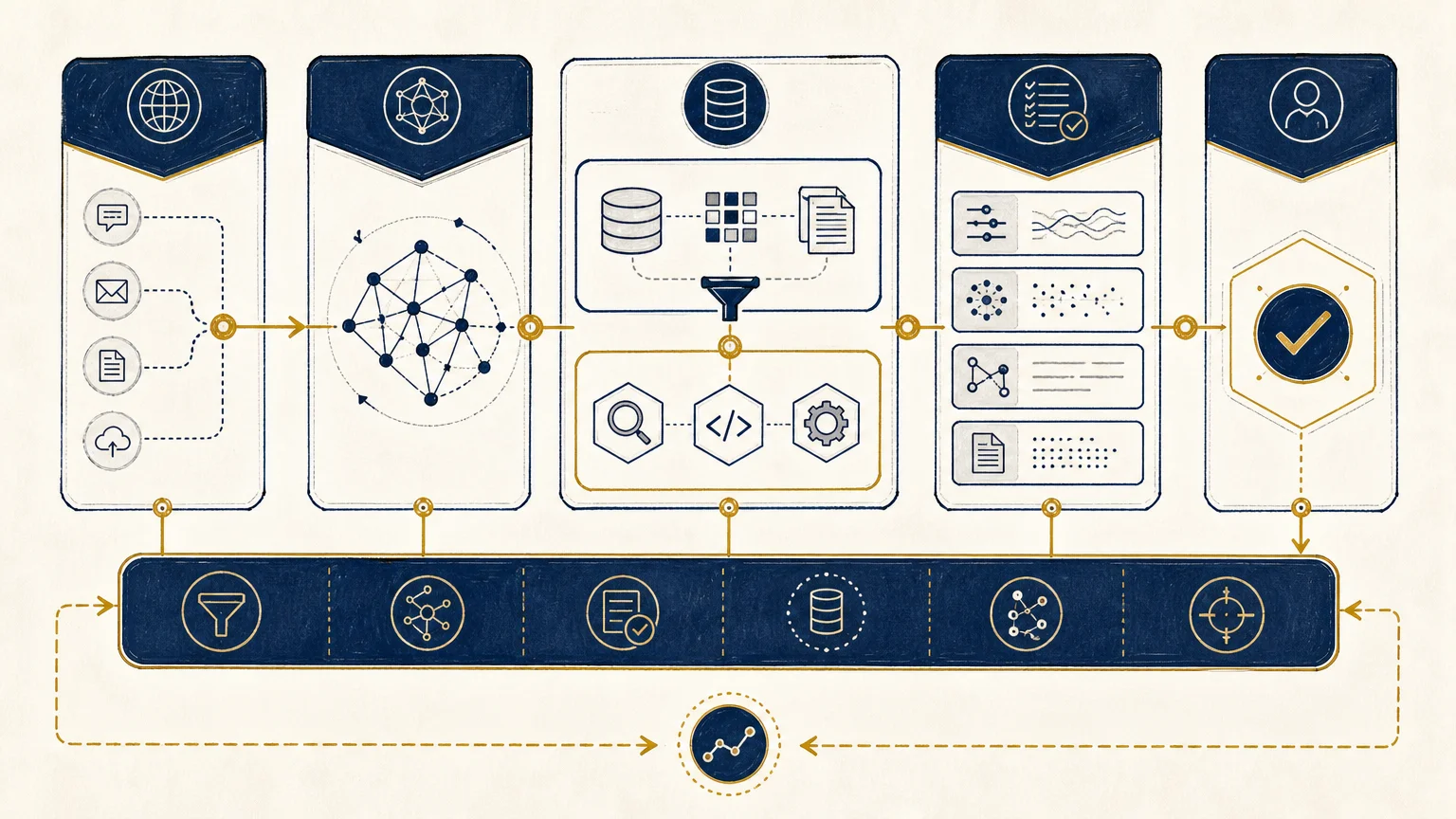
Risk prioritization should begin with the application, not with the model alone. An LLM may be relatively isolated in one deployment and highly exposed in another. The difference usually comes from the data it receives, the systems it can reach, and the actions it can initiate.
The OWASP 2026 guide frames data security as a central concern for generative AI environments. It emphasizes that exposure can arise during collection, training, retrieval, inference, storage, and downstream use. This lifecycle view is useful because a secure model can still operate inside an insecure application.
- Prompt injection manipulates instructions through direct user input or indirect content from websites, files, emails, and databases.
- Sensitive information disclosure occurs when prompts, retrieved records, model outputs, logs, or memories expose confidential information.
- Improper output handling appears when generated text, code, queries, or commands reach downstream systems without validation.
- Data and model poisoning can alter training, fine-tuning, retrieval, or evaluation data.
- Supply-chain risk affects models, datasets, libraries, plugins, APIs, containers, and hosting infrastructure.
- Excessive agency gives an agent more permissions, tools, or autonomy than its task requires.
- Misinformation and overreliance can turn plausible but incorrect output into an operational or business decision.
- Unbounded consumption can create service disruption, uncontrolled cost, or resource exhaustion.
These categories overlap. A malicious document can trigger prompt injection, cause unauthorized retrieval, influence an output, and exploit an over-permissioned tool. Treating each event as a separate problem can therefore leave the full attack path unaddressed.
Why data minimization belongs in LLM security
Security teams often begin by protecting the data that enters an LLM. A stronger question comes earlier: does the data need to enter the system at all?
A 2026 systematic review of real-world LLM threats describes risks across model abuse, sensitive-data exposure, service disruption, dependencies, and connected application components. Its findings support a defense-in-depth approach that combines technical safeguards with lifecycle controls, rather than relying on a single filter or model setting. See the systematic review for the broader threat analysis.
Data minimization reduces the material available for leakage, misuse, inference, and long-term exposure. It can also reduce the consequences of a compromised account, prompt, plugin, or retrieval index. This does not eliminate risk, because even temporary data can remain identifiable and sensitive during processing.
Our framework applies this reasoning through three connected directions:
- Zero Collection asks whether information is functionally necessary before it enters the system.
- Zero Retention asks whether information must persist after the operational task is complete.
- Zero Exploitation asks whether information may be reused for unrelated profiling, advertising, training, or activation.
These principles are not a regulation, certification, product, or guarantee. They are an emerging independent architectural framework for examining how much information a system needs, how long it remains available, and what purposes may follow.
When identity is not required for a task, this approach also supports Human Freedom Choice. The practical consequence is that users retain the freedom not to provide personal information when the service can function without it. This is relevant to anonymous access, consent, tracking, account design, and privacy-by-design decisions.
To examine these questions in greater detail, our analysis of generative AI data privacy risks and controls separates request content, metadata, account information, connected data, derived information, and retention behavior. That separation helps teams avoid treating all data as one undifferentiated category.
How should organizations defend against prompt injection?
Prompt injection is difficult because natural language can carry both information and instructions. A document may look like ordinary business content to a person while containing language that attempts to redirect an AI system.
Direct prompt injection comes from the user. Indirect prompt injection arrives through external material that the model retrieves or processes. In an agentic workflow, indirect attacks can be especially damaging because the model may have access to email, internal documents, APIs, browsers, or business tools.
Separate trust boundaries
System instructions, user requests, retrieved content, tool results, and memory should not be treated as equally authoritative. The application should preserve their source and trust level throughout processing.
Useful controls include:
- Keep system policies outside user-controlled content.
- Mark retrieved material as untrusted data rather than executable instruction.
- Use allowlists for tools, domains, actions, and data sources.
- Require explicit confirmation before irreversible or high-impact actions.
- Prevent retrieved content from silently changing permissions or workflow rules.
- Test direct and indirect injection against the complete application, not only the base model.
Input filtering can help, but it should not be treated as a complete defense. Attackers can vary wording, encoding, language, formatting, and delivery channels. Architectural separation, permission limits, output validation, and monitoring should remain effective even when an input filter misses an attack.
How can organizations protect sensitive information?
Privacy exposure may occur before inference, during retrieval, in model outputs, or after the response enters logs, caches, tickets, analytics systems, and agent memory.
The EDPB report describes privacy risks and mitigation measures across the LLM lifecycle. Its defense-in-depth perspective is important because encryption and access controls do not address unnecessary collection or unrelated reuse by themselves.
A practical privacy control set begins with a data-flow inventory. Document what users submit, what metadata is created, where the request travels, which providers receive it, what retrieval systems are queried, and which records persist afterward.
Then apply controls at each stage:
- Before inference: remove unnecessary fields, mask direct identifiers, and block sensitive categories that the task does not require.
- During inference: enforce tenant separation, restrict provider routing, and prevent unauthorized access to prompts or retrieved records.
- After inference: validate outputs, control logging, limit memory, and define deletion behavior for normal and exceptional paths.
- During secondary use: prohibit unrelated profiling, advertising, training, or activation unless a distinct and legitimate purpose exists.
Retention requires particular care. “Not used for training” does not necessarily mean “not stored.” Account records, billing data, security logs, configuration, backups, queues, caches, and connected source data may still exist.
Our architectural view therefore distinguishes temporary task context, session memory, persistent memory, and derived memory. Each category creates a different future exposure. A summary, classification, embedding, report, or decision can remain sensitive even when the original request is deleted.
What controls reduce unsafe output and tool misuse?
An LLM response becomes a security issue when another component trusts it too much. The danger increases when output is converted into SQL, HTML, code, API parameters, file operations, or administrative actions.
Output handling should follow the same principle as any other untrusted interface. Treat generated content as data until a separate control validates its type, structure, destination, and authorization.
- Use structured output formats with strict schemas.
- Parameterize database queries rather than executing generated strings.
- Escape or sanitize generated HTML and markup.
- Reject unexpected commands, URLs, file paths, and permission changes.
- Run generated code inside a restricted sandbox when execution is necessary.
- Verify that the requesting user is authorized for the proposed action.
- Require human approval for financial, legal, medical, destructive, or external-facing actions.
Validation should occur before the output reaches the next system. A final user interface filter cannot reliably protect a database, browser, workflow engine, or internal API that processes the response earlier.
Human review should be risk-based. Requiring approval for every low-impact response can create fatigue and encourage workarounds. Removing review from irreversible or high-impact actions can create unacceptable consequences. The control should match the action’s sensitivity, reversibility, and potential blast radius.
How should teams manage models, plugins, and suppliers?
LLM applications are assembled from more than a model. They may include training and fine-tuning data, embedding models, vector stores, orchestration libraries, plugins, APIs, containers, hosting services, and monitoring tools.
A 2026 survey of LLM safety research identifies attacks, defenses, alignment methods, metrics, and guardrails as connected areas of evaluation. The 2026 safety survey also reinforces the need to assess security and reliability across the system rather than at the model boundary alone.
Supply-chain controls should cover provenance, integrity, maintenance, permissions, and change management. Teams should know which components are present, who maintains them, what data they access, and how updates are approved.
Recommended practices include:
- Maintain an inventory of models, datasets, plugins, APIs, tools, and embedded AI features.
- Record model versions, hashes, sources, licenses, intended uses, and known limitations.
- Review dependencies for vulnerabilities, abandoned maintenance, and excessive permissions.
- Verify downloaded models and packages before loading or executing them.
- Use signed artifacts and controlled repositories where practical.
- Test updates in a staging environment before production deployment.
- Include data handling, breach notification, deletion, logging, and subcontractor terms in supplier reviews.
Our guidance on AI supply chain risk mitigation treats downstream providers, connected systems, metadata, and derived information as part of the security boundary. This is useful when a vendor’s public model policy does not explain every component involved in the operational data path.
Third-party risk also includes embedded AI capabilities inside ordinary business software. A procurement review should ask whether a product sends prompts to an external provider, retains inputs, creates persistent memory, uses customer data for unrelated purposes, or permits administrators to change routing without notice.
How do least privilege and human oversight limit excessive agency?
Agency changes the risk calculation. A chatbot that drafts an answer has a limited blast radius. An agent that can read documents, send messages, modify records, and call external services has a much wider one.
Least privilege should apply to the model, the user, each tool, each credential, and each data source. The agent should receive only the permissions required for the current task, with short-lived credentials where feasible.
- Separate read, write, delete, send, and administrative permissions.
- Use narrowly scoped tools instead of broad multifunctional plugins.
- Restrict access by tenant, role, data classification, and workflow stage.
- Place irreversible actions behind confirmation or approval gates.
- Set transaction, token, time, and request limits.
- Record tool calls, arguments, results, identities, and approval decisions.
Least privilege is stronger when paired with least data. Limiting what an agent can reach does not solve the problem if unnecessary sensitive information is already present in its context, memory, logs, or retrieval index.
Our discussion of third-party AI risk management can help teams assess vendors and external AI components without assuming that a supplier’s stated controls cover every connected system or downstream purpose.
How can teams test reliability, monitoring, and incident response?
Testing should begin before deployment and continue after release. LLM behavior can change when prompts, retrieval sources, model versions, tools, users, or surrounding workflows change.
A 2026 review of LLM security and privacy research identifies ongoing challenges in evaluation, data protection, model updates, and governance. This supports a continuous program rather than a one-time launch assessment.
Pre-deployment testing
Test the complete application with realistic data paths and adversarial scenarios. Include prompt injection, sensitive-data extraction, unsafe output execution, excessive permissions, denial-of-service behavior, retrieval poisoning, and misleading responses.
Testing should include normal users, privileged users, external users, compromised accounts, malicious documents, malformed inputs, long contexts, repeated requests, and provider failures. Evaluate both the model response and the application’s next action.
Production monitoring
Monitor events that reveal security or reliability changes. Useful signals include unusual retrieval patterns, repeated extraction attempts, unexpected tool calls, sensitive-data detections, policy violations, cost spikes, latency changes, failed approvals, and abnormal access sequences.
Logging must be balanced against privacy. Do not collect full prompts and outputs by default when a smaller event record can support detection and investigation. Define retention periods, access rules, redaction practices, and deletion procedures before production use.
Incident response
Prepare a response plan for prompt injection, data leakage, unauthorized tool use, compromised dependencies, model poisoning, harmful outputs, and service exhaustion. The plan should define who can disable a tool, revoke credentials, isolate a workflow, preserve evidence, notify affected parties, and restore service.
Residual risk should be documented rather than hidden. No filter, memory policy, retention control, or framework can guarantee safe behavior under every condition. The objective is to reduce likelihood and impact while making failures easier to detect, contain, explain, and correct.
What does a practical LLM risk program look like?
A workable program connects technical controls to clear ownership. Security teams can use the following sequence as a starting point:
- Define the use case: document the intended purpose, users, data, tools, outputs, and prohibited actions.
- Map the data lifecycle: identify collection, routing, processing, retrieval, memory, logging, retention, deletion, and secondary use.
- Classify the risk: consider sensitivity, autonomy, reversibility, external exposure, and potential harm.
- Apply layered controls: combine minimization, access control, validation, sandboxing, approval, monitoring, and incident response.
- Test the full workflow: include adversarial inputs, indirect content, supplier changes, failures, and misuse scenarios.
- Measure continuously: track security events, policy violations, output quality, data exposure, and operational anomalies.
- Review residual risk: update controls when the model, data, provider, user population, or business purpose changes.
This approach keeps LLM security connected to privacy and architecture. It also avoids a common failure mode, where an organization protects the model but ignores prompts, logs, tools, connected databases, vendor routing, or derived information.
Building a resilient approach to LLM risk
Mitigating LLM risks is a continuing engineering and governance responsibility. Organizations should combine trusted data flows, strict permissions, output validation, adversarial testing, monitoring, and accountable human decisions. They should also minimize the information that enters the system, limit persistence, and reject unrelated reuse wherever those controls are functionally possible.
Residual risk remains because LLM applications are probabilistic, connected, and constantly changing. A resilient program therefore measures what happens in practice, prepares for failure, and improves controls when new models, tools, providers, or workflows are introduced.
Take action with Zero Data Protocol
If your organization is reviewing an LLM or agent deployment, you need more than a model policy. You need a clear view of what information enters the system, what persists, which systems are connected, and how outputs may be reused.
Zero Data Protocol provides independent architectural guidance centered on Zero Collection, Zero Retention, Zero Exploitation, and Human Freedom Choice. Explore our AI agent security guidance to examine memory, permissions, connected systems, data lifecycles, and externally enforced controls without treating any single measure as a universal solution.
Frequently Asked Questions
What is the first step in mitigating LLM risks?
Start by defining the complete use case, including data, users, tools, outputs, permissions, and prohibited actions. This creates the context needed to select proportionate controls.
Can prompt filtering prevent prompt injection?
Filtering can reduce some attacks, but it cannot provide complete protection. Stronger defense combines trust-boundary separation, least privilege, output validation, tool restrictions, monitoring, and human approval for sensitive actions.
Does zero retention mean that no data exists?
No. Account, billing, configuration, security, metadata, backup, queue, cache, and connected-system records may still persist. Retention controls must define exactly which information is covered and for how long.
How should organizations manage LLM vendor risk?
Review data routing, retention, training use, subprocessors, model updates, security controls, incident notification, deletion behavior, and access boundaries. Include embedded AI features and downstream providers in the same review.
How can Zero Data Protocol support LLM security work?
Zero Data Protocol provides an independent architectural framework for examining collection, retention, secondary use, identity dependency, agent memory, and connected-system exposure. It complements technical controls but is not a regulation, certification, product, or guarantee.