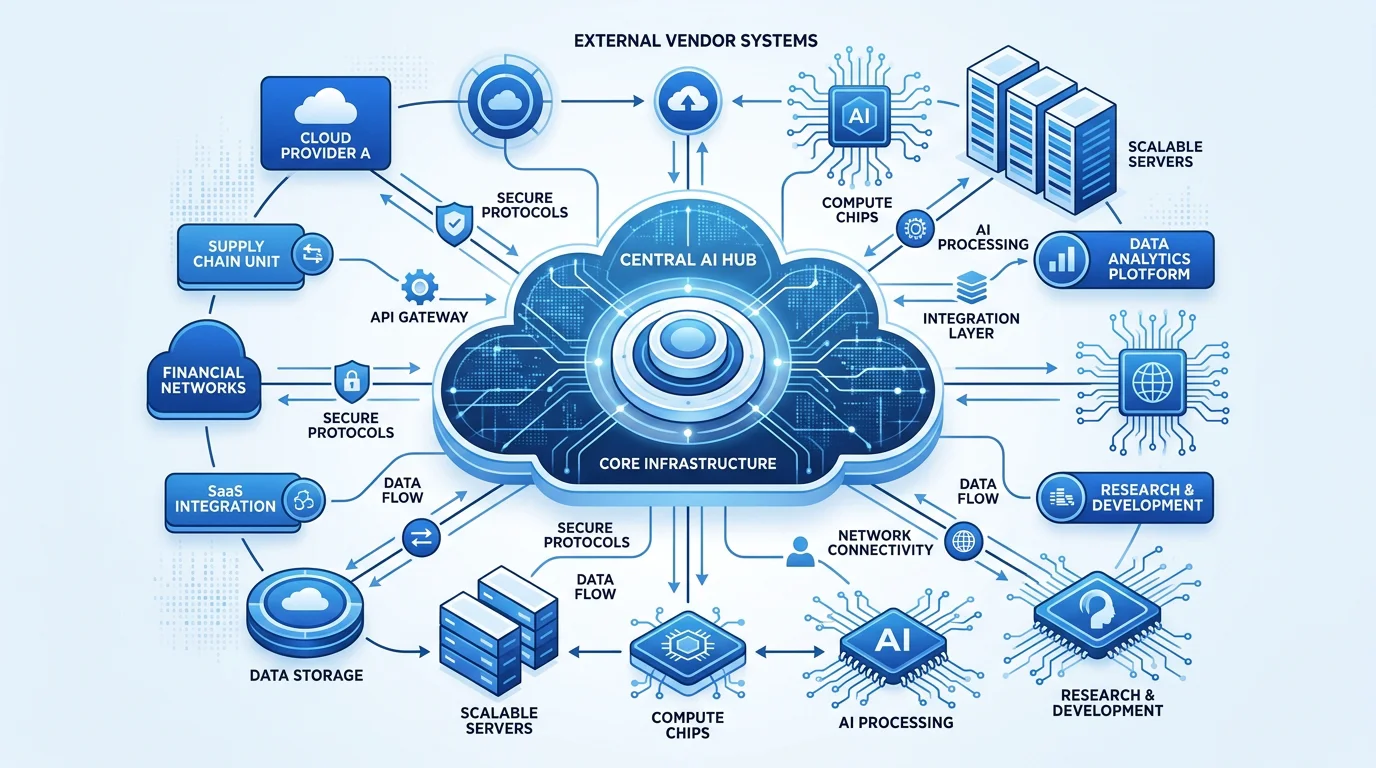

Vendor and partner ecosystems are now treated as a default entry point for attackers rather than a rare exception. Every model you fine-tune, every dataset you ingest and every library you install extends the surface an adversary can reach. Managing the security risks of the AI supply chain has become a board-level concern, and the pressure is not slowing. For a structured view of the vendor dimension, our guide to Third-Party AI Risk: A 2026 Guide for Enterprise Security examines how external dependencies reshape enterprise defence.
The stakes are considerable. According to Grand View Research, , up from $6.5 billion in 2022. As adoption scales, so does the number of components that must be trusted, verified and monitored across the entire lifecycle.
What turns an AI system into a supply chain liability
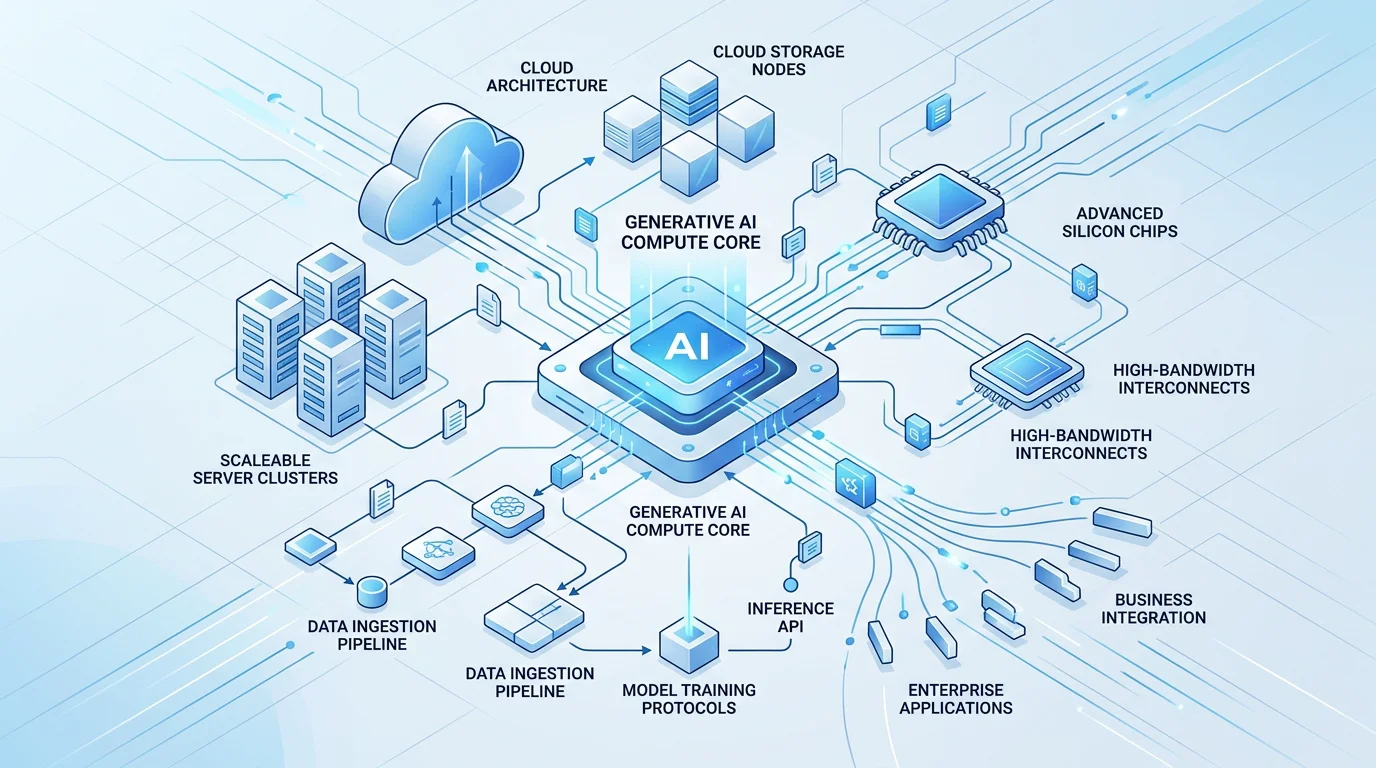
An AI system is rarely built from scratch. It is assembled from pretrained models, public datasets, package registries, cloud APIs and managed services. Each of these introduces an AI supply chain risk that is inherited rather than created in-house. When a component is compromised upstream, the weakness flows silently into your production environment.
This inherited exposure is what distinguishes AI systems from traditional software. A poisoned dataset can bias outputs for months before detection. A tampered model weight can embed hidden behaviour that no functional test reveals. The model supply chain demands continuous validation because implicit trust in external artefacts is no longer defensible.
Where the threats concentrate in 2026
The most active attack paths cluster around open-source dependencies and development tooling. The fourth annual ReversingLabs report documents malware on open-source platforms rising 73%, alongside attacks that target developer infrastructure and efforts to infiltrate AI development pipelines.
New categories are emerging quickly. Security researchers now track model poisoning, backdoor attacks against AI coding assistants and "slopsquatting", where attackers register package names that AI assistants reliably hallucinate. These are no longer hypothetical scenarios.
Autonomous agents widen the attack surface further, because they act on data and invoke tools with limited human review. If you are designing systems where models take actions independently, our resource on AI Agent Security addresses the specific exposure introduced by agentic behaviour.
The cost of underestimating the exposure
Financial consequences compound quickly when an AI dependency fails. Referencing the IBM Cost of a Data Breach Report, enterprises faced an average breach cost of $4.88 million in 2024, the highest recorded. AI-related incidents add a further dimension, because compromised models can degrade decisions long before anyone notices.
Human behaviour amplifies the problem. Cyberhaven reported that 11% of the data employees pasted into ChatGPT was confidential, exposing trade secrets, personal information and internal intellectual property. Understanding these exposure patterns is central to our overview of Generative AI Security Risks: An Enterprise Guide 2026.
Why cybersecurity became a major supply-chain concern
The shift in priorities is measurable. The Lehigh Business Supply Chain Risk Management Index ranked cybersecurity as the top risk on supply chain managers' minds for five consecutive quarters, with technology risk climbing to second place as concern about generative AI intensified.
Managers describe apprehension about cyber-attacks, data corruption and how generative AI might increase organisational vulnerability. This is not abstract anxiety. It reflects a recognition that digital dependency and data retention create liabilities that traditional operational planning did not anticipate.
The supply chain professionals are apprehensive of how generative AI might increase their companies' vulnerability, according to the index's director.
Reducing exposure through data minimisation
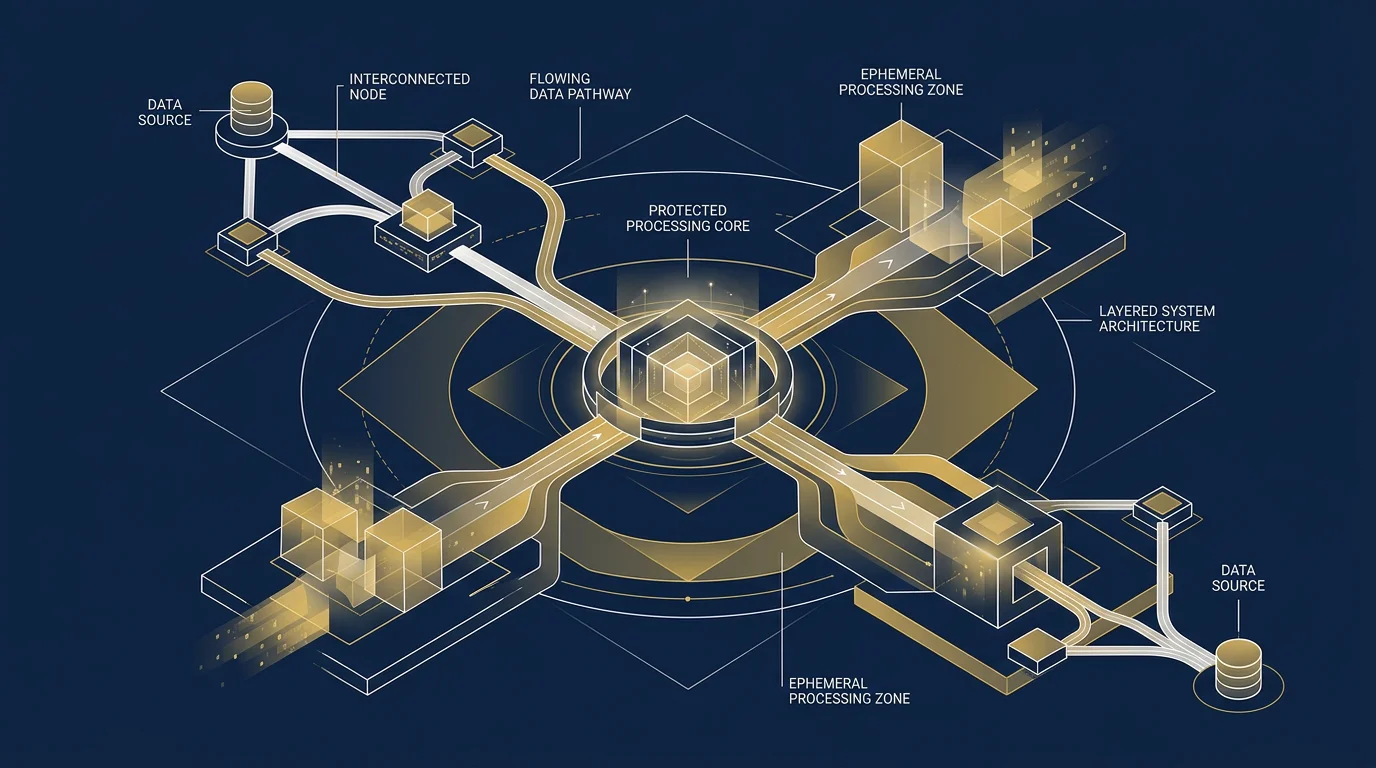
Much of the residual risk in AI systems is proportional to how much personal data those systems collect, retain and exploit. If a component does not collect or retain sensitive data unnecessarily, the opportunities for later exposure are reduced. This is the structural logic behind the Zero Data Protocol, an emerging independent framework built on three principles: Zero Collection, Zero Retention and Zero Exploitation.
The framework connects privacy, cybersecurity, AI governance and system design into one direction: collect less, retain less, exploit less. Its human consequence is Human Freedom Choice. When identity or personal data is not functionally necessary, users should remain free not to provide it. We do not present this as a certification, a guarantee or a universal solution. Rather, it is an architectural stance that shrinks the future target surface.
The following comparison illustrates how a minimisation posture changes the exposure profile compared with common approaches.
Approach | Data held | Exposure if compromised | Residual risk |
Collect-by-default | Extensive | High | High |
Consent-based retention | Moderate | Moderate | Moderate |
Reduced where function allows | Minimal or none | Reduced | Lower, though never zero |
Practical steps to strengthen resilience
No single control eliminates the risk, so defence must be layered. The following measures reduce the probability and the impact of a compromise across the AI lifecycle:
Maintain a software bill of materials for models, datasets and dependencies, and validate provenance continuously.
Treat every external artefact as untrusted until verified, shifting from implicit trust to continuous validation.
Restrict what data enters models, and avoid retaining personal data that serves no functional purpose.
Monitor internet-exposed transfer and integration points, which remain frequent targets.
Govern autonomous agents with least-privilege access and human oversight for consequential actions.
These practices lower exposure, but residual risk remains. The goal is resilience and rapid recovery, not the illusion of complete security.
Bringing it together
Managing the security risks embedded in the AI supply chain is now a continuous discipline rather than a one-time review. The dominant threats in 2026 arrive through inherited components: poisoned dependencies, tampered models and compromised third parties. You reduce exposure by validating provenance, restricting what enters your systems and retaining as little personal data as the function truly requires. None of these measures guarantees safety, yet together they meaningfully narrow the surface an attacker can exploit and shorten the path to recovery when incidents occur.
Take action with Zero Data Protocol
If your teams are designing AI systems that depend on external models, datasets and vendors, the amount of personal data you hold directly shapes your exposure. Addressing that dependency at the architectural level is where durable resilience begins.
We built Zero Data Protocol as a structural approach to designing systems that collect, retain and exploit less personal data, or only when necessary. It connects privacy, cybersecurity, AI governance and system design into one direction. Explore the Zero Data Protocol framework to understand how minimising personal-data dependency reduces liability and strengthens digital trust through architecture rather than promises.
Frequently Asked Questions
What is an AI supply chain risk?
It is any threat that reaches your organisation through the external components an AI system depends on. These include pretrained models, public datasets, open-source packages, cloud APIs and third-party vendors. A weakness introduced upstream is inherited by every system that relies on it.
What are the most common AI supply chain attacks in 2026?
The most active paths include poisoned open-source dependencies, model poisoning and backdoors in AI coding assistants. Slopsquatting, where attackers register package names that AI tools hallucinate, is an emerging class. Compromised third-party vendors remain a frequent initial-access route.
How does data minimisation reduce AI supply chain risk?
Data that is never collected removes one category of exposure, while avoiding unnecessary retention reduces the window during which stored data can later be compromised. Our approach through Zero Data Protocol applies Zero Collection, Zero Retention and Zero Exploitation to shrink the target surface. This lowers exposure, though it does not remove risk entirely.
Does a software bill of materials help with AI systems?
Yes, extending provenance tracking to models, datasets and dependencies improves visibility into what you actually trust. It supports continuous validation rather than implicit trust. It also aligns with tightening transparency expectations across procurement.
Can AI supply chain risk ever be fully eliminated?
No responsible approach promises zero risk. Layered controls, provenance validation and data minimisation reduce both probability and impact, but residual exposure always remains. The realistic objective is resilience and fast recovery rather than guaranteed security.