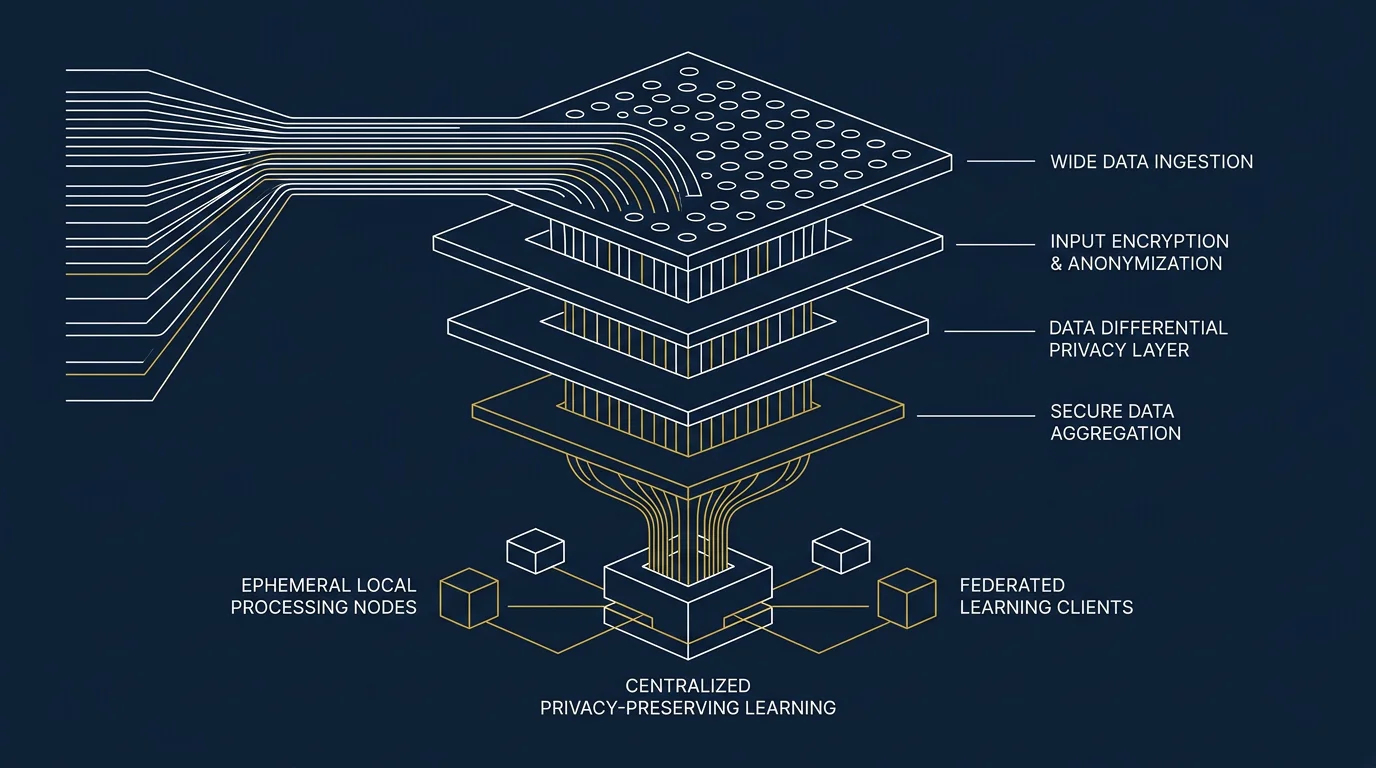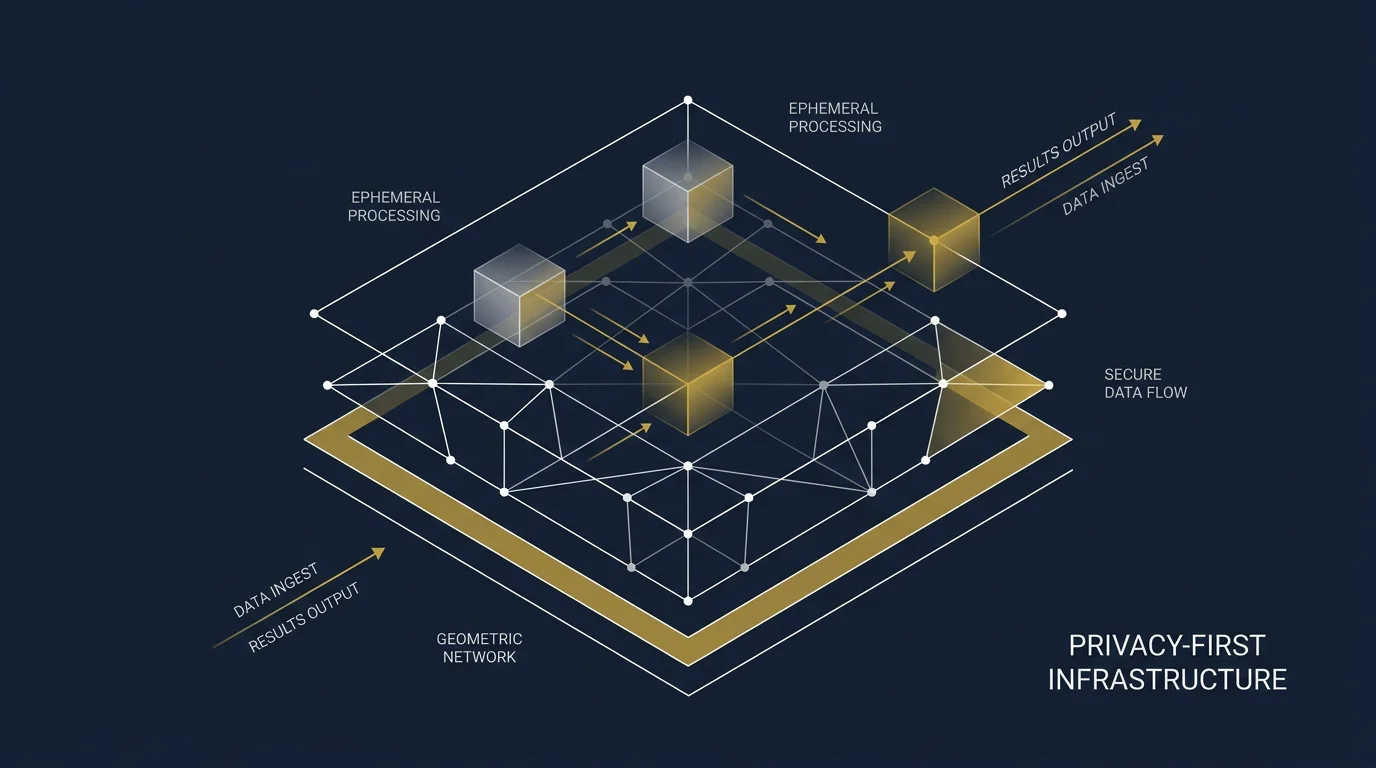

Most enterprises now feed sensitive information into systems they do not fully control, and traditional security tooling was never designed to contain that flow. The practical question is no longer whether to adopt these tools, but how much personal data you must actually hold to run them. In our analysis of data minimization to reduce generative AI data exposure, we argue that reducing unnecessary collection and persistent retention is one of the most durable ways to reduce future exposure. The privacy challenges of generative AI have become a governance priority rather than a compliance footnote.
The scale of the shift is visible in adoption data. According to the 2026 Microsoft Data Security Index, 82% of organizations have developed plans to embed generative AI into their data security operations, up from 64% the previous year. As dependence grows, so does the surface where personal information can leak, drift or be repurposed.
Why generative AI has redrawn the privacy map
Earlier privacy debates focused on databases with clear boundaries. Generative models dissolve those boundaries, which is what makes generative ai data privacy a distinct problem. A model learns statistical patterns from vast, often opaque training sets, then produces new content that can reflect what it absorbed.
Three shifts define the new terrain. First, unintentional exposure: a model may reproduce fragments of personal data it was trained on. Second, purpose drift: information gathered for one reason is reused to train or fine-tune systems. Third, persistent influence: once personal data has influenced a trained model or derived artefacts, tracing or removing its effects can become difficult, which complicates deletion requests within regulated timeframes.
These properties do not make the technology unsafe by default. They do mean that privacy has to be designed in early, because retrofitting protection onto a trained model is far harder than limiting what enters it.
The core privacy risks you inherit with every model
Consider a support chatbot fine-tuned on real ticket history. It becomes useful precisely because it has seen sensitive detail, and that same exposure creates risk. Several distinct hazards deserve attention.
Data leakage and memorization occur when a model repeats sensitive strings it should have generalized away. Inference and profiling arise when a system connects unrelated data points to reveal something a person never disclosed. Unauthorized training use follows when data collected without a lawful basis for that purpose ends up shaping a model.
The risk is measurable rather than theoretical. Replace the secondary Gartner citation with a direct Gartner source if publicly accessible, or remove the statistic if no primary source can be cited reliably. To help teams recognize these failure modes early, we maintain a review of the generative AI privacy pitfalls to avoid in your enterprise, from oversharing in conversational interfaces to weak vendor terms.
Shadow AI and the retention problem
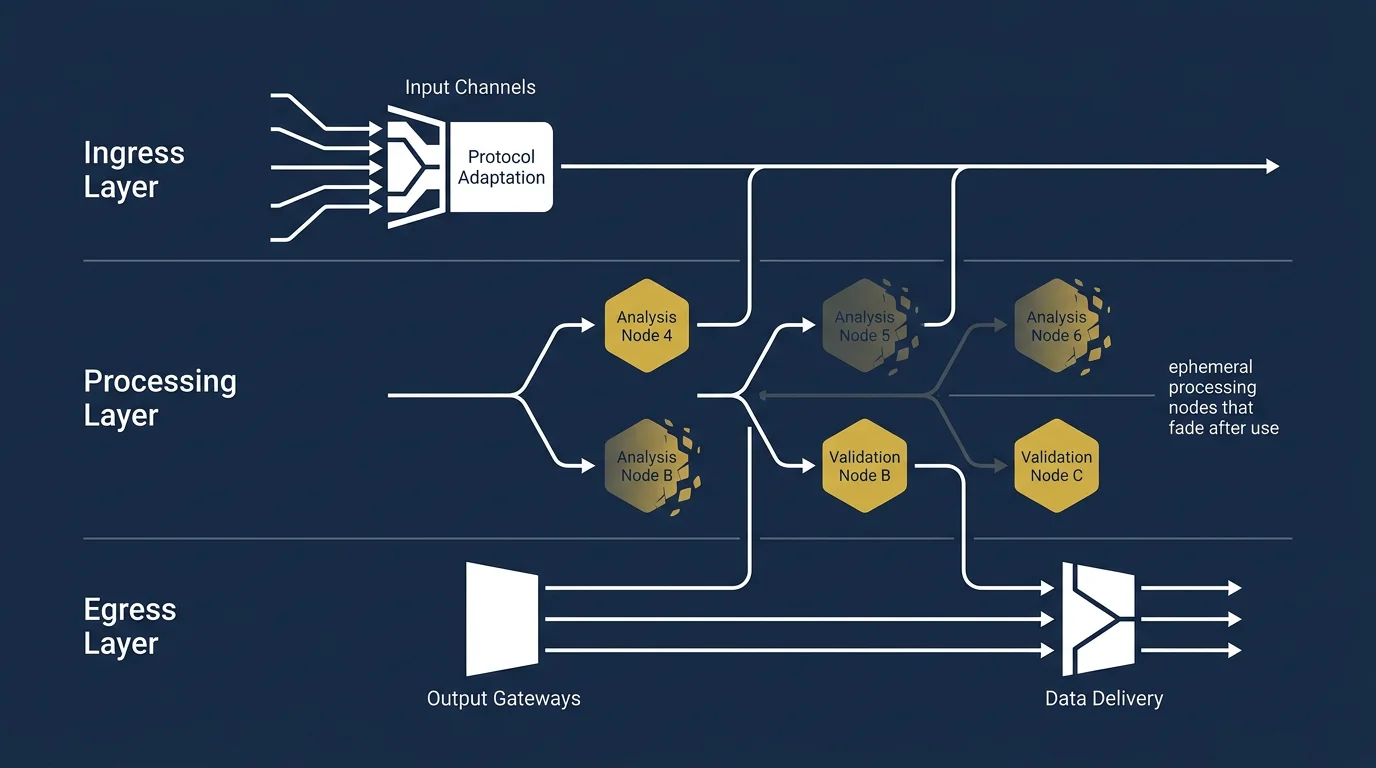
Employees frequently adopt tools faster than governance teams can approve them, creating unmonitored data paths often called shadow AI. The exposure compounds when the underlying vendors are themselves opaque about their own supply chains.
Research illustrates the gap. In the DataGrail Privacy and AI Trends Report 2026, 63.6% of AI-powered vendors did not disclose third-party AI subprocessors in their legal documentation, and 32.8% of AI systems participated in at least one high-risk activity such as sensitive data processing or automated decision-making. You cannot govern data flows you cannot see.
Retention magnifies every one of these problems. Data retained without clear necessity can become a future breach target and increase legal, operational and governance exposure. Defining how long information is held, and when it is destroyed, is foundational; our data retention and deletion policy for privacy sets out how to align retention windows with genuine functional need rather than habit.
Regulation is tightening, but accountability starts earlier
Legal frameworks are converging on the same expectations: lawful basis, data minimization, transparency and meaningful control. Under the GDPR, individuals hold the right not to be subject to decisions based solely on automated processing, including profiling, where those decisions carry legal or similarly significant effects. Comparable profiling opt-outs appear in several United States state laws, subject to the conditions and exceptions provided by Article 22 GDPR.
The EU AI Act adds a tiered, risk-based classification that imposes stricter transparency and oversight duties on high-risk applications. Yet compliance obligations rarely map neatly onto how a model was actually trained, so accountability has to begin at the design stage. Documenting data provenance, restricting what enters a system and maintaining audit trails all reduce the distance between what the law requires and what your architecture can prove. Our enterprise guide to generative AI security risks connects these regulatory duties to concrete engineering decisions.
Designing for less data dependency: a structural approach
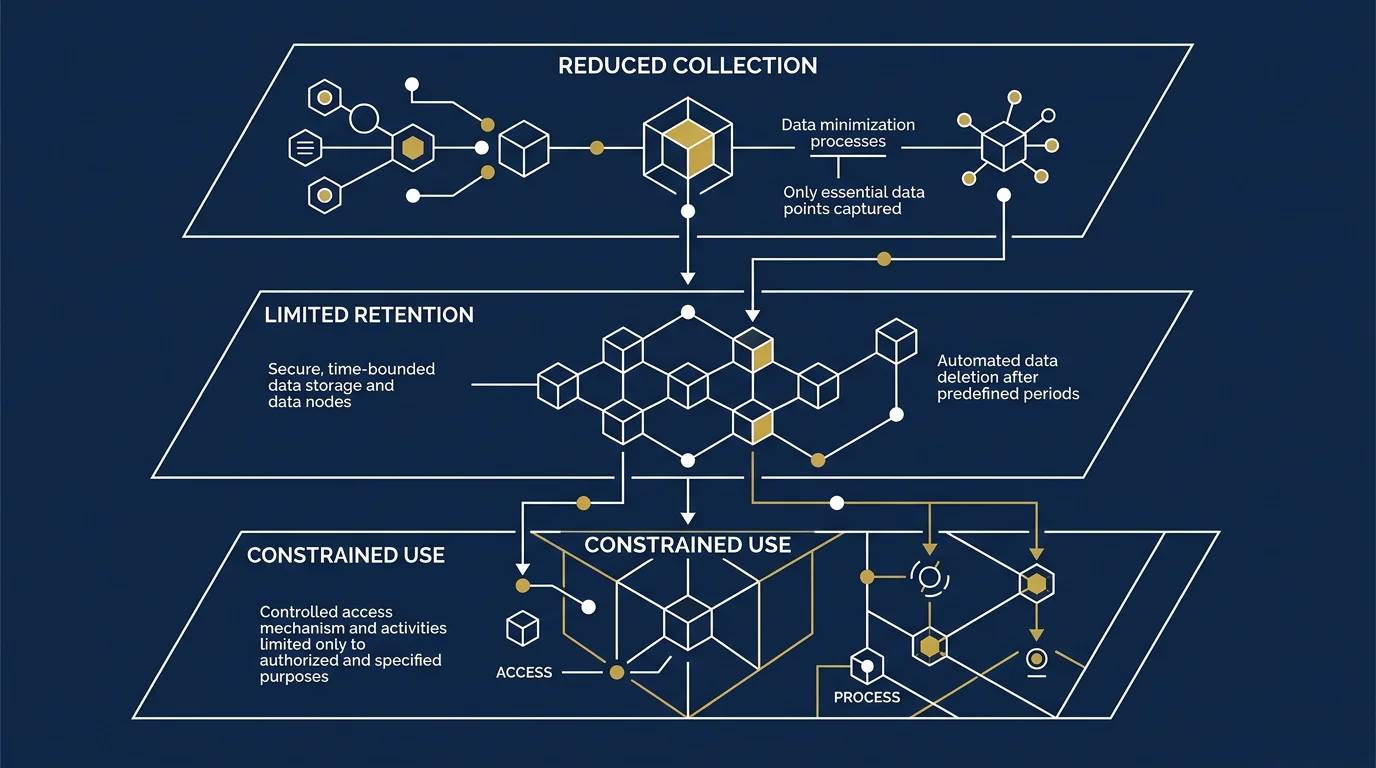
Most privacy programs still lean on promises: consent language, policies and pledges to delete data later. An emerging alternative reframes trust as an outcome of system design. Zero Data Protocol (ZDP) is an independent framework built on three principles, and it is neither a regulation, a certification, nor a guarantee.
Zero Collection: do not gather personal data that a function does not genuinely require.
Zero Retention: avoid storing information beyond the moment it is useful.
Zero Exploitation: derive value from system function, not from profiling or behavioral extraction.
Their human consequence is Human Freedom Choice: when identity or personal data is not functionally necessary, the person should remain free not to provide it. Applied to generative AI, the logic is direct. Personal data that is not unnecessarily sent to a model is not available for later exposure or reuse within that model’s processing path, reducing opportunities for inference and repurposing. This does not eliminate residual risk, and no architecture can; it narrows the surface where risk can materialize.
Governance data suggests the industry is moving in a compatible direction. The Cisco 2026 benchmark notes that between 2025 and 2026, organizations moved away from blunt restrictions such as outright bans, favoring structured controls over crude prohibition.
Practical controls to reduce generative AI exposure
Reducing exposure is a layered exercise rather than a single fix. The table below contrasts three common postures toward personal data, and the underlying difference is where trust actually comes from.
Approach | Data collected | Long-term exposure | Basis of trust |
|---|---|---|---|
Consent and lawful-basis controls | Limited according to purpose and applicable rules | Depends on retention and implementation | Legal basis, transparency and user rights |
Policy and compliance controls | Governed according to policy | Reduced through documented controls | Governance, enforcement and auditability |
Zero Data Protocol — structural reduction | Reduced where architecture allows | Lower where unnecessary retention is avoided | System architecture and minimized dependency |
Beyond posture, concrete measures apply to every deployment. Strip identifiers and use synthetic or anonymized data for training where feasible. Encrypt data in transit and at rest, especially when calling third-party APIs. Apply role-based access controls to models, training sets and outputs. Run bias and privacy audits, and monitor outputs for inadvertent disclosure. None of these guarantees safety, but together they shrink the probability and the blast radius of an incident.
Turning privacy into an architectural decision
The most durable answer to the data privacy risks of generative AI is to need less personal data in the first place. Leakage, inference, shadow AI and open-ended retention all trace back to information that was collected and kept without clear necessity. Treat every personal-data element as something that requires a clear functional or legal justification before collection or retention. Regulation will keep tightening, but the organizations best placed to adapt are those whose systems already avoid holding personal data they do not genuinely need.
Take action with Zero Data Protocol
If your teams are weighing how much personal data your AI systems truly require, the answer often begins with a structural rethink rather than another policy document. Reducing dependency on identity and behavioral data can reduce unnecessary exposure, may limit certain forms of legal and operational liability, and shrink the persistent personal-data target surface, while strengthening the trust your users place in you.
Zero Data Protocol connects privacy, cybersecurity, AI governance and system design into one direction: collect less, retain less, exploit less. To explore the framework, its principles and how minimal-data architecture reduces personal-data dependency, visit the Zero Data Protocol framework and see how trust can be engineered into your systems rather than merely promised.
Frequently Asked Questions
What is the biggest privacy risk of generative AI?
One of the most consequential risks is that models may memorize or later reproduce personal data from training or inference contexts. This is compounded by inference, where a system connects scattered data points to reveal something an individual never disclosed. Both risks scale with the volume of sensitive data ingested.
Can generative AI comply with the GDPR?
Generative AI can be deployed in ways that support GDPR compliance, but compliance depends on the specific purpose, lawful basis, data flows, transparency, safeguards, rights handling and governance of the deployment. Removing or mitigating the influence of personal data after model training can be technically difficult and remains an active area of research and implementation.
How does data minimization reduce generative AI risk?
Reducing unnecessary collection and retention limits the amount of personal data available for exposure, misuse, inference or later repurposing. Minimization can therefore reduce both the probability and the potential impact of an incident. The Zero Data Protocol principles of Zero Collection, Zero Retention and Zero Exploitation apply this logic structurally across a system.
What is shadow AI and why does it matter?
Shadow AI describes tools that employees adopt without governance approval, creating unmonitored data paths. It matters because you cannot secure flows you cannot see, and many vendors do not disclose their own AI subprocessors. This leaves organizations carrying risks they may not even know they hold.
Is anonymization enough to protect data in AI systems?
Anonymization helps, but it is not a complete safeguard, because re-identification and inference remain possible with rich datasets. It should be combined with encryption, access controls, retention limits and output monitoring. Treat it as one layer within a broader minimization strategy rather than a standalone guarantee.