
In Cyberhaven’s 2026 dataset, nearly four in ten observed AI interactions involved sensitive corporate data. That figure alone reframes the privacy pitfalls of AI adoption as an architectural question rather than a purely procedural one. Before you connect another model to your systems, it is worth examining how our AI Data Protection guidance treats exposure at its source instead of after the fact.
The scale is not hypothetical. According to the Cyberhaven 2026 report, roughly 39.7% of all AI interactions involve sensitive data. When data enters systems designed to learn, retain and infer, ordinary privacy weaknesses scale with it. The sections below map where those weaknesses concentrate and how you may limit them structurally.
Why artificial intelligence amplifies existing privacy gaps
Artificial intelligence rarely invents a brand new privacy failure. Instead, it magnifies the ones already present in your data estate. A single misconfigured access point becomes far more damaging once it is connected to a model that ingests, correlates and reproduces information at scale. The volume of data in play is the multiplier: text, images and records flow into training and inference pipelines, and some of that material is inevitably sensitive.
Public sentiment reflects this unease. Surveys have repeatedly found that a majority of adults believe wider use of AI will make their personal information less secure. That perception matters commercially, because data privacy concerns now rank among the leading barriers to deploying generative systems in production. Treating privacy as a foundation, rather than a compliance afterthought, is what allows the rest of an AI programme to function.
The secondary use pitfall: purpose limitation under pressure
Consider a birth date collected purely to verify a customer's identity.Using that same field later for birthday promotions introduces a new purpose that must be assessed separately and supported by an appropriate lawful basis. AI intensifies this temptation because models reward the reuse of whatever data is available. A resume submitted for a job, or a photograph shared for one reason, can quietly become training material for something else.
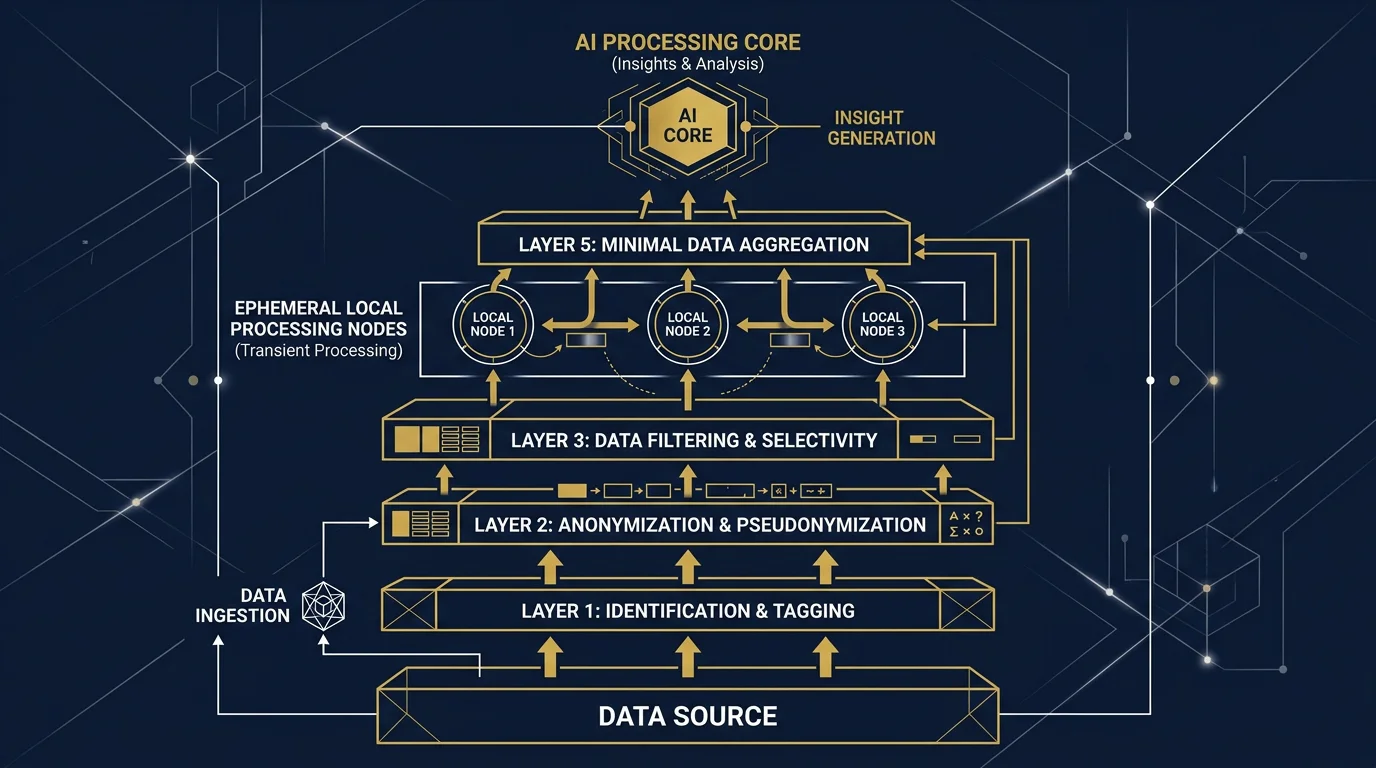
Under the principle of purpose limitation, you must define a specific, lawful reason for any data you collect and only gather what that reason genuinely requires. The safest posture is to avoid accumulating fields you cannot justify. Our Sensitive Data Footprint guidance describes how reducing unnecessary collection and retention can limit opportunities for later repurposing.
Proportionality versus data minimisation
Here a genuine tension appears. Models often require robust, representative datasets to remain accurate and fair, which can pull against the instinct to collect as little as possible. Removing attributes such as race or gender from a dataset may reduce exposure, yet it can also make bias harder to detect and correct. There is no single resolution that fits every case.
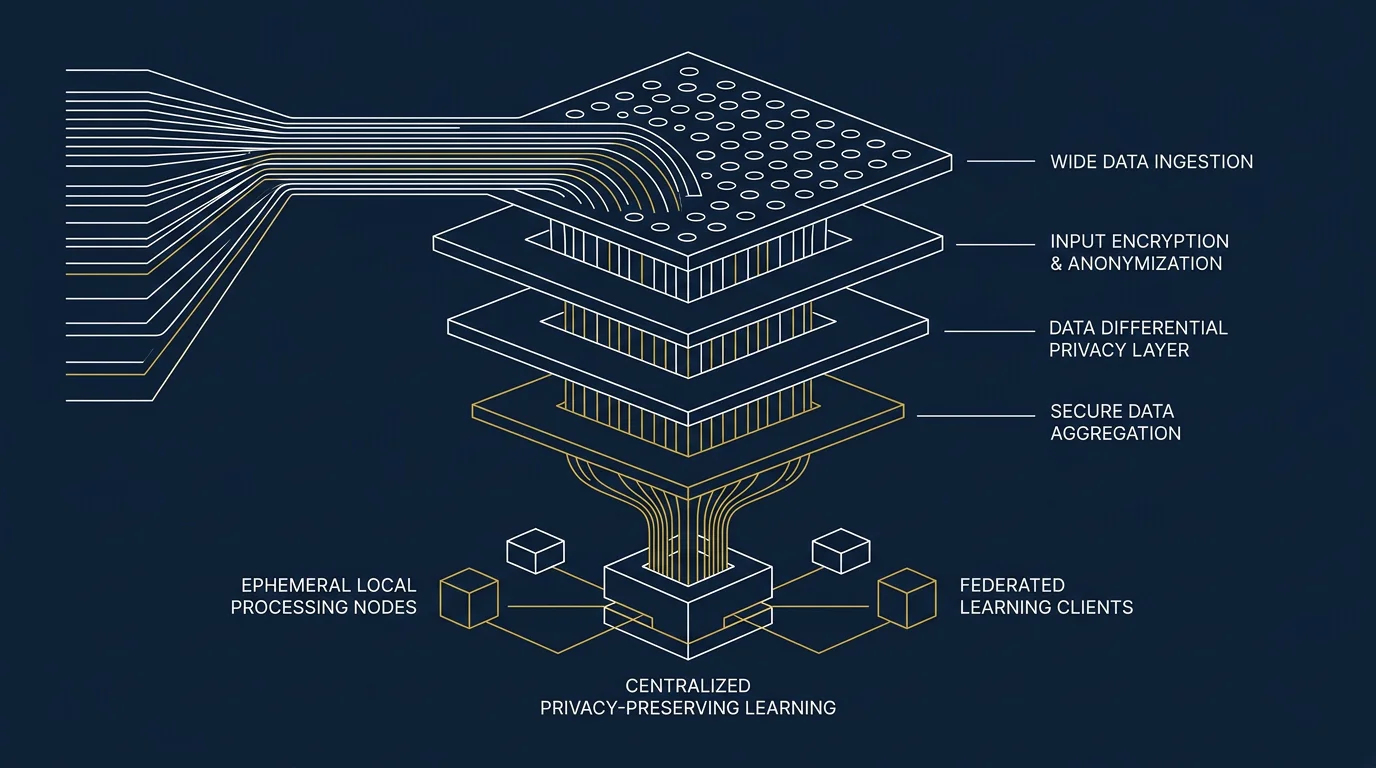
Privacy-enhancing technologies help you hold both goals at once. Techniques including differential privacy, synthetic data, homomorphic encryption and multi-party computation allow sensitive inputs to inform a model while limiting what any individual record reveals. According to the StartUs Insights 2026 report, around 90% of companies now cite AI as the main catalyst for expanding their privacy programmes, and multi-party computation is among the fastest-growing of these protective methods. No single technique is universal; most robust designs combine several.
Retention, deletion and the business continuity trap
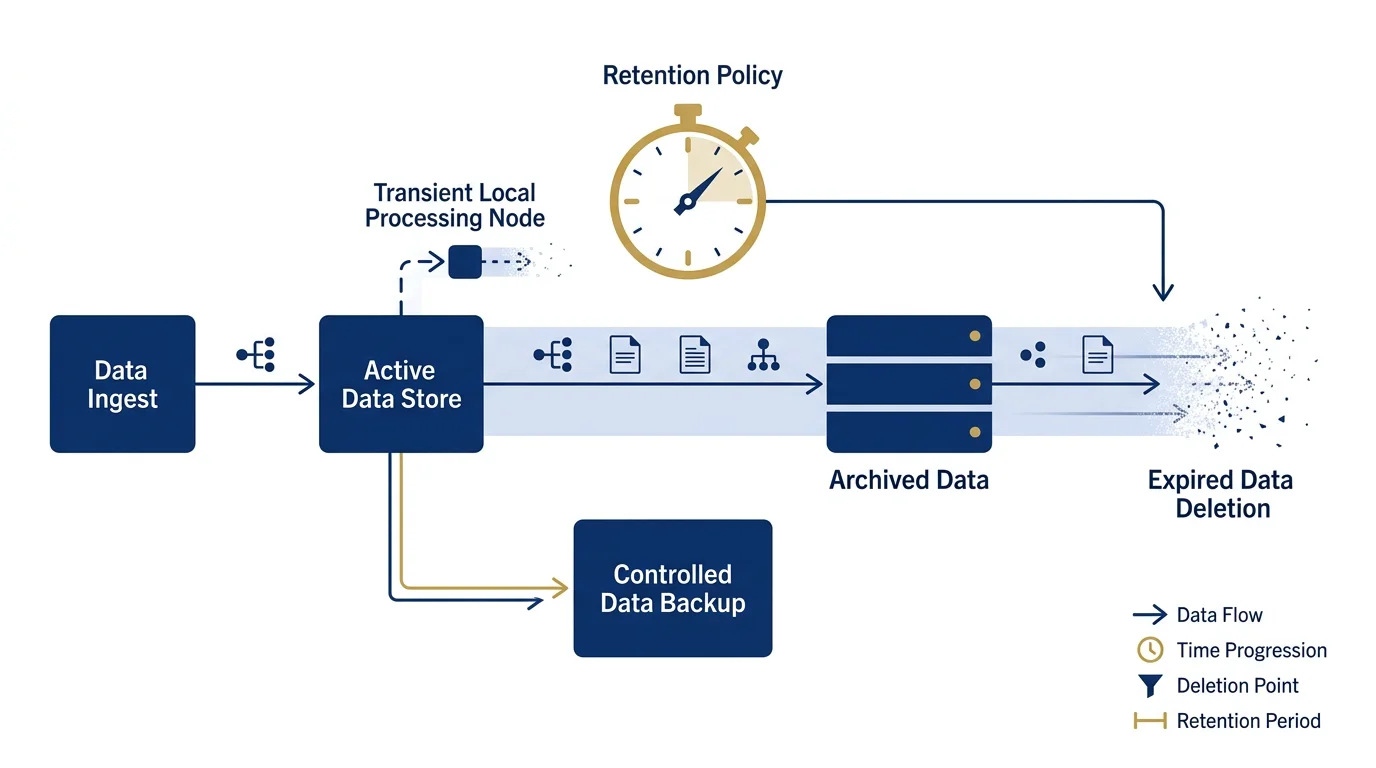
What happens when a customer withdraws consent, and their data sits inside a model that has already learned from it? When processing relies on consent, individuals must be able to withdraw that consent. AI systems can make downstream deletion more complex when personal data has influenced trained models or derived artefacts. Depending on the architecture and legal context, remediation may involve removing source records, updating retrieval stores, applying model-unlearning techniques where effective, or retraining a model from an appropriate dataset.
This is why indefinite retention is a quiet liability. Under the principle of storage limitation, personal data should be kept only until its purpose is fulfilled and then deleted. Establishing clear timelines, as set out in our Data Retention and Deletion Policy resource, means fewer records to unwind, fewer future breach targets and a smaller compliance burden. Retrieval-based designs, which ground a model in an external and updatable knowledge base, can further reduce the need to bake personal data permanently into model weights.
Third-party and shadow AI: exposure you do not control
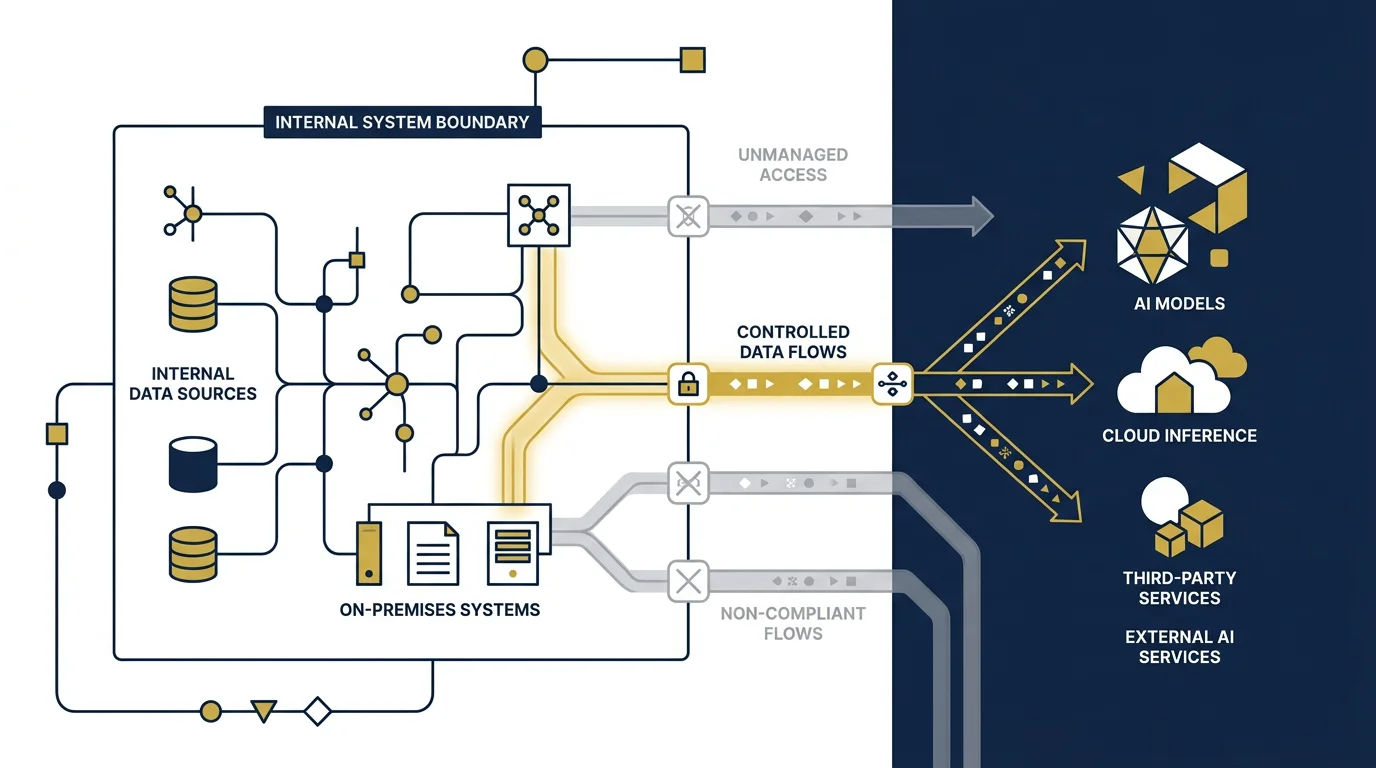
Much of the risk now sits outside your own perimeter. Employees paste confidential material into consumer tools, and connectors wire enterprise applications directly into external models. According to the LayerX 2026 report, sensitive data exposure rates differ sharply between platforms, with consumer-oriented tools showing higher exposure than enterprise-integrated environments operating under tighter governance.
The lesson is not to ban tools outright, since usage tends to migrate to personal devices where security teams lose all visibility. Instead, map where data actually travels and constrain it. Our Third-Party AI Risk guidance sets out how to assess vendors, limit connector scope and keep sensitive material out of systems you cannot audit. Every external dependency you remove is one less party who can leak, retain or repurpose your data.
A structural alternative: designing for less data dependency
Many privacy programmes rely heavily on consent and policy controls, which are necessary but do not by themselves reduce unnecessary collection or persistent retention. The Zero Data Protocol (ZDP) proposes a different starting point. It is an emerging independent framework, not a regulation, certification or guaranteed solution, built on three principles: Zero Collection, Zero Retention and Zero Exploitation. The premise is structural: personal data that is not unnecessarily collected or persistently retained creates less future exposure.
This structural posture is increasingly aligned with how leaders perceive risk. According to Gallagher's 2026 benchmarking, data protection and privacy violations rank among the top perceived threats from AI adoption, cited by 55% of respondents, close behind errors and hallucinations. Designing systems that depend on less personal data does not eliminate risk, and residual exposure always remains. It does, however, shrink the persistent data exposure, may reduce certain forms of legal and operational liability, and may simplify parts of governance.
Dimension | Consent-first approach | Zero Data Protocol — structural data reduction |
|---|---|---|
Primary control | Lawful basis, transparency and usage rules | Reduced unnecessary data dependency by design |
Data collected | Limited according to purpose and applicable rules | Reduced where architecture allows |
Retention | Governed by purpose and retention requirements | Persistent retention avoided where unnecessary |
Secondary use | Requires separate assessment and lawful basis | Reduced by limiting unnecessary retention and reuse |
Residual risk | Depends on implementation and retained data | Reduced in some areas, but never eliminated |
Turning privacy pitfalls into design decisions
The recurring lesson across every risk examined here is that the privacy risks of adopting AI concentrate wherever personal data is collected without a clear purpose, retained without a deadline, or shared without oversight. You cannot regulate away exposure that your architecture invites. Begin by mapping what your models actually depend on, then remove what they do not need: unjustified fields, indefinite logs and unmanaged connectors. Treat consent and policy as necessary but insufficient, and pair them with genuine data minimisation. This will not deliver zero risk, yet it can reduce unnecessary exposure, narrow the persistent personal-data attack surface, and make governance more defensible as regulations continue to evolve.
Take action with Zero Data Protocol
If the patterns in this article feel familiar, the underlying issue is likely structural: your systems depend on more personal data than they truly require. Addressing that at the design layer is more durable than adding another consent notice on top of an already wide collection surface.
Zero Data Protocol presents a structural approach built on Zero Collection, Zero Retention and Zero Exploitation, connecting privacy, cybersecurity, AI governance and system design into one direction. To understand how designing for minimal data dependency can reduce exposure and support digital trust, explore the Zero Data Protocol framework and its guiding principles.
Frequently Asked Questions
What is the biggest privacy risk when adopting AI?
The largest risk is not a single failure but amplification. AI magnifies existing weaknesses, so over-collection, indefinite retention and repurposing of data become far more damaging once a model can correlate and reproduce that information at scale.
Does data minimisation reduce the accuracy of AI models?
It can create tension, since some models rely on representative datasets to stay accurate and fair. Privacy-enhancing technologies such as differential privacy and synthetic data help balance both goals, allowing useful analysis while limiting what individual records expose.
How does retention affect the right to be forgotten?
Deletion becomes more complex when personal data has influenced trained models, embeddings or derived datasets. Depending on the architecture, organizations may need to delete source records, update retrieval stores, assess derived artefacts, use effective model-unlearning techniques where available, or retrain. Limiting unnecessary retention from the outset can reduce the scope of this work.
Is Zero Data Protocol a regulation or certification?
No. Zero Data Protocol is an emerging independent framework, not a regulation, certification, product or guarantee. It offers a structural direction, built on Zero Collection, Zero Retention and Zero Exploitation, for designing systems with less dependency on personal data.
Can shadow AI use ever be fully eliminated?
Outright bans can push usage toward personal devices or unmanaged channels, reducing visibility for security teams. A more effective response is to map where data travels, constrain third-party connectors and reduce the sensitive data available to leak.