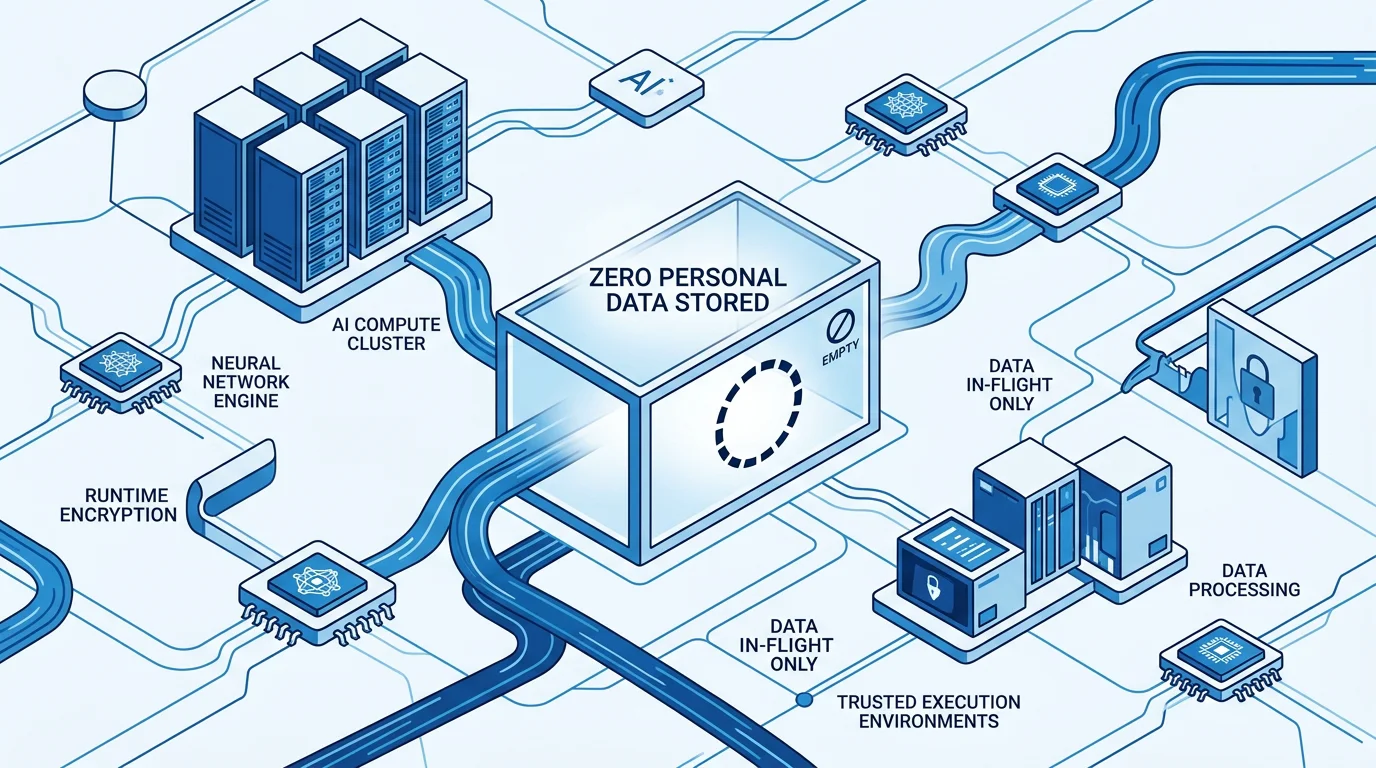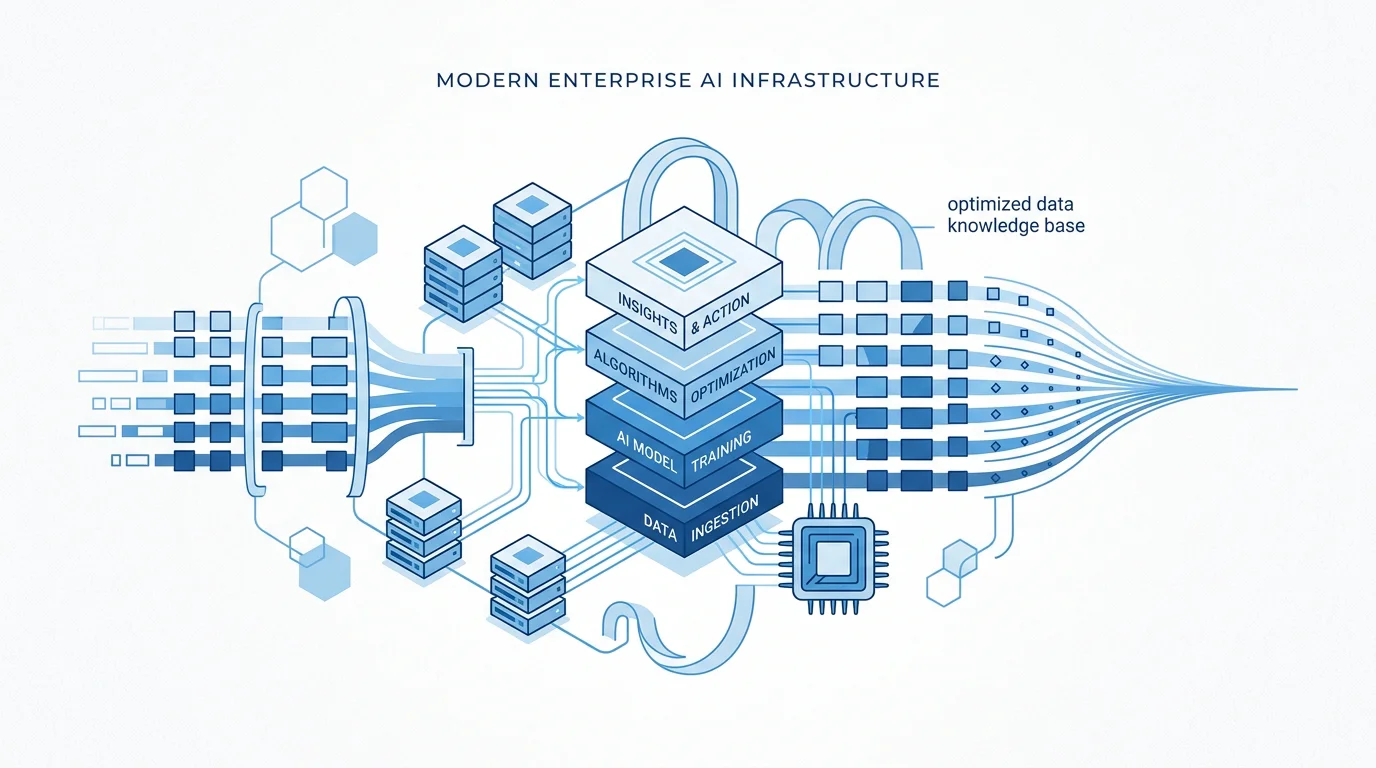

Only 7% of enterprises consider their information completely prepared for artificial intelligence, a striking gap between ambition and operational reality. Most organizations respond by gathering and centralizing more records, assuming that volume equals preparedness. That assumption deserves scrutiny, and our guide on making AI business-ready examines why.
The pursuit of data readiness for AI has become an operational priority, yet readiness is frequently confused with accumulation. According to a 2026 Cloudera study, most enterprises remain unprepared to operationalize AI despite accelerating investment. This article explains what readiness genuinely requires and how you may achieve it while minimizing dependency on personal data.
What data readiness for AI actually means
Readiness describes the degree to which your information can be used confidently for training, inference, and automation. It is a function of quality, accessibility, governance, and security, not merely of quantity. Cloudera and Harvard Business Review found that more than one quarter of surveyed organizations reported their data as not very or not at all ready for AI adoption.
In practice, AI-ready data is accurate, consistent, well-labeled, and traceable. It arrives with governance and privacy controls embedded from the outset, rather than bolted on afterward. It is available at the right moment, in an accessible format, and aligned with a defined use case. These characteristics determine whether a model produces reliable output or amplifies error and bias.
Crucially, readiness is measurable across dimensions such as availability, volume, quality, governance, and ethical responsibility. Preparing information along these axes is where value is created. Simply hoarding records does not advance any of them.
The hidden assumption: more data does not equal more readiness
Why do so many programs stall despite substantial data collection? Because volume is not the constraint. Research from Drexel University's LeBow College, conducted with Precisely in late 2025, found that leaders confidently report readiness while simultaneously naming it among their greatest obstacles, a confidence that outpaces true maturity.
The industry has predicted this friction for some time. Gartner has warned that through 2026, organizations will abandon a significant share of AI projects that are not supported by AI-ready data. The lesson is consistent: fragmented, ungoverned, and inconsistent information blocks progress far more often than insufficient volume does.
This reframing matters because collecting more personal data introduces cost, complexity, and risk without guaranteeing better readiness. Every additional record expands your attack surface and your compliance burden. A leaner foundation, well-governed and purpose-aligned, frequently outperforms a larger, poorly managed one. Our overview of zero data architecture explores this principle in depth.
A Zero Data Protocol approach to readiness
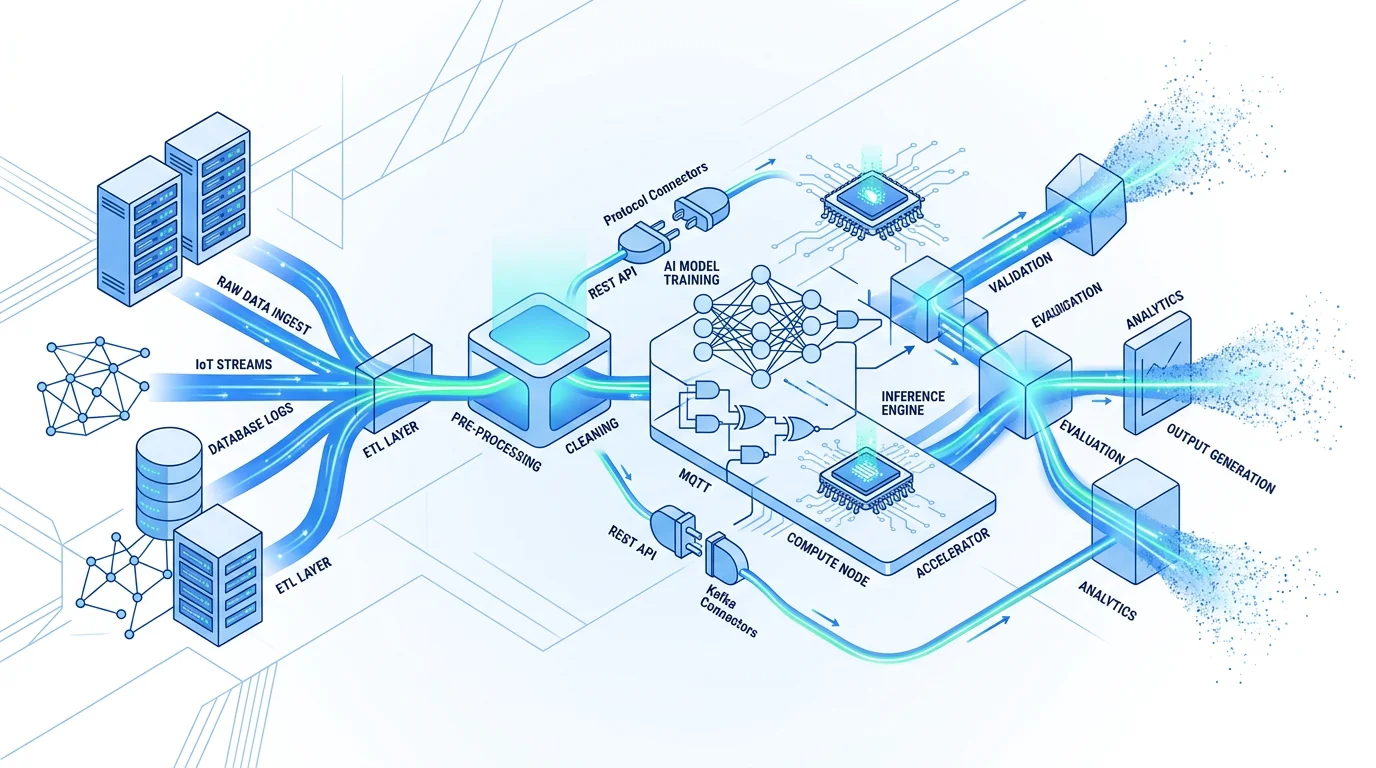
Consider a different starting point. Instead of asking how much data you must gather, ask how little you truly need. A Zero Data Protocol approach treats readiness as an architectural property, built on minimization rather than accumulation. It rests on four disciplines that reduce dependency on personal data by design.
- Data minimization: collect only what a defined use case genuinely requires, and nothing more.
- Local or ephemeral processing: process information close to its source and discard it when the task is complete, avoiding unnecessary movement.
- Strict purpose limitation: bind every input to a single, explicit purpose, preventing silent repurposing.
- No unnecessary persistent retention: avoid storing, caching, or archiving records that serve no continuing operational function.
These disciplines do not eliminate all operational data, nor do they replace governance. They narrow what must exist so that the remaining information can be made genuinely ready. When a system is designed so that the absence of certain data is not a limitation, you reduce exposure while sustaining performance. Our discussion of the agent data protocol shows how standardized, purpose-bound exchanges support this model for autonomous systems.
Traditional readiness versus a minimization-first model
The two approaches share a goal, reliable and usable inputs, but diverge on how much personal data must persist to reach it. The comparison below positions our recommended model against the conventional accumulation-centric path.
| Dimension | Traditional data-heavy readiness | Zero Data Protocol approach (recommended) |
|---|---|---|
| Guiding principle | Collect and centralize broadly | Minimize and purpose-bind by design |
| Personal data retention | Persistent storage and archiving | Ephemeral or no unnecessary retention |
| Processing location | Centralized repositories | Local or ephemeral, close to source |
| Attack surface | Expands with every record | Structurally reduced |
| Governance posture | Applied after collection | Embedded from the outset |
| Readiness driver | Volume and centralization | Quality, purpose, and integrity |
This table does not suggest that operational data disappears. It clarifies that readiness can be decoupled from indiscriminate personal-data dependency.
A practical readiness checklist
Before you begin any AI initiative, work through a structured assessment. The following checklist helps you evaluate whether your foundation is prepared without defaulting to accumulation.
- Define the business problem and the precise data each use case requires.
- Identify which inputs are genuinely necessary and which are collected out of habit.
- Assess quality: accuracy, completeness, consistency, and labeling.
- Confirm unified access to relevant information without physically duplicating it.
- Embed governance, lineage, and purpose limitation into pipelines from day one.
- Establish whether processing can occur locally or ephemerally rather than in persistent stores.
- Classify sensitive inputs and remove any that serve no continuing purpose.
- Document retention decisions and enforce strict deletion where retention is unnecessary.
Working through these items reveals how much of your assumed data dependency is structural rather than essential. Frequently, a considerable portion can be eliminated without weakening model performance.
Use cases, benefits, and honest limitations
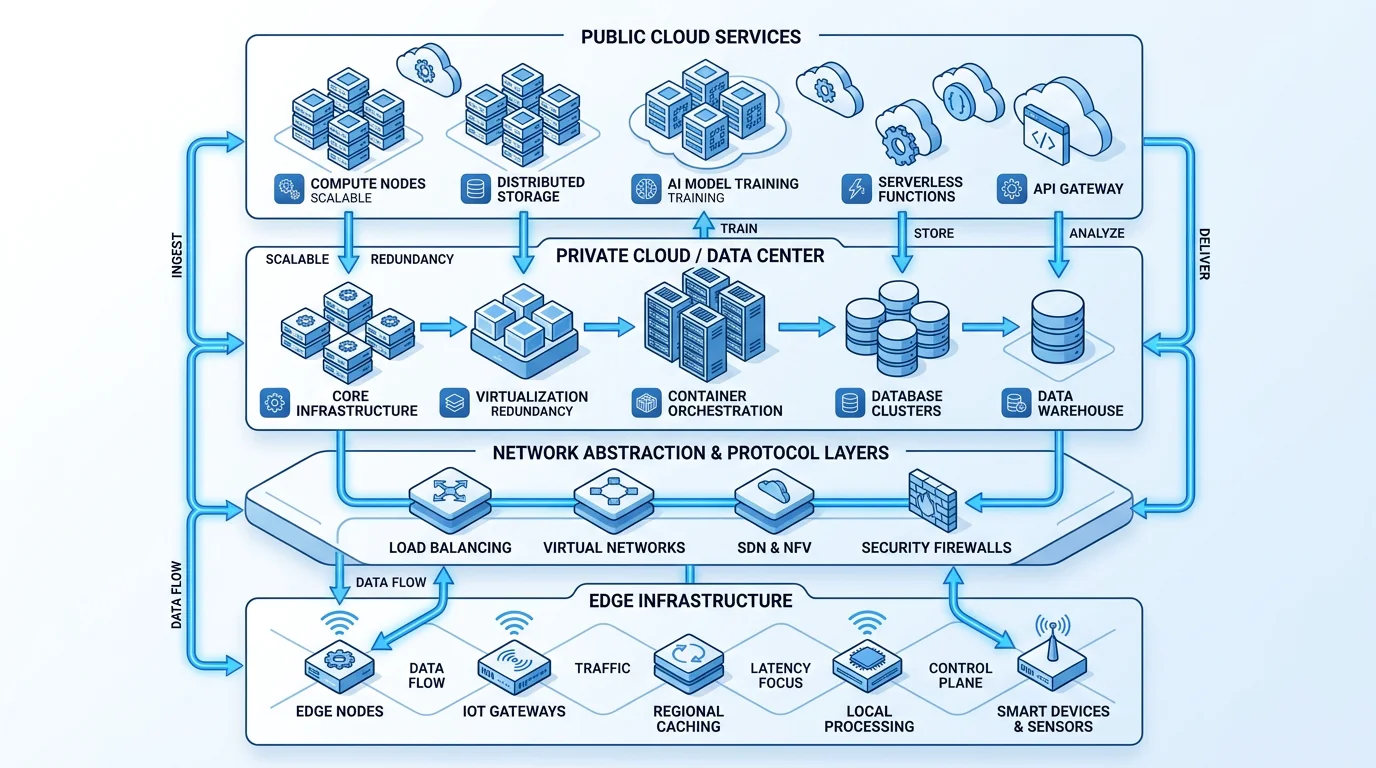
Where does a minimization-first approach apply most naturally? Consider fraud detection that operates on behavioral signals without retaining identifying records, or personalization that processes preferences locally and discards them after inference. Consider agentic systems that exchange only purpose-bound information rather than accessing entire customer databases.
The benefits are tangible. You reduce the exposure that a 2026 Cloudera report identified, where nearly four out of five enterprises said their AI initiatives were constrained by data access and foundation challenges. By limiting what must persist, you simplify access decisions and shrink the surface that vulnerabilities can expose. Our framework for building an AI-ready network details the architectural implications.
Honesty about limitations is essential. A minimization approach does not remove all operational data, and it does not replace data governance, quality management, or human oversight. Certain use cases, such as longitudinal analysis or regulatory record-keeping, legitimately require retention. The objective is to distinguish necessary data from habitual data, not to pretend that data ceases to matter.
Implementation steps
How do you move from principle to practice? Begin incrementally rather than attempting wholesale transformation. A staged path reduces disruption and builds evidence for wider adoption.
- Map dependencies: inventory where personal data enters, flows, and rests across your systems.
- Challenge each dependency: for every input, ask whether the use case would fail without it.
- Redesign the highest-risk pipeline first: apply minimization, purpose limitation, and ephemeral processing to one flow.
- Measure readiness and exposure: compare model performance and risk before and after redesign.
- Scale the pattern: extend proven practices across additional workloads with governance embedded throughout.
- Sustain the discipline: review new data sources against minimization criteria before they are added.
This sequence keeps governance intact while progressively reducing structural dependency. Each iteration produces a foundation that is both more prepared for AI and less burdened by unnecessary risk.
Bringing readiness and minimization together
Achieving genuine data readiness for artificial intelligence does not require you to collect and centralize ever more personal data. It requires quality, governance, accessibility, and purpose. By treating minimization as an architectural discipline, you prepare information for AI while reducing the exposure, retention, and dependency that conventional approaches take for granted. Start by auditing what you truly need, redesign your highest-risk flows, and let readiness follow from integrity rather than accumulation.
Take action with Zero Data Protocol
If your teams are designing AI systems that assume personal data must exist somewhere, it is worth questioning that assumption at the architectural level. Reducing structural dependency on personal data strengthens both your readiness and your resilience.
We built the Zero Data Protocol architecture to eliminate personal-data dependency by design, preventing unnecessary collection, retention, and exploitation before they occur. Rather than protecting data after the fact, we help you architect systems where the absence of data becomes a designed feature and a source of structural sovereignty. Explore how a protocol-level approach can support your next generation of AI, cloud, and cybersecurity infrastructure.
Frequently Asked Questions
Does data readiness for AI require collecting more personal data?
No. Readiness depends on the quality, governance, accessibility, and purpose of your information, not on its volume. You may achieve strong readiness while minimizing personal data through purpose limitation and ephemeral processing.
Does a Zero Data Protocol approach eliminate all operational data?
It does not. The approach removes unnecessary and habitual data dependency, not the operational information a use case genuinely requires. Certain functions, such as regulatory record-keeping, legitimately require retention.
Is minimization a replacement for data governance?
No. Minimization complements governance rather than replacing it. You still need quality management, lineage, access controls, and human oversight, applied to a leaner and better-defined foundation.
How does reducing data improve AI security?
Every retained record expands the surface that vulnerabilities can expose. By limiting what is collected and stored, you structurally reduce that surface, which lowers both breach impact and compliance complexity.
Where should we begin implementing a minimization-first model?
Begin by mapping where personal data enters and rests across your systems. Then redesign your highest-risk pipeline first, applying our zero data architecture principles before scaling the pattern across additional workloads.