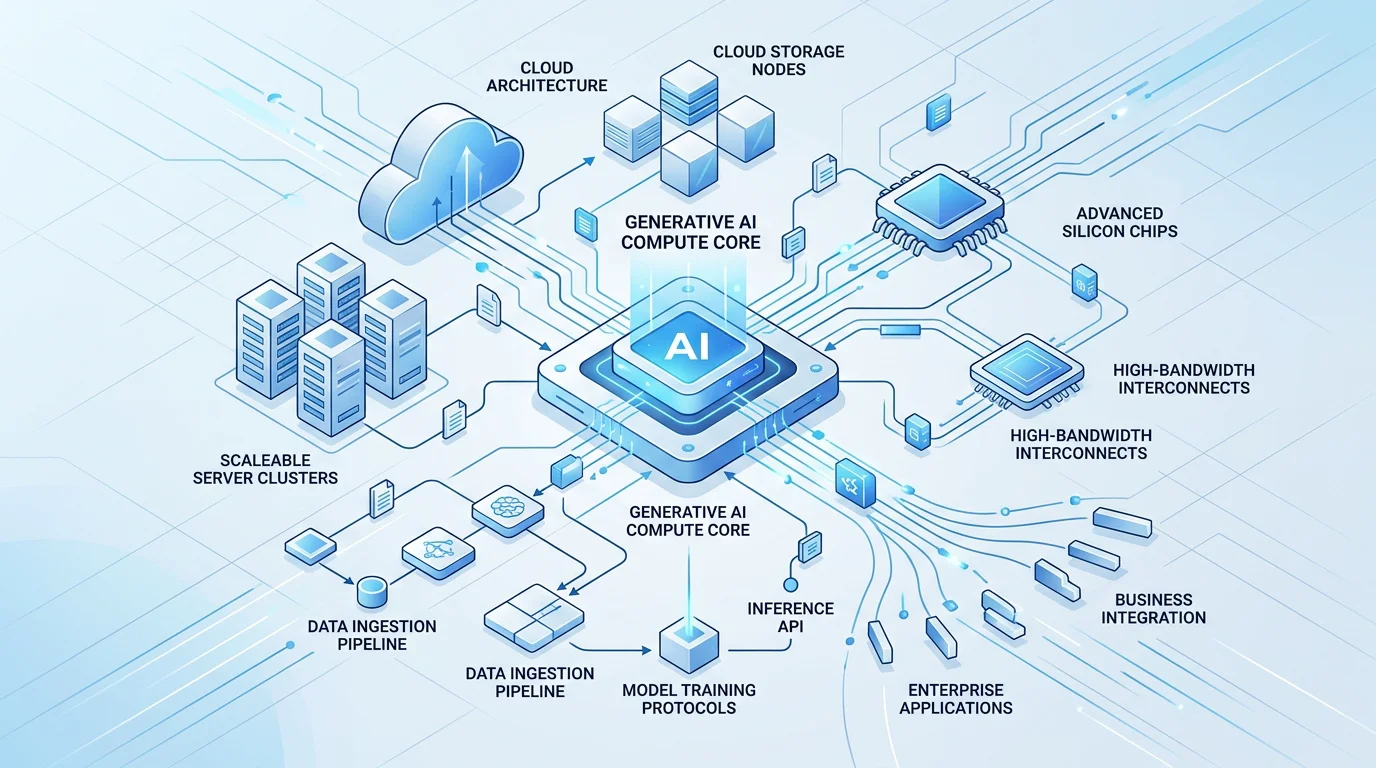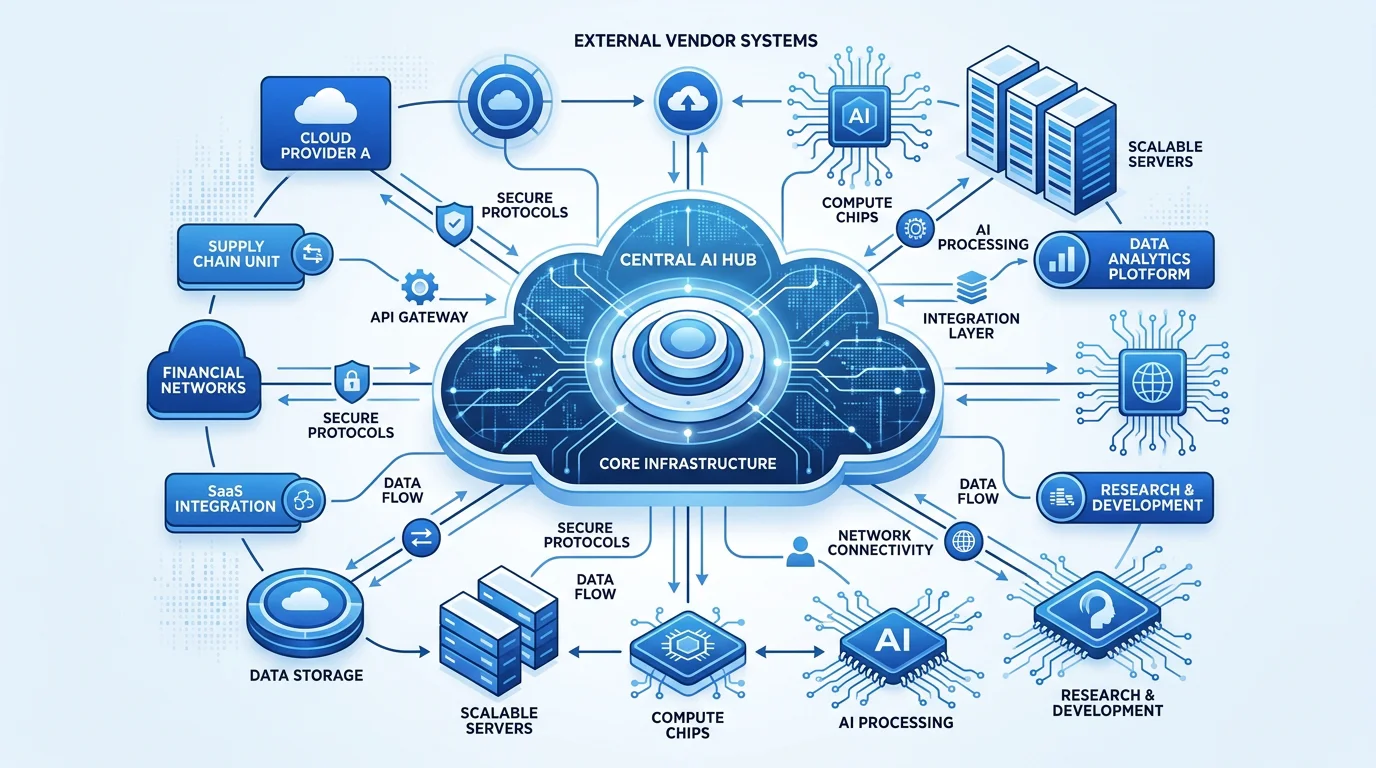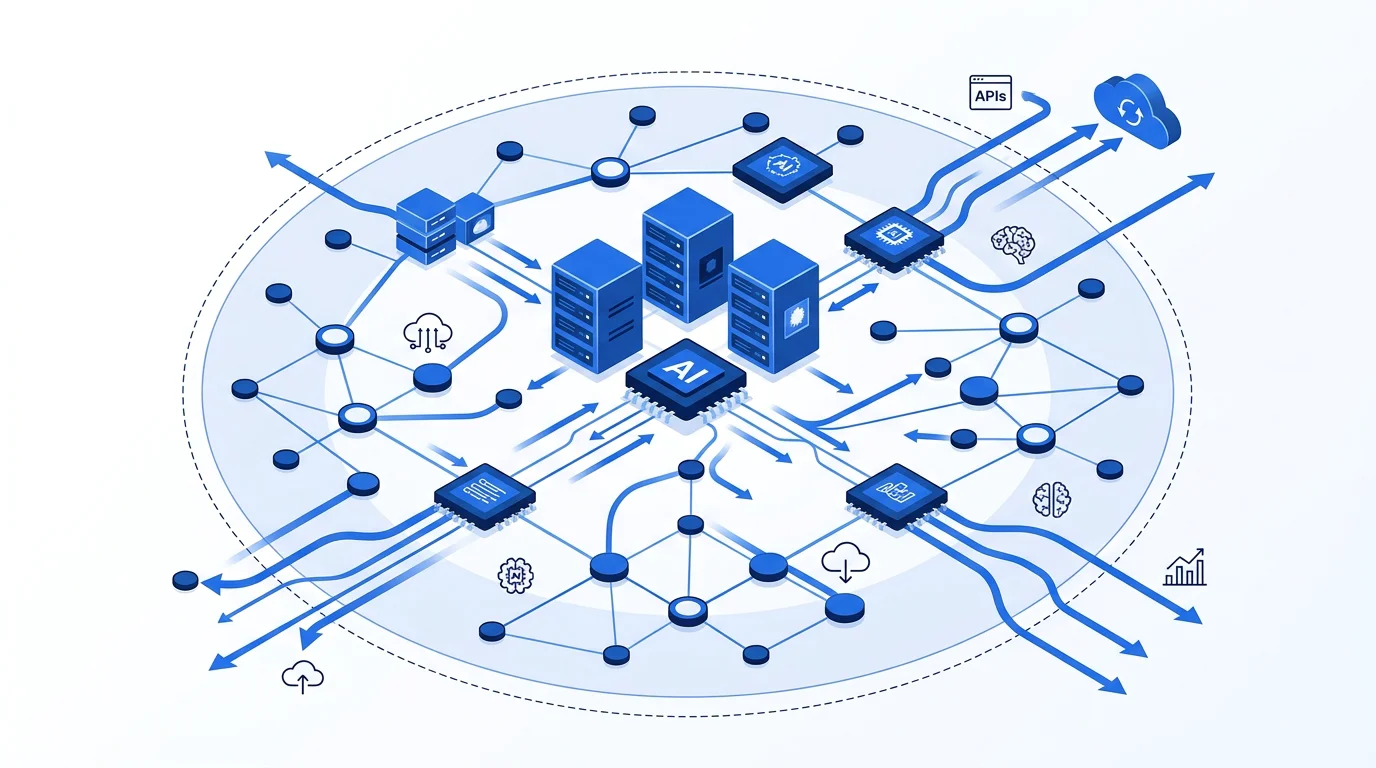

AI systems do not have clean edges, and the agents enterprises deploy across environments do not stop at a firewall. When an authenticated agent operates inside your infrastructure with legitimate credentials, a traditional boundary offers little meaningful control. This is why AI security beyond perimeter controls has become a defining concern for security leaders, and why our enterprise guide to generative AI security risks starts from the assumption that the boundary has already dissolved.
The pace of adoption compounds the problem. According to the State of AI Agent Security 2026 report, 88% of organizations confirmed or suspected AI agent security incidents in the last year, while most agents operate with limited oversight. Governance has not kept pace with deployment, and the gap continues to widen.
Why the perimeter no longer contains AI systems
Traditional application security rests on three assumptions: bounded input, predictable execution, and deterministic output. AI systems violate all three. Every prompt is dynamic, every response is probabilistic, and sensitive data can surface inside user inputs, model context, or generated outputs.
The perimeter model also assumes trust can be established once and relied upon afterward. Machine identities expose the limits of that logic. Once an autonomous agent holds valid credentials, it can act continuously and at scale, and a gate checked at the door does not observe what happens inside. This is the structural weakness that agentic AI amplifies rather than invents.
The consequence is a new class of risk: inadvertent exposure of regulated data, misuse of AI systems, unsafe or off-policy outputs, and limited visibility into how AI is used in production. Firewalls and static rules were never designed to evaluate probabilistic behavior in real time.
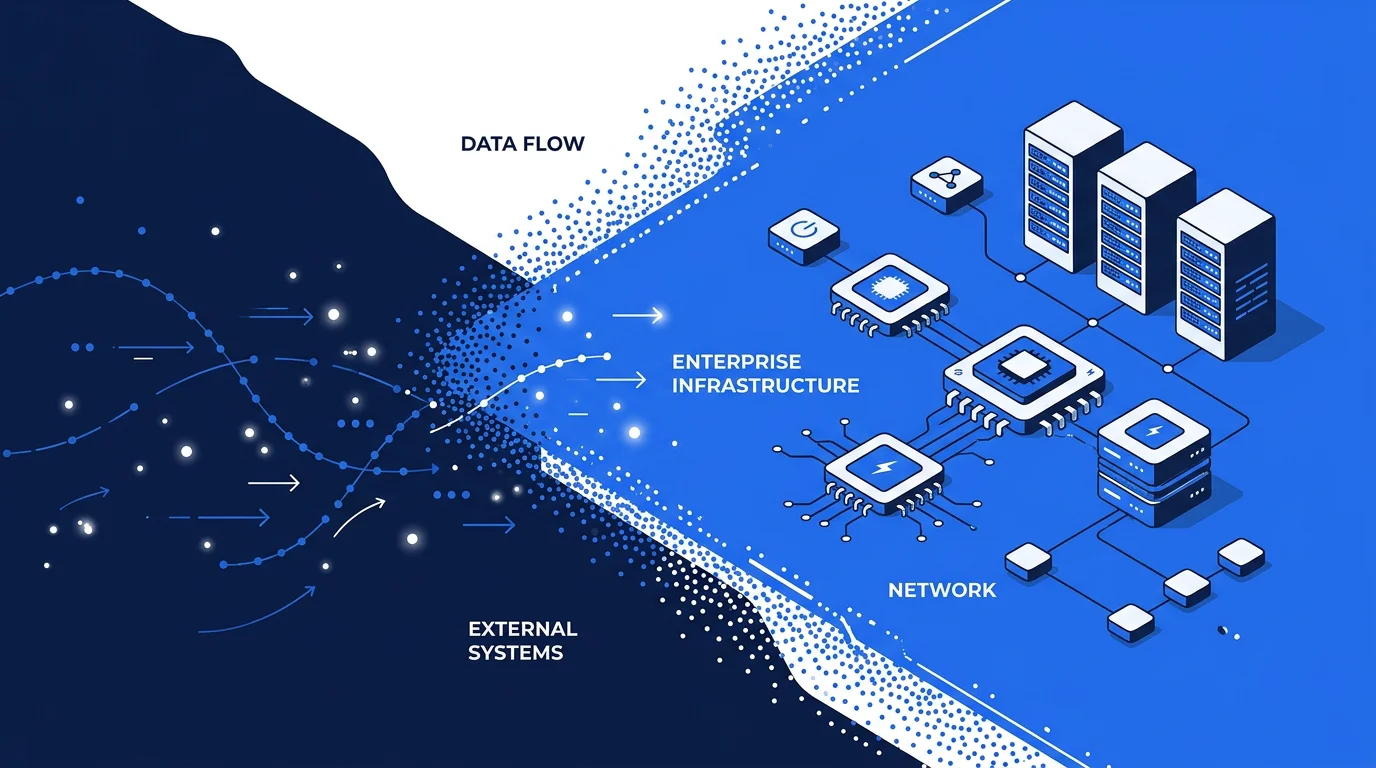
Where enterprise AI risk actually lives
Much attention focuses on the model itself: how it is trained, what data it contains, and how it behaves under controlled conditions. Model security matters, but it addresses only a fraction of the risk surface. In production, the most consequential vulnerabilities appear outside the model, in the data it connects to, the tools it can invoke, and the permissions it inherits.
A well-aligned model can still be used unsafely. It may comply with every content policy yet disclose sensitive information through aggregation or inference. It may enforce rules under normal load yet fail unpredictably during partial outages. These are system problems, not model problems.
The organizational gap reflects this. According to figures cited by Optro, Deloitte research finds roughly 74% of companies plan to deploy agentic AI within two years, yet only 21% report a mature governance model for it. Most enterprises are governing autonomous systems with controls designed for supervised tools. Our overview of third-party AI risk for enterprise security examines how these dependencies extend well past your own infrastructure.
Runtime guardrails and continuous authorization
If the boundary cannot contain AI, protection must move to the point of interaction. Runtime guardrails are real-time controls implemented outside the model to enforce policy at the moment of application interaction. They evaluate prompts before they reach the model and validate outputs before they return to users, using system-level context such as user identity, data sensitivity, and application state.
Authorization follows the same logic. Instead of a one-time gate, every request is evaluated against policy in real time. Decoupling authorization from application logic, and governing it through centralized, policy-driven systems, allows fine-grained control without rewriting every application. This is continuous authorization operating at machine speed.
The practical principle is straightforward: model security reduces intrinsic model risk, while runtime controls manage enterprise risk where it materializes. The two are complementary, and neither is sufficient alone. Our perspective on network access control without surveillance shows how enforcement can remain strong while collecting less about the people behind each request.
Shared responsibility shifts with implementation scope
Not every organization carries the same burden. The security obligations you own depend on how you consume AI, and clarifying that scope prevents both over-investment and dangerous gaps.
Consumer applications such as general chat assistants place most responsibility with the provider. You focus on acceptable use policies and preventing employees from entering sensitive data.
Enterprise applications with AI features represent a shared model, where you own role-based access, data classification, and audit logging.
Pre-trained foundation models shift more to you, including prompt engineering, retrieval architecture, output filtering, and tool permissions.
Fine-tuned and self-trained models place nearly all responsibility on your organization, from training data curation through production monitoring and incident response.
This mirrors how cloud security already works. Before planning controls, identify the scope, because it determines what must be built internally and where collaborative oversight is required.
Data minimisation as a structural control
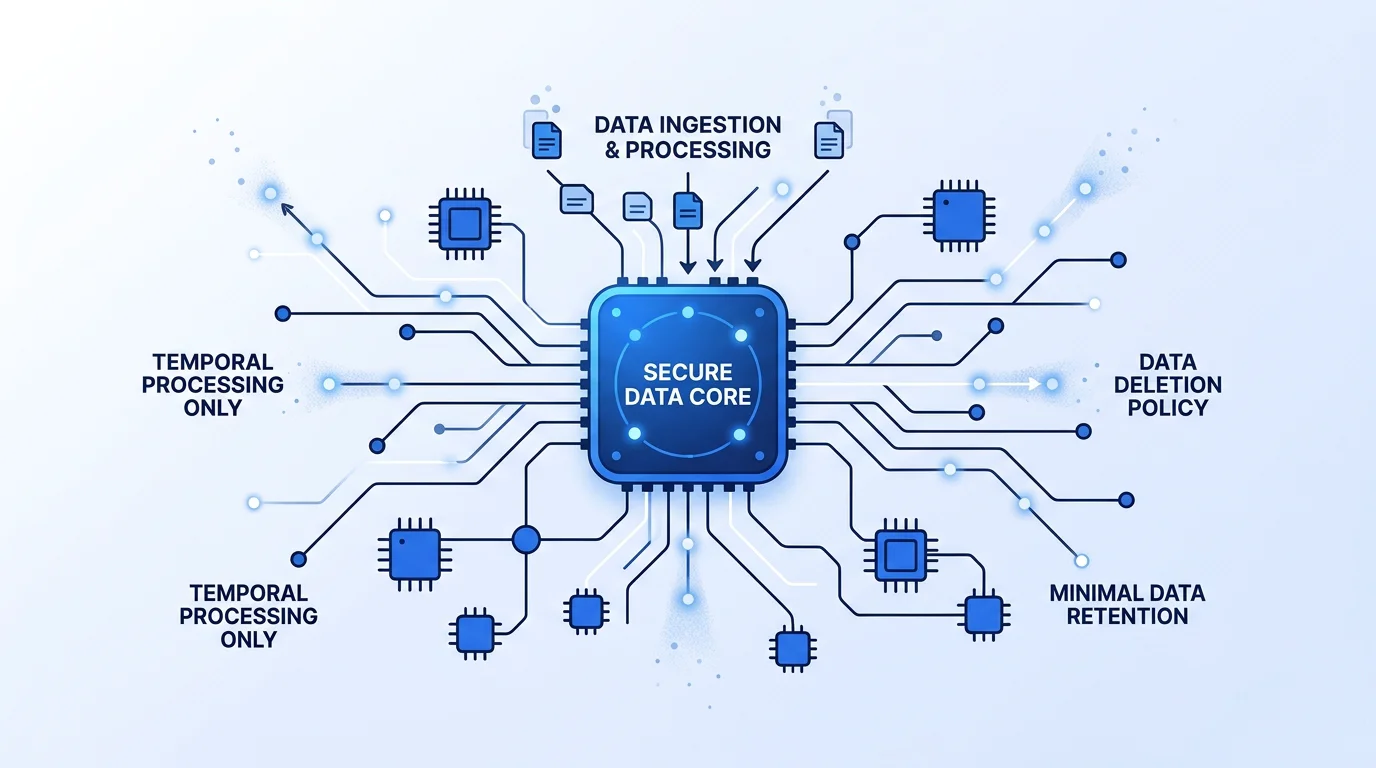
Here is a differentiator often missing from perimeter debates: the most resilient defense is reducing what a system depends on in the first place. The safest data is the data you never collected. Less retention means less exposure, less liability, and fewer future targets.
This is the direction behind the Zero Data Protocol, an emerging independent framework built on three principles: Zero Collection, Zero Retention, and Zero Exploitation. It is not a regulation, certification, or guaranteed solution. Rather, it is an architectural stance: value should come from system function, not from the extraction of user data. When a system holds little sensitive information, an intrusion finds less to exfiltrate, and governance may be simpler to demonstrate. Residual risk remains, but the attack surface tied to stored personal data shrinks.
The stakes are rising. According to aggregated governance data, Stanford HAI's 2026 AI Index recorded 362 AI-related incidents in 2025, a 55% increase over the 233 logged in 2024. Reducing data dependency does not eliminate these incidents, but it limits how much any single failure can expose. Our discussion of why zero trust is not zero data explains why access control alone leaves this exposure intact.
Comparing approaches to enterprise AI security
The following comparison sets these approaches side by side. It is a conceptual guide, not a claim that any single approach removes all risk.
Approach | Enforcement point | Data exposure over time | Fit for agentic AI |
|---|---|---|---|
Perimeter controls only | Network boundary, one-time | High (data retained inside) | Low |
Model-layer safeguards | Inside the model | Moderate | Partial |
Runtime guardrails and continuous authorization | Every interaction, real time | Moderate | High |
Zero-data architecture (our approach) | System design, before collection | Lowest (less collected and retained) | High |
The market reflects this shift toward continuous, context-aware control. According to MarketsandMarkets analysis, the agentic AI security market is projected to grow from 1.65 billion dollars in 2026 to 13.52 billion by 2032, driven by demand for real-time monitoring and governance of autonomous agents.
Governance turns controls into accountability
Runtime enforcement produces the evidence that governance requires. Centralized visibility lets security, privacy, and risk teams share insight into usage patterns and policy effectiveness, making AI auditable and manageable at scale. Without observability and resilience, technical controls cannot deliver the assurance regulated environments demand.
The most mature organizations therefore treat AI security as a system and governance problem, not a model-only problem. Policies that govern enterprise data usage should also govern how AI accesses, processes, and generates information, applied consistently across tools and models rather than hard-coded into each application.
Moving past the boundary
The lesson of AI security that extends beyond perimeter controls is that boundaries no longer define your risk surface. Protection now depends on enforcing policy at every interaction, clarifying who owns which responsibilities, and, critically, reducing the data a system collects and retains in the first place. Combine runtime guardrails with continuous authorization and disciplined data minimisation. None of these eliminates risk, but together they shrink exposure, clarify accountability, and give your teams meaningful control over systems that operate at machine speed.
Take action with Zero Data Protocol
If perimeter thinking no longer matches how your AI systems behave, the next step is to reconsider what those systems truly need to collect and retain. Reducing data dependency is one of the most durable ways to lower exposure and simplify oversight, and it starts at the architecture stage rather than after an incident.
Zero Data Protocol offers a structural framework for designing digital systems with minimal dependency on personal data, connecting privacy, cybersecurity, and AI governance into one direction: collect less, retain less, exploit less. To understand how these principles apply to your environment, explore the Zero Data Protocol framework and its approach to building trust through architecture.
Frequently Asked Questions
Why are perimeter controls insufficient for AI systems?
Perimeter controls assume fixed boundaries and one-time trust, but AI systems accept dynamic input, produce probabilistic output, and deploy agents that operate inside your environment with valid credentials. A boundary checked once cannot observe or constrain what happens during each interaction.
What are runtime guardrails?
Runtime guardrails are real-time controls placed outside the model that evaluate prompts and outputs at the moment of interaction. They use context such as user identity and data sensitivity to enforce policy where enterprise risk actually materializes.
How does data minimisation improve AI security?
Data that is never collected cannot be breached, and data not retained cannot be exposed later. Reducing dependency on personal data lowers your attack surface and liability, though it complements rather than replaces runtime and governance controls.
Does the Zero Data Protocol guarantee compliance or security?
No. Zero Data Protocol is an emerging independent framework built on Zero Collection, Zero Retention, and Zero Exploitation, not a regulation, certification, or guarantee. It aims to reduce exposure and may simplify governance, while residual risks always remain.
Who is responsible for securing enterprise AI?
Responsibility depends on your implementation scope, following a shared model similar to cloud security. Consumer applications place most obligations on the provider, while fine-tuned or self-trained models shift nearly all responsibility to your organization.