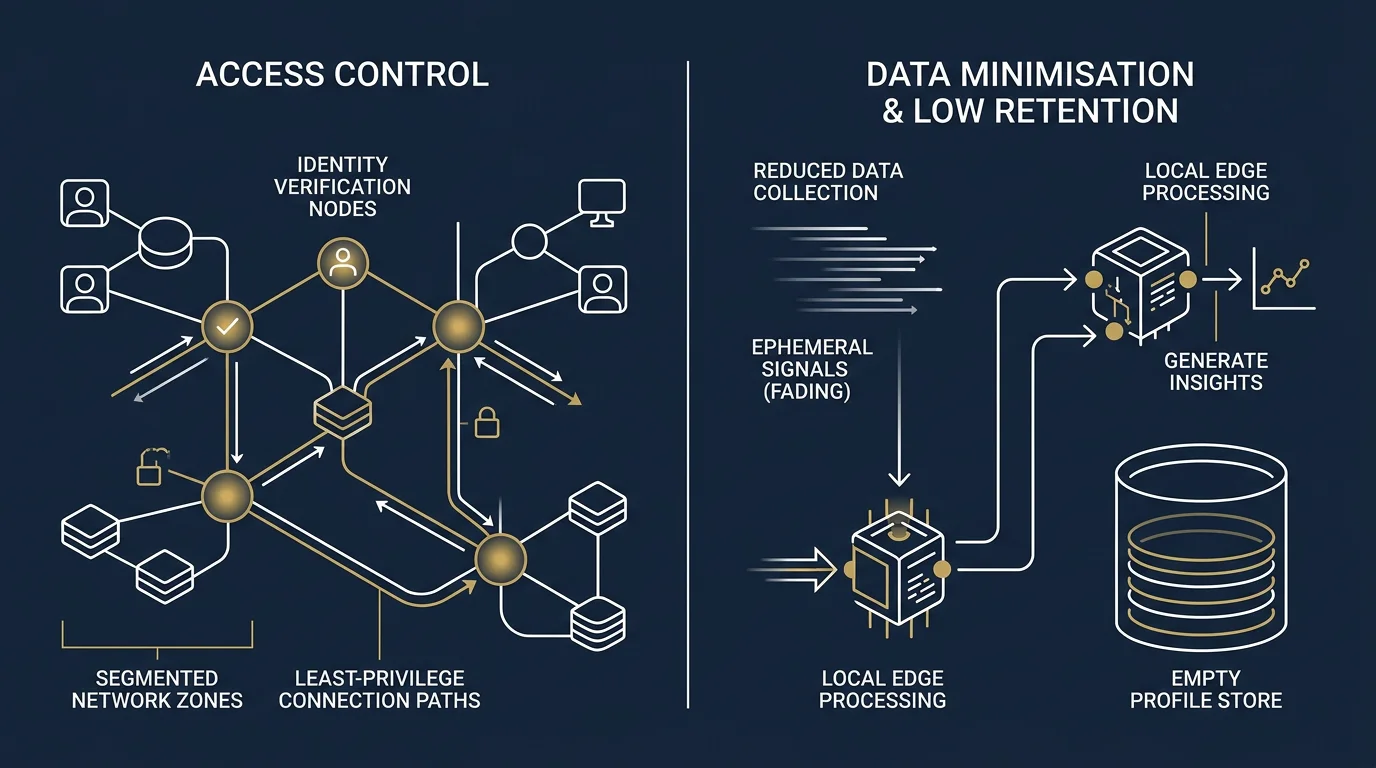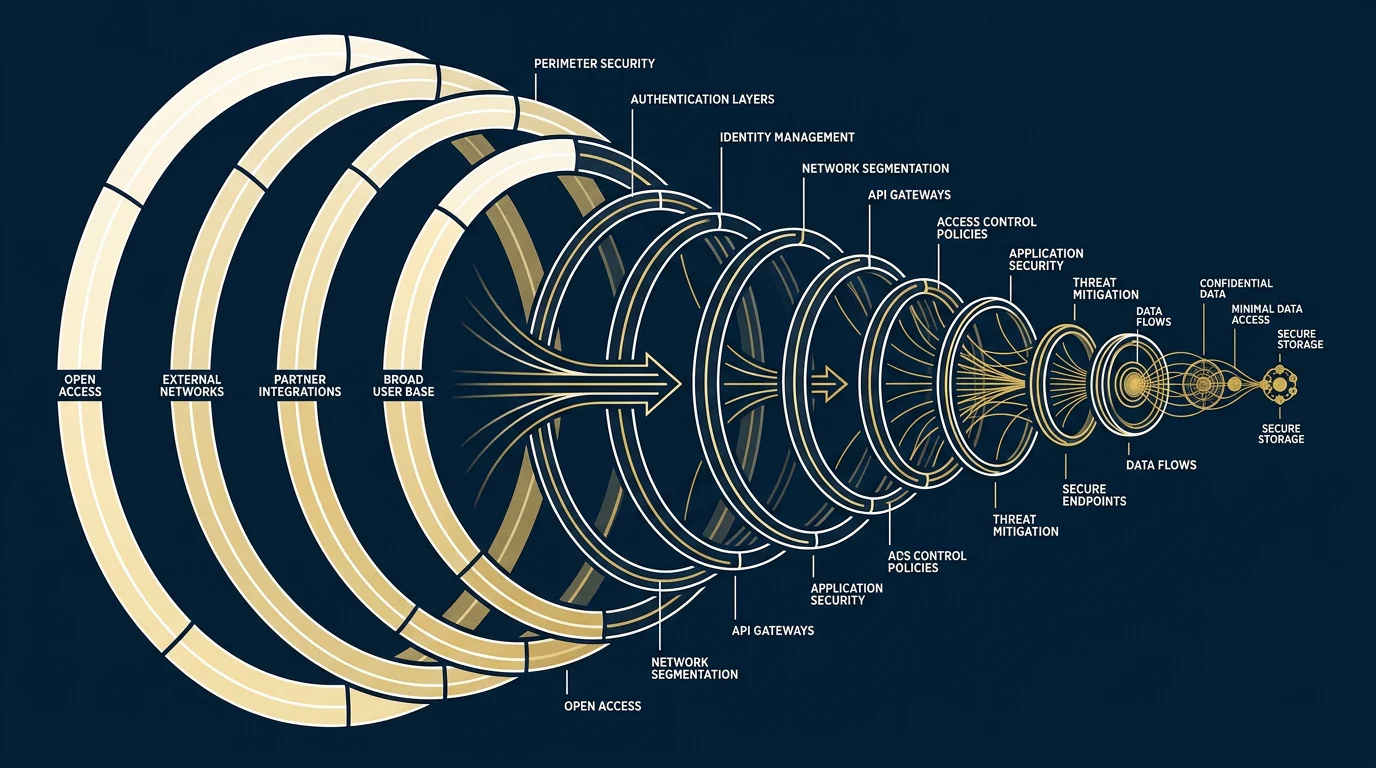

By 2026, verifying identity and scoping access have become baseline expectations, yet a breach still hurts most when there is a large store of sensitive data waiting to be exfiltrated. Access control decides who can reach information; it does not decide how much information exists in the first place. That distinction is why the progression from Zero Trust to a least data posture matters. For a deeper primer, consider our analysis of Why Zero Trust isn’t “zero data” and what to do instead.
The strategic direction is clear. A Gartner survey found that 63% of organizations had fully or partially implemented a Zero Trust strategy, showing how mainstream the architecture has become. Adoption momentum is real, but momentum on verification does not automatically translate into less data retained, less inference performed, or fewer future targets on the balance sheet.
Zero Trust verifies access, but the data still exists
The premise of the concept known as Zero Trust least data begins with an honest limitation. Zero Trust operates on continuous verification and the assumption that any connection could be hostile. It authenticates, authorizes and monitors every request between users, devices, applications and data. What it does not do is delete or avoid collecting the sensitive records that make a compromise valuable.
The threat model keeps proving the point. According to the Verizon Data Breach Investigations Report, 22% of breaches in 2025 began with credential abuse. Strong access control raises the cost of that first step, yet once an attacker holds valid credentials, the damage scales with the volume of sensitive data that is sitting in reach. Verification narrows the door; it does not empty the room behind it.
Least privilege reduces access, not data volume
Least privilege is one of the core principles of Zero Trust. Users and workloads receive the minimum permission required for a task, and those permissions are revoked when the session ends. This limits lateral movement and constrains the blast radius of a compromised account, which is genuinely valuable.
However, least privilege is a control over reach, not over existence. Adoption of these controls continues to climb: Gartner research cited by Integrate.io found 63% of organizations had fully or partially implemented Zero Trust, based on surveyed security leaders. Even with mature least-privilege enforcement, a database of personal records remains a liability, a compliance obligation and a target. The next logical step is to ask a different question: does this data need to exist at all?
From least data to minimum retention
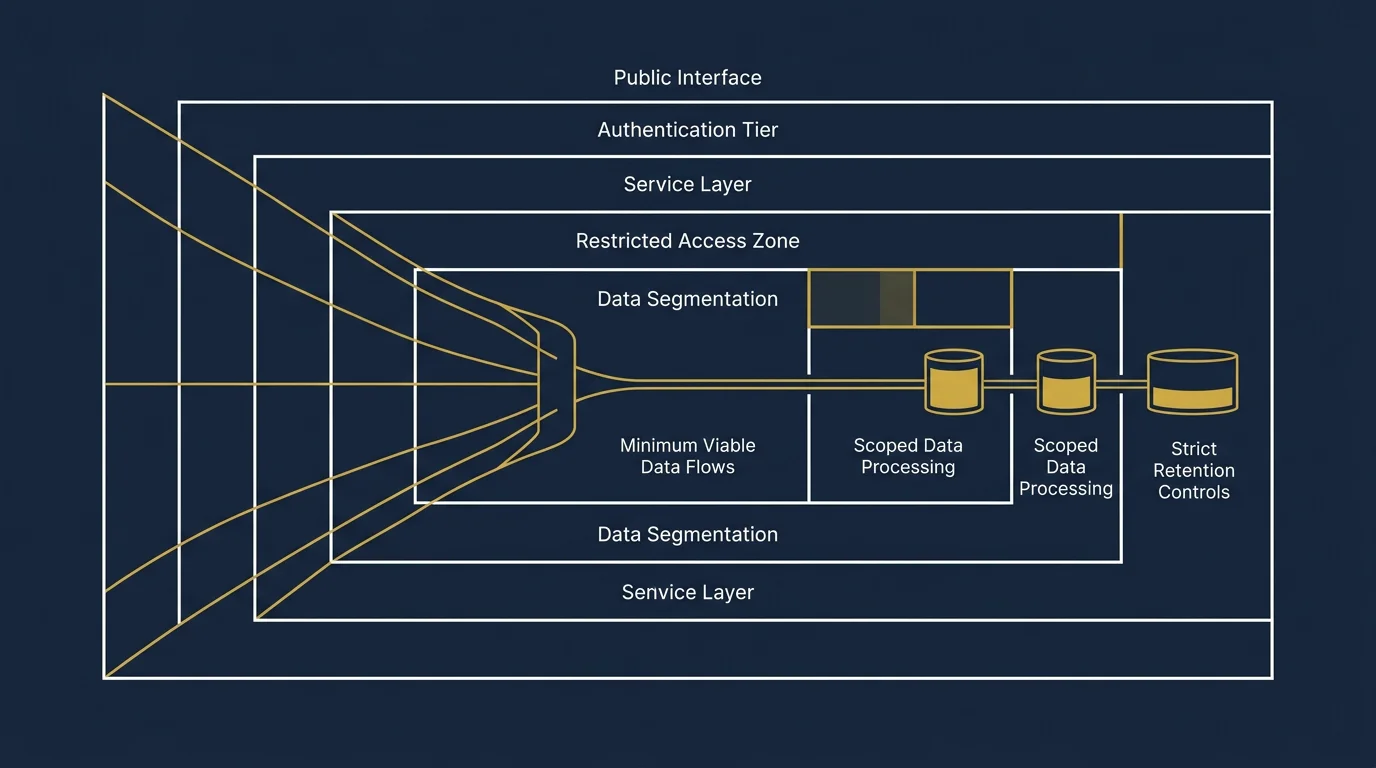
Least data is the direction that access control cannot reach on its own. The principle is straightforward: collect less by default, and hold only what a function genuinely requires. When identity or a personal attribute is not functionally necessary, the safest design is to never request it. Data that is never collected removes an entire category of retention and later-exposure risk.
Minimum retention follows naturally. Data that must be collected should not be kept longer than its purpose justifies. Every retained copy is future exposure, future liability and a future target. This economic reality is measurable. The global Zero Trust architecture market reached $31.84 billion in 2026 and is projected to grow substantially through the decade, reflecting how much organizations now invest in protecting data. Reducing the underlying volume changes what that spend has to defend. Our overview of Data minimization controls for AI security and privacy examines how this discipline applies where profiling and inference amplify the stakes.
Zero Retention and the Zero Data Protocol
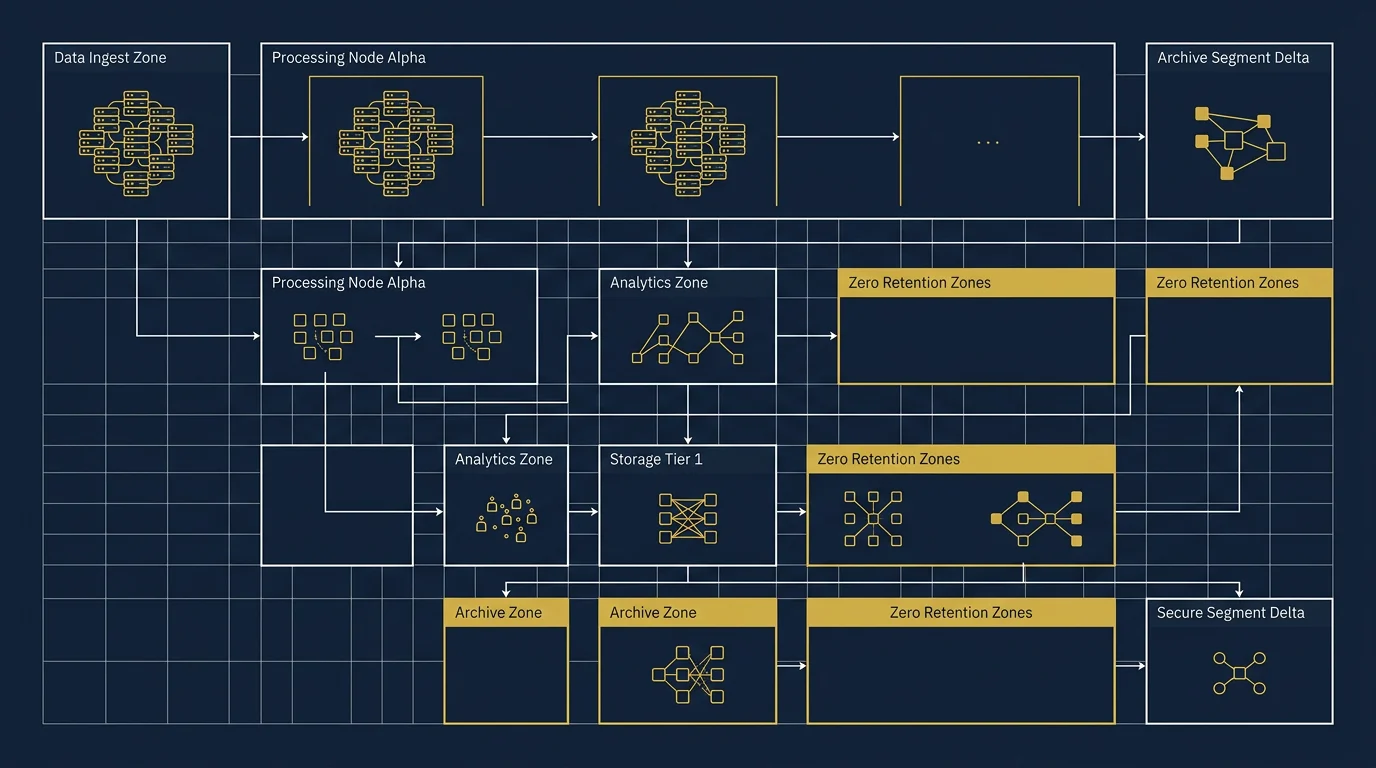
Where a function can operate without retaining personal data, zero retention becomes achievable. This is the endpoint of the progression: Zero Trust to least privilege, then to least data, then to minimum retention, and finally to zero retention where the architecture permits it. Zero Data Protocol frames this direction through three commitments: Zero Collection, Zero Retention and Zero Exploitation.
Their human consequence is what we call Human Freedom Choice: when identity or personal data is not functionally necessary, the user should remain free not to provide it.
Zero Data Protocol is an independent framework, not a replacement for Zero Trust. Verification and least privilege remain essential for the data that must exist; structural reduction addresses the data that does not need to. Containment strategies pair well with this thinking, and our explainer on Breach containment through micro-segmentation without heavy profiling shows how segmentation limits damage without expanding surveillance. IBM has previously reported materially lower breach costs among organizations with mature Zero Trust strategies, including a $1.76 million average difference in one study and holding less sensitive data compounds that benefit by shrinking what a breach can reach. No approach guarantees absolute security; the aim is durable risk reduction through design.
How the layers compare
The following comparison positions each layer by what it controls. The layers are cumulative, not competitive.
Approach | What it controls | Effect on data volume |
Zero Trust verification | Who connects, continuously | None |
Least privilege | Scope of access per session | None |
Least data | What is collected by default | Reduces collection |
Minimum retention | How long data is kept | Reduces stored volume |
Zero Data Protocol (our framework) | Collection, retention and exploitation together | Reduces unnecessary dependency where technically and functionally feasible |
Bringing the layers together
Zero Trust remains a sound foundation for continuous verification and scoped access, and it should stay in place. The point of moving from least privilege toward a least data posture is that access control cannot shrink a store of sensitive information it was never designed to touch. Treat the layers as a progression: verify rigorously, grant the minimum, collect less, retain less, and reach zero retention wherever a function allows it. Design for less data, and there is less to defend, less to lose and less to regret.
Take action with Zero Data Protocol
If your Zero Trust program is mature yet your data stores keep growing, the next gain is structural rather than another access rule. You reduce risk fastest by questioning which personal data your systems truly need, and by removing dependencies that only add liability.
Zero Data Protocol provides an independent architectural framework built around Zero Collection, Zero Retention and Zero Exploitation, connecting privacy, cybersecurity and AI governance into one direction. Explore our least privilege, least data approach to see how architecture, rather than consent promises, lowers exposure, liability and future target surface while strengthening digital trust.
Frequently Asked Questions
Does a least data posture replace Zero Trust?
No, it does not. Zero Trust governs verification and access for data that must exist, while least data reduces how much sensitive data exists at all. The two directions are complementary and work best together.
Why is least privilege insufficient on its own?
Least privilege limits who can reach data and constrains lateral movement, which is valuable. However, it does not delete or avoid collecting sensitive records, so the underlying liability and target remain. Reducing data volume addresses what access control cannot.
What does Zero Retention mean in practice?
Zero Retention means a function operates without keeping personal data after its purpose is served, or without storing it at all. It applies where the architecture permits, and it removes the future exposure that every retained copy represents.
How does the Zero Data Protocol relate to these principles?
Our Zero Data Protocol frames the direction through Zero Collection, Zero Retention and Zero Exploitation. It is an independent framework that complements Zero Trust by targeting structural reduction of personal-data dependency rather than access alone.
Can reducing data still allow useful functionality?
Yes. Value should come from system function rather than from extracting user data, so many services can operate on minimal or no personal data. The design goal is to request identity or attributes only when they are functionally necessary.