

Nearly 90% of United States browsers are expected to eventually operate without third-party cookies, a shift that redraws how the open web recognizes people. For teams accustomed to cross-site profiling, the change feels abrupt, yet it rewards organizations that treat privacy as a design decision rather than a compliance afterthought. If your systems depend on external identifiers, the same dependency creates exposure, which is why understanding vendor and identifier risk matters; our Third-Party AI Risk guide examines that terrain in depth. The strategic question is no longer how to track, but how to remain relevant while collecting less.
Adapting to the decline of third-party tracking cookies means rebuilding measurement, targeting, and personalization on data you own or that users share willingly. According to recent industry figures, of consumers distrust brands that rely heavily on third-party data. That distrust, more than any single browser policy, defines the transition ahead.
What the end of cross-site cookies really changes
Third-party cookies powered behavioral targeting, retargeting, and multi-touch attribution for nearly two decades. Their removal degrades the signals that advertising has treated as default infrastructure. Yet the timeline itself has been uneven. In 2025, Google shifted to a user-choice model rather than mandatory removal, while global cookie acceptance reportedly fell under 40% as more people declined tracking. The practical effect is the same: reliable cross-site identifiers are shrinking, whether by policy or by refusal.
Surviving the post-third-party-cookie world therefore requires a change in posture. Safari and Firefox already block these cookies by default, and mobile platforms have tightened cross-app tracking. Statista's dedicated deprecation report tracks how these changes ripple across the United States and United Kingdom advertising markets. The lesson is that signal loss is structural, not temporary, so durable strategies should assume fewer third-party identifiers by design.
Chrome no longer follows a mandatory third-party-cookie phaseout. Google chose to maintain user choice, while Safari and Firefox continue to apply strong cross-site tracking restrictions.
The data strategies replacing cross-site tracking
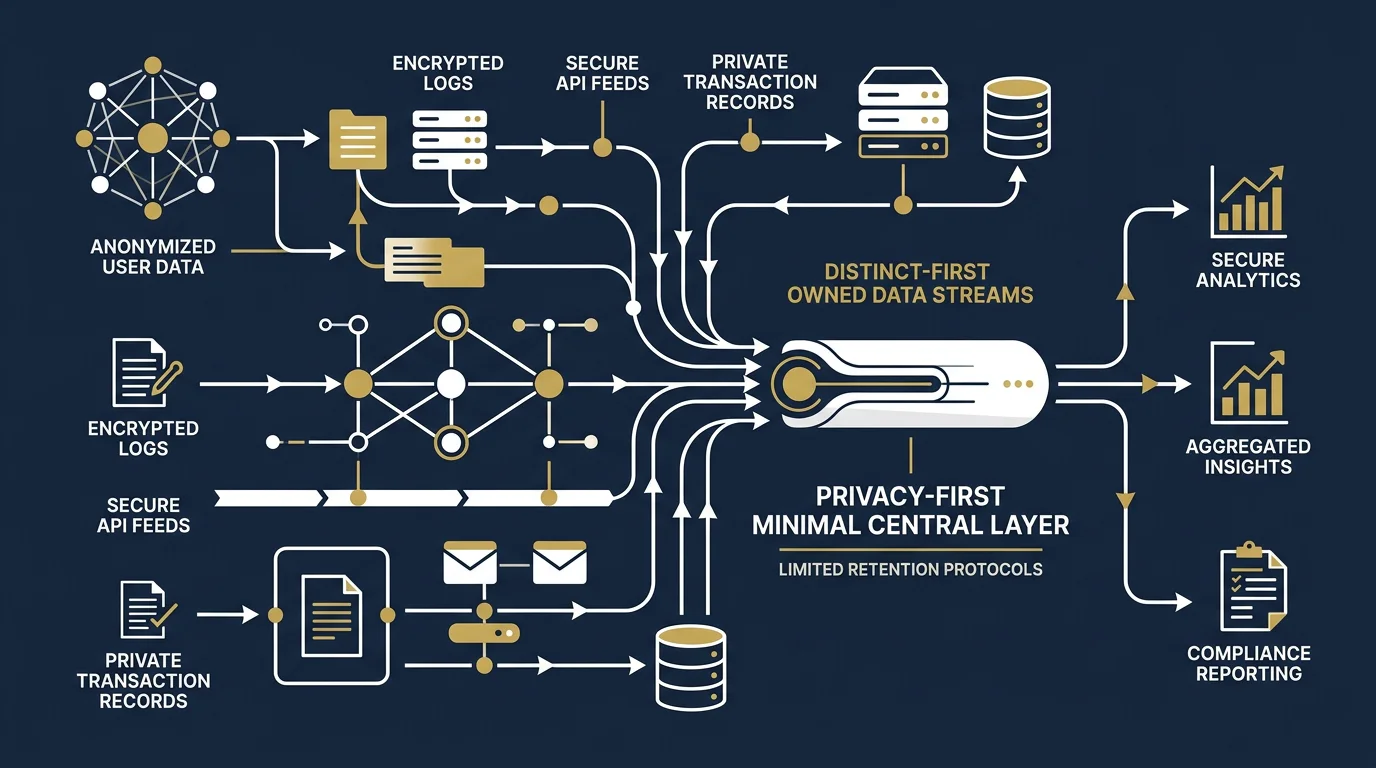
Three approaches now anchor most transition plans. First-party data comes from direct interactions on your own website or application. Zero-party data is information a customer shares intentionally, such as preferences submitted through a quiz or account. Contextual advertising places messages according to page content rather than personal history. Each reduces reliance on external identifiers, and each can be combined.
Momentum is measurable. In 2026, according to reported IAB and Salesforce findings, agencies, and publishers were growing their first-party datasets, nearly double the 2022 rate, while 84% of surveyed marketers named first-party data a primary source. Zero-party data is intentionally provided by the user, but that does not automatically determine the applicable legal basis or remove retention and governance obligations. If you are weighing where intentional disclosure fits, our Zero-party data approach contrasts sharing by request with designing so the data is never required.
Rethinking trust as an architectural outcome
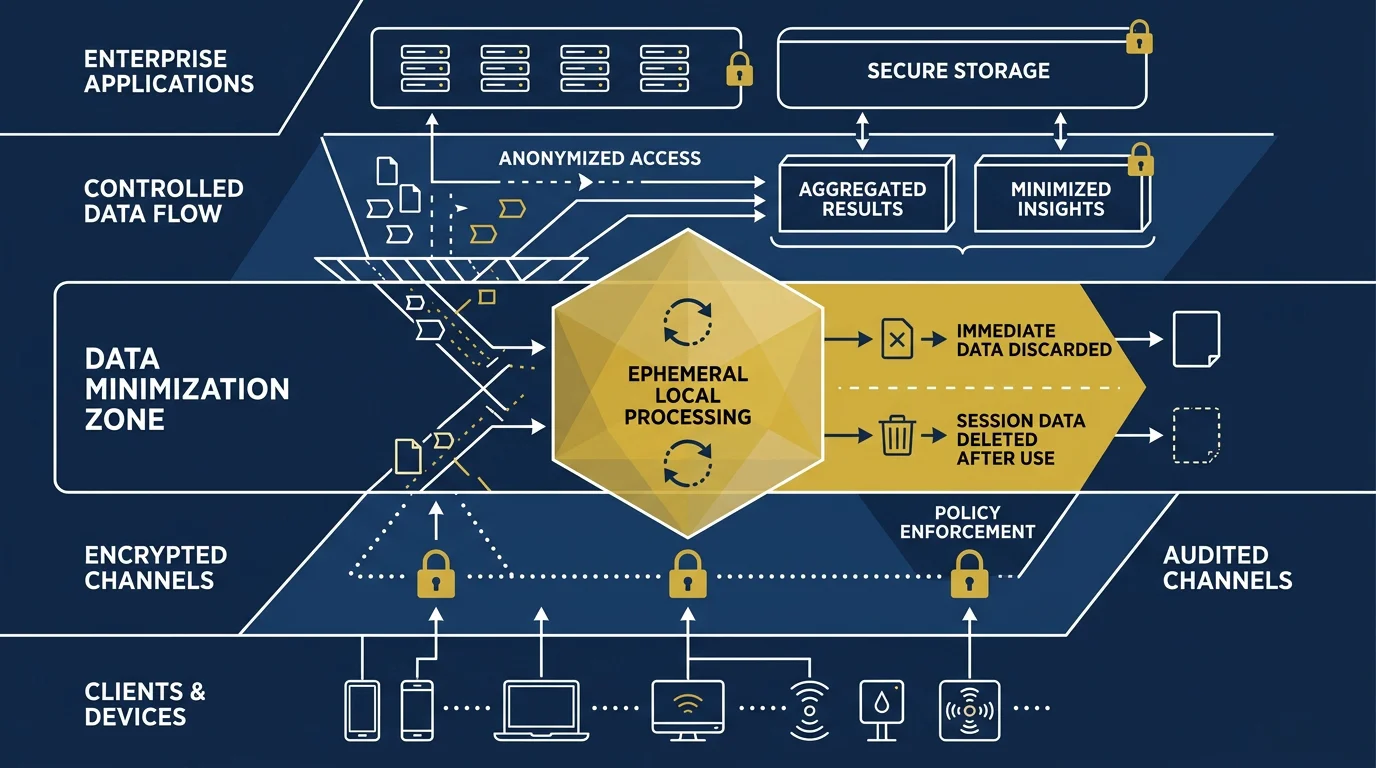
Most transition advice still frames the problem as substitution: swap one identifier for another. There is a different lens. Zero Data Protocol (ZDP) is an emerging independent framework built on three principles, Zero Collection, Zero Retention, and Zero Exploitation. Its human consequence is Human Freedom Choice: when identity or personal data is not functionally necessary, users should remain free not to provide it. This reframes trust as something your architecture produces, not something a consent banner promises.
The reasoning is direct. Avoiding unnecessary collection removes one category of exposure, while avoiding unnecessary retention reduces the window for later compromise. As you rebuild systems for a world of shrinking identifiers, the underlying networks matter too. Our Network access control without surveillance resource shows how access decisions need not depend on persistent profiling, and our Network segmentation without persistent identity profiling guide applies the same logic deeper in the stack. ZDP is not a regulation, certification, product, or guarantee; it is a direction: collect less, retain less, exploit less.
Comparing data approaches by personal-data dependency
Different methods carry different exposure. The table below compares them on the source of data, the personal-data dependency involved, and the durability of the approach as identifiers erode. It positions structural minimization as the most resilient posture, without claiming any method removes all risk.
Approach | Data source | Personal-data dependency | Durability as cookies fade |
Third-party cookies | Cross-site tracking | High | Declining |
Contextual advertising | Page content | Low | Stable |
First-party data | Owned interactions | Moderate | Durable with consent |
Zero-party data | Intentional user sharing | Moderate, consented | Durable with value exchange |
Zero Data Protocol direction | System function, not extraction | Reduced where function allows. | Structural minimization where feasible |
No single row is a complete answer. Contextual methods lose granular personalization, first-party and zero-party data still require careful governance, and structural minimization demands rethinking product design. The point is to reduce unnecessary dependency, not to declare a winner.
Residual risks and honest limits
A privacy-first transition does not eliminate risk. First-party and zero-party data still create retention and breach exposure if stored longer than needed. Consent can be misconfigured, and contextual tools that rely on machine analysis raise their own governance questions. Even minimal-data architectures depend on disciplined operations, so residual risk always remains.
Treat any claim of automatic compliance or guaranteed security with skepticism, including from vendors selling cookie replacements. The durable advantage comes from asking, for every field you request, whether the system genuinely needs it. When identity or a personal identifier is not functionally required, preserving the user's freedom not to provide it lowers exposure, liability, and future attack surface at once.
Turning constraint into durable advantage
The shift beyond third-party tracking cookies is best read as an invitation to simplify. Rebuild measurement on data you own, request only what a feature truly needs, and retain it only as long as it serves a purpose. Contextual targeting, first-party and zero-party data, and transparent consent form a practical toolkit, while structural minimization turns privacy into an outcome of your architecture. Assume fewer identifiers, design for that reality, and let trust follow from what you deliberately choose not to collect.
Take action with Zero Data Protocol
If the erosion of cross-site identifiers has you rethinking how much personal data your systems truly need, that instinct is worth acting on. Reducing dependency is not only a marketing adjustment; it is a security and governance decision that shapes your exposure for years.
Zero Data Protocol offers a structural approach to designing digital systems with minimal dependency on personal data, connecting privacy, cybersecurity, AI governance, and system design around Zero Collection, Zero Retention, and Zero Exploitation. Explore our Zero Data Protocol framework to understand how collecting less, retaining less, and exploiting less can strengthen trust and resilience. It is a direction rather than a guarantee, and that honesty is part of the point.
Frequently Asked Questions
Are all cookies disappearing?
No. First-party cookies remain widely used, and third-party cookies have not disappeared universally. Safari and Firefox strongly restrict cross-site tracking, while Chrome maintains user choice over third-party cookies.
What is the difference between first-party and zero-party data?
First-party data comes from observed interactions on your own properties, such as page visits and purchases. Zero-party data is information a customer shares intentionally, such as stated preferences. Both require clear consent and responsible retention.
Does contextual advertising work without personal tracking?
Yes. Contextual advertising places messages based on the content of a page rather than a person's browsing history. It sacrifices some granular targeting but avoids reliance on cross-site identifiers and reduces privacy exposure.
How does Zero Data Protocol relate to this transition?
Zero Data Protocol is an emerging independent framework, not a regulation or product, built on Zero Collection, Zero Retention, and Zero Exploitation. It encourages designing systems that do not depend on personal data, so trust becomes an architectural outcome rather than a promise.
Can any approach guarantee compliance or zero risk?
No responsible approach can promise automatic compliance or eliminate risk entirely. Even minimal-data architectures carry residual exposure through operations, consent configuration, and retention. The goal is to reduce unnecessary dependency, not to claim perfect security.