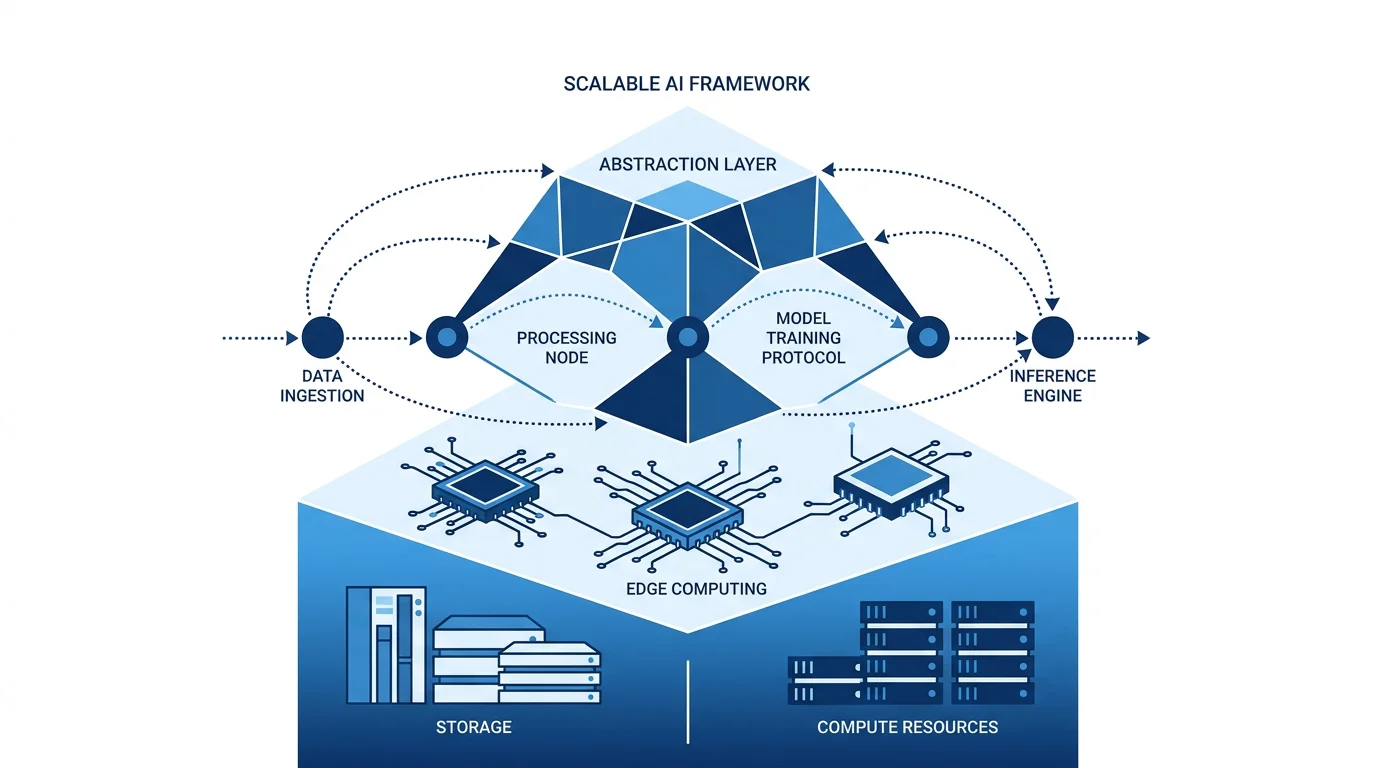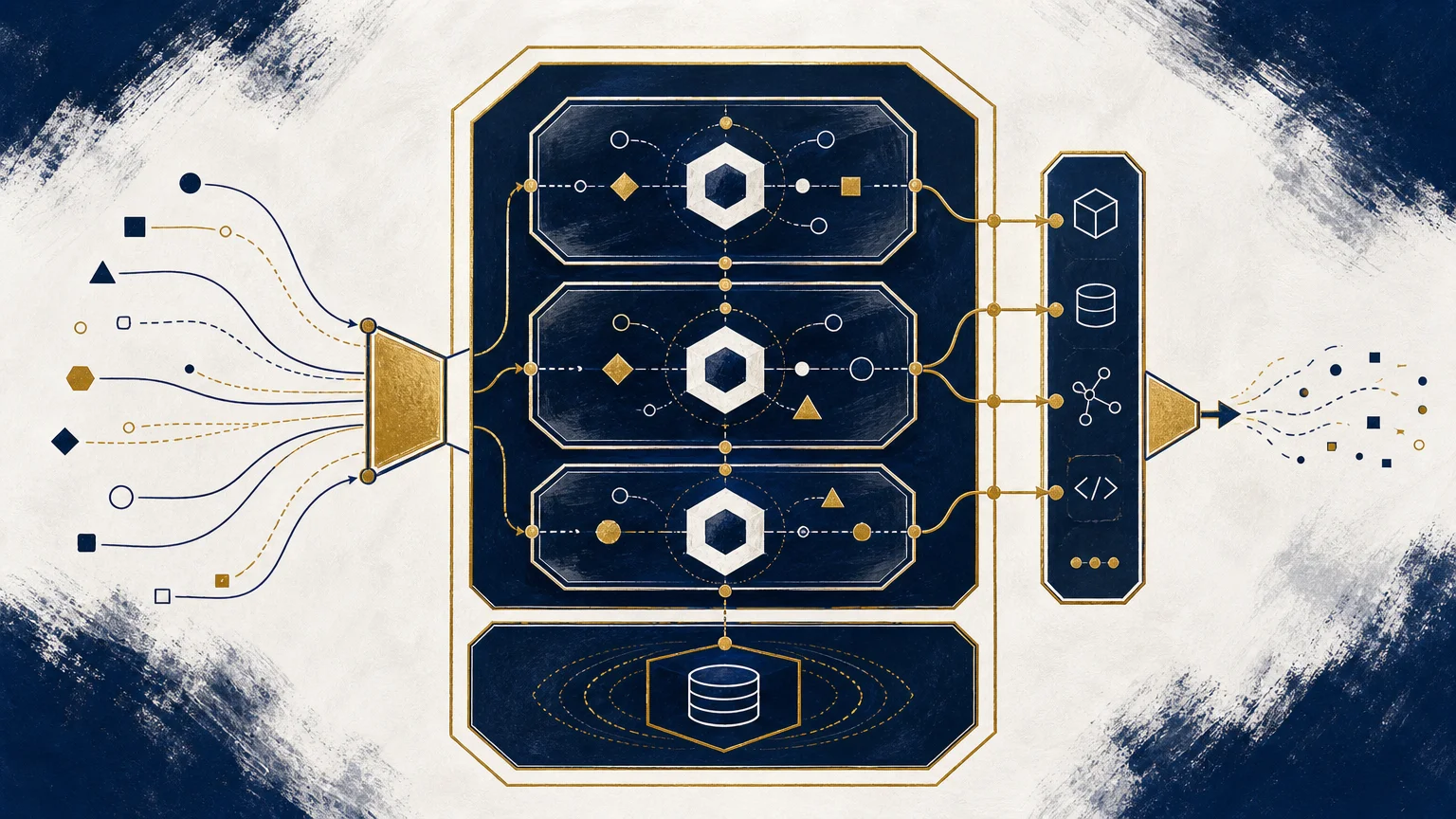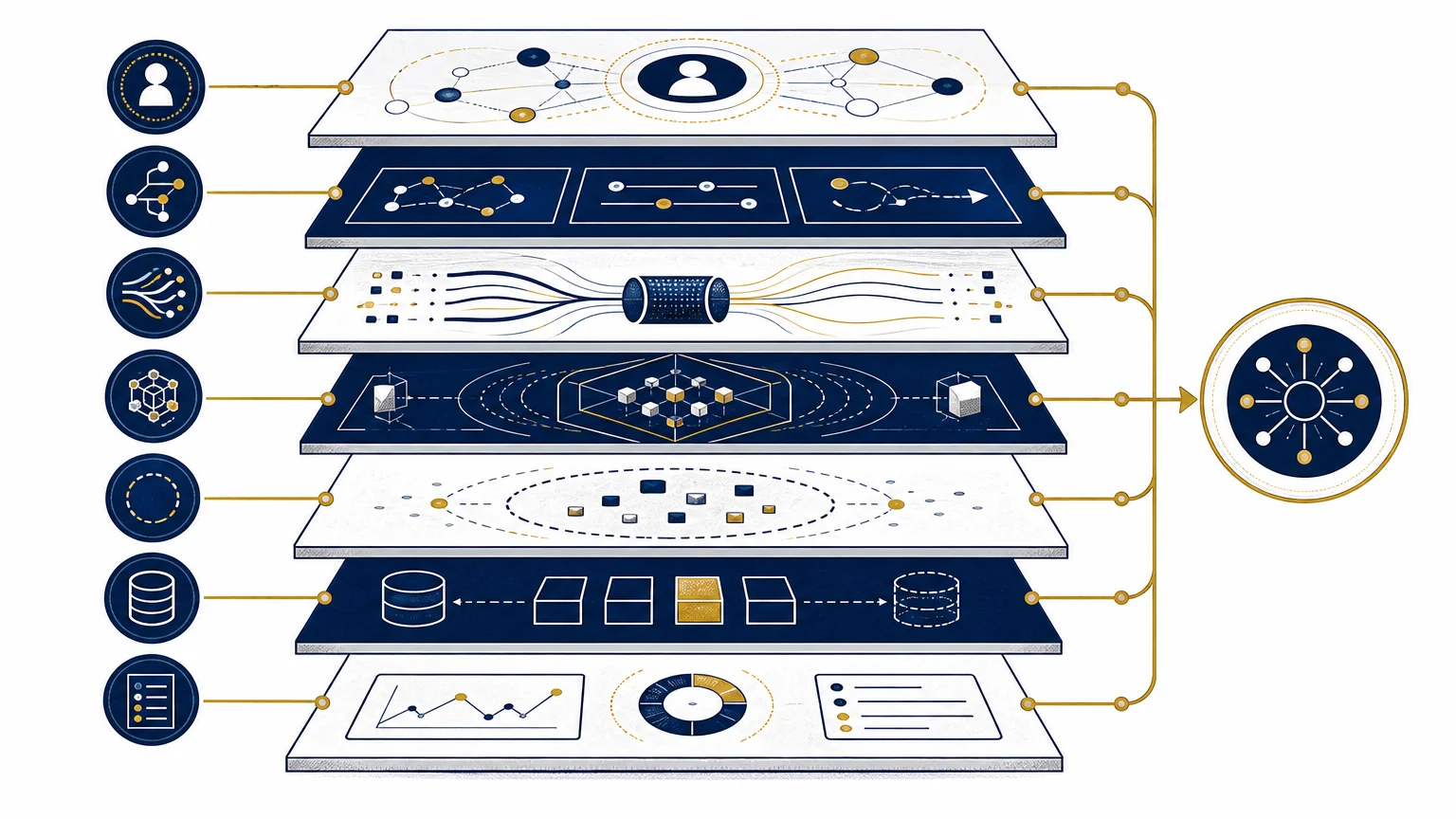

Trust in digital systems is no longer created by a login screen, a privacy notice or a security product alone. It depends on how the entire system handles identity, information, decisions and responsibility. Our Zero Data Architecture perspective begins with a practical question: what information must exist for the requested function to work?
That question expands the meaning of digital trust architecture. Authentication and authorization remain essential, but they are only part of the structure. A trustworthy system must also limit unnecessary collection, control persistence, restrict secondary use, govern connected systems and make AI-agent activity reviewable without creating avoidable personal-data exposure.
What does digital trust architecture actually protect?
Digital trust architecture protects more than data at rest. It supports confidence that the right entity is accessing the right resource, that information has not been manipulated, that automated actions remain within defined boundaries and that the system does not create unnecessary exposure through its own design.
In practical terms, the architecture should answer five questions:
Identity: Who or what is requesting access?
Authorization: What is that entity allowed to do?
Integrity: Can the origin, state and history of information be verified?
Data necessity: Does the system need this information at all?
Accountability: Can the organization explain, investigate and correct what happened?
These questions apply to people, devices, applications, APIs, AI agents and connected services. They also apply to the information created during processing. A system may protect a customer database carefully while still exposing sensitive data through prompts, diagnostic logs, analytics tools, vector stores, agent memory or downstream providers.
The architecture therefore has to connect technical controls with operational decisions. Access control, encryption, network isolation and monitoring reduce exposure during use. Data minimisation, retention rules and purpose boundaries reduce the amount of information that can become exposed in the first place.
The commercial and operational importance of this approach is becoming clearer. In 2026, Gartner’s 2026 forecast said that 40% of government organizations could establish dedicated TrustOps functions by 2028 to address deepfake identity impersonation and related threats. The forecast is specific to government organizations and is not a universal adoption rate, but it illustrates the shift from isolated security controls toward coordinated trust operations.
Why data necessity is a trust control
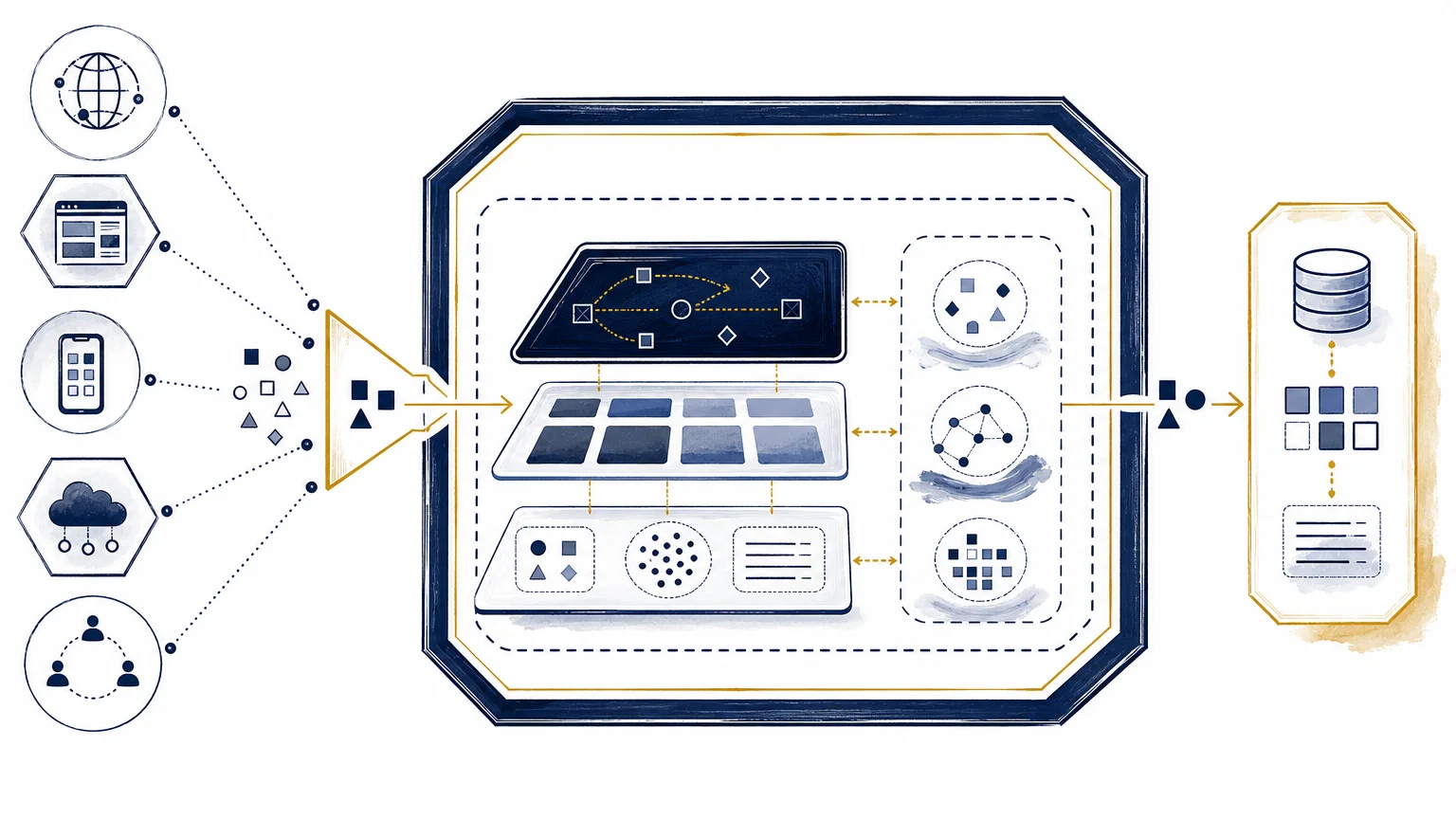
Traditional security often starts with the assumption that data will be collected and stored, then asks how to protect it. A more structural approach asks whether the information should enter the workflow at all.
This is the central distinction between data minimisation and a narrow storage-protection strategy. If an application requests a real name, full document, persistent identifier or behavioral history without a defined functional reason, encryption does not remove the underlying dependency. It protects the data while it exists, but it does not explain why the system needed to create that exposure.
Zero Data Protocol is an emerging independent framework built around three connected directions:
Zero Collection: avoid collecting personal or sensitive information that is not functionally necessary.
Zero Retention: avoid persisting information beyond the lifecycle required for the function.
Zero Exploitation: restrict unrelated profiling, targeting, training, advertising or other secondary reuse.
The framework also connects these principles to Human Freedom Choice. When identity or personal information is not functionally necessary, the system should preserve the person’s freedom not to provide it. This matters in anonymous access, unlinkable interactions, consent design, tracking decisions and privacy-by-design reviews. It does not mean that every system can remove identity, and it does not make a user anonymous automatically.
For architects, the practical method is to examine every input and connect it to a defined function. That includes visible form fields, cookies, SDKs, telemetry, error reports, analytics, account records and third-party integrations. A field that may be useful later is not necessarily necessary now. A persistent identifier that simplifies personalization may still create long-term exposure that the core function does not require.
Our What Is ZDP? explanation develops this architectural distinction without presenting the framework as a regulation, certification, product or security guarantee. Its value is as a review lens for identifying unnecessary dependency before the system accumulates more data than its purpose requires.
How should trust be designed for AI agents and connected systems?
AI agents make digital trust more complicated because they can receive context, retrieve information, call tools, create outputs and write results into other systems. The relevant question is not only whether the agent is authorized. It is also what information the agent can see, remember, derive and transmit during the task.
A useful review separates at least four memory states:
Task context: information required for the immediate request.
Session memory: information kept during a defined interaction.
Persistent memory: information retained for future interactions.
Derived memory: summaries, classifications, embeddings, decisions, profiles or workflow outputs created from the original information.
These states have different risk profiles. A prompt may disappear after an answer while a summary is written to a case-management platform. A session may end while an embedding remains searchable. A provider may apply a retention condition to prompts and outputs while account data, security metadata, billing records or connected enterprise data remain elsewhere.
In December 2025, the ITU security group summary identified agentic AI, security, trust frameworks and identity management as active topics in international security standardization work. That does not establish a single global architecture, but it reinforces the need to treat agent identity, permissions and data flows as connected design questions.
A practical AI-agent review should map:
the content submitted by the user or application;
retrieved context and tool results;
provider routing and downstream processors;
metadata such as request identifiers, timestamps and account references;
temporary queues, caches, retries, crash reports and backups;
outputs written to business systems;
derived information such as summaries, embeddings, classifications and risk scores.
Model instructions should not be treated as the sole enforcement layer for these boundaries. The surrounding architecture should apply permissions, network controls, isolation, sandboxing, credential handling, provider restrictions and retention rules. A well-written system prompt cannot stop a connected service from retaining data, prevent an over-permissioned tool from accessing an unrelated database or guarantee deletion from a backup.
Our privacy architecture for AI agents material focuses on this lifecycle view. It treats agent memory and connected systems as architectural surfaces that require explicit decisions about necessity, persistence, access and deletion.
Where do zero trust, retention and provenance fit?
Zero trust architecture centers on resource-access decisions, continuous verification and least-privilege enforcement. Digital trust architecture, as used here, applies a broader lens that also examines data necessity, retention, purpose, provenance and accountability.
Architecture concern | Core question | Typical design controls |
|---|---|---|
Identity and access | Who or what may access a resource? | Authentication, authorization, least privilege and session controls |
Data necessity | Does the information need to enter the workflow? | Field review, redaction, scoped identifiers and input minimisation |
Retention | How long must the information remain available? | Lifecycle rules, deletion testing, storage limits and exception handling |
Purpose integrity | May the information be reused for another purpose? | Purpose-bound access, workflow restrictions and downstream review |
Provenance and accountability | Can the origin and action history be reconstructed? | Integrity checks, audit records, timestamps and controlled evidence |
Least privilege and least data should also be treated as complementary controls. Least privilege limits what an agent or user can reach. Least data limits the information that exists within the reachable environment. An agent can have narrow permissions and still receive an unnecessarily detailed customer record. Conversely, a minimized dataset can still be exposed if an agent has excessive access or weak credentials.
Zero Data Retention is another related but narrower concept. It usually addresses whether defined content remains persistently stored after processing. It does not automatically answer whether the content needed to be collected, whether metadata remains, whether a connected system keeps a copy or whether the information can be reused for another purpose.
Our analysis of from least privilege to least data explains why access restriction and data minimisation solve different parts of the same exposure problem. A complete architecture may need both, along with encryption, secure deletion, network boundaries and appropriate records management.
Provenance adds another dimension. Digital signatures, timestamps, audit trails and integrity records can help establish where an asset came from and whether it changed. These controls are valuable when organizations need to investigate a transaction, validate an automated action or distinguish an approved output from a manipulated one. They do not, however, reduce the amount of personal data collected by themselves.
How can organizations evaluate the architecture in 2026?
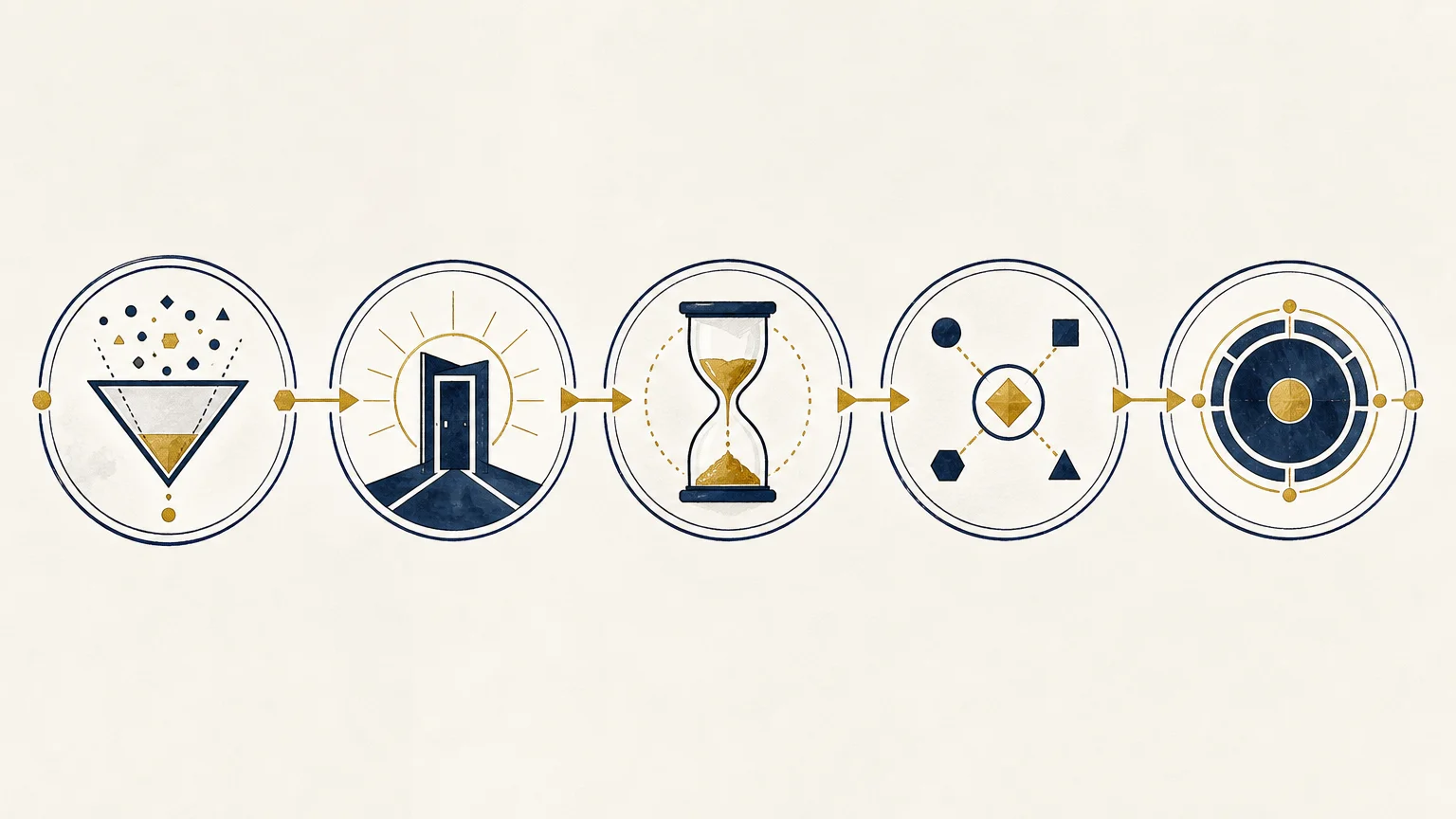
A useful evaluation begins with the data flow rather than the vendor label. Terms such as trusted, private, secure or zero retention can describe different technical and contractual scopes. The architecture should make those scopes visible and testable.
Define the function. State what the system must accomplish and which information is genuinely required.
Map every data path. Include prompts, outputs, metadata, identity systems, connected applications, providers, logs, queues, caches and backups.
Separate content from identity. Determine whether the function can operate without identity, or with a pseudonymous or temporary identifier.
Classify memory. Distinguish task context, session memory, persistent memory and derived information.
Set retention triggers. Specify when data is created, when it should be deleted and which exceptions apply.
Inspect secondary use. Review profiling, advertising, unrelated analytics, model training and downstream reuse.
Test failure paths. Examine retries, timeouts, queue failures, crash reports, support exports, backups and incident-response procedures.
Assign responsibility. Identify who approves access, retention, provider routing, deletion and exceptions.
Testing deletion is especially important. A system may remove a visible record while leaving copies in a cache, queue, trace, backup or connected application. Deletion should therefore be tested as a process across normal and abnormal conditions, not treated as a single database operation.
Evidence should also be proportional to the risk. High-impact workflows may need stronger identity assurance, more detailed audit records, controlled provenance and human review. Low-risk functions may be able to operate with transient identifiers and limited telemetry. A digital trust architecture should not collect everything merely to create a comprehensive audit trail, because the audit trail itself can become a sensitive dataset.
Industry investment has also evolved over time. A McKinsey technology analysis published in 2023 described investment in digital-trust and digital-identity ventures as having grown about fivefold between 2018 and 2022. That historical figure does not describe the current market in 2026, but it shows that trust architecture has been developing as a strategic technology category rather than remaining a purely compliance-oriented concern.
Current examples also show that trust architecture can combine identity, evidence and oversight. In its annual security reporting published in 2026, IATA described work on the digital-trust architecture behind its aviation security framework, including verifiable credentials for evidence such as training records and audit outputs. The example is sector-specific, and it does not establish that one model applies everywhere, but it demonstrates how trust can be designed into verification and evidence exchange.
The result of this evaluation should be a set of explicit decisions, not a generic trust score. Organizations should be able to explain why each category of data exists, where it travels, how long it remains, who can access it, what derived information is created and which controls remain effective when a component fails.
Building trust by reducing unnecessary dependency
A mature digital trust architecture combines identity assurance, access control, integrity, provenance, data minimisation, retention discipline and accountable AI governance. The most important design decision may occur before collection, when the team decides whether personal or sensitive information needs to enter the workflow at all. From there, the system should limit access, control memory, test deletion, restrict secondary use and acknowledge residual risks. Zero Data Protocol offers one independent framework for asking these questions through Zero Collection, Zero Retention, Zero Exploitation and Human Freedom Choice, while leaving implementation, legal interpretation and security testing context-dependent.
Explore Zero Data Architecture
When a system handles AI requests, connected applications or sensitive user information, trust depends on more than a retention setting or a security promise. The next step is to review necessity, persistence, identity dependency, derived information and secondary use together.
Our zero-data architecture material provides an independent architectural direction for reducing unnecessary personal-data dependency across digital systems, AI workflows and connected services.
Frequently Asked Questions
What is digital trust architecture?
Digital trust architecture is the system-level design of identity, access, integrity, data handling, AI governance, retention and accountability. It aims to make digital interactions verifiable, controlled and aligned with the function the system is meant to provide.
How is digital trust architecture different from zero trust architecture?
Zero trust architecture focuses primarily on continuous verification and authorization of access to resources. Digital trust architecture includes those controls but also examines data necessity, retention, secondary use, provenance and the broader responsibilities created by digital systems.
Why does data minimisation belong in a trust architecture?
Collecting less unnecessary data reduces the amount of information that can be exposed, misused or retained incorrectly. It also makes the system’s purpose easier to explain, although minimisation does not remove the need for access control, encryption, monitoring or legal review.
Can zero data retention protect an AI system by itself?
No. Zero data retention may limit persistent storage for defined content, but data can still be transmitted, processed, logged as metadata, copied by connected systems or retained under documented exceptions. It should be assessed alongside input minimisation, permissions, provider routing and deletion testing.
How can Zero Data Protocol help with digital trust architecture?
Zero Data Protocol provides an independent framework for examining Zero Collection, Zero Retention, Zero Exploitation and Human Freedom Choice. It can help architects question unnecessary data dependency, but it is not a certification, regulation, product, universal solution or guarantee of security or compliance.