
How long should a digital system keep information after it has served its immediate purpose? The answer depends on the data, the function, the legal context, and the risks created by continued access. For organizations evaluating AI systems, our AI agent data retention framework helps examine what enters a system, what remains available, and what should disappear after the task ends.
Data retention has become more than a storage question. In February 2026, a U.S. Government Accountability Office review examined how federal agencies collect, share, and use personal data while protecting civil rights and civil liberties. That perspective reinforces a practical point: retention decisions should be connected to purpose, accountability, access, and downstream use.
What does data retention actually control?
Data retention controls the period during which an organization keeps information in an identifiable or usable form. It may cover customer records, employee files, financial documents, communications, system logs, backups, research materials, AI prompts, generated outputs, and access records.
A retention policy should answer four basic questions. What information is being kept? Why is it being kept? Where does it remain accessible? When and how will it be deleted, anonymized, or transferred to an archive?
This distinction matters because retention is not the same as storage. Storage describes where information resides. Retention describes the business or legal decision to keep it for a defined period. Archiving usually means moving inactive information into a separate repository. Deletion means removing it through a controlled process that considers active systems, backups, caches, exports, and replicas.
Retention also differs from data minimization. Minimization asks whether the organization needs to collect or process particular information in the first place. Retention begins after information has entered the environment, although the two decisions should be designed together.
How should you set a defensible retention period?
Consider a financial record, a temporary support message, and an AI agent session. These items do not have the same operational value, legal status, sensitivity, or exposure. Applying one universal period to all three creates avoidable risk and may also prevent the organization from meeting legitimate recordkeeping duties.
A defensible retention period usually combines five considerations:
- Purpose and necessity: Identify the function that requires the information and confirm that the purpose remains valid.
- Legal and contractual duties: Record the statutes, regulations, contracts, audit requirements, or litigation obligations that apply.
- Operational value: Determine whether the information supports continuity, investigation, service delivery, safety, or another documented need.
- Risk and sensitivity: Consider the harm created by unauthorized access, disclosure, inference, or misuse during the retention period.
- Disposal feasibility: Confirm that the organization can actually find, delete, anonymize, or restrict the information when the period ends.
In the United States, retention duties may differ by sector and record type. For example, the Federal Acquisition Regulation explains that records retention requirements exist to support contract administration and audits, while also allowing reductions for specific record classes under prescribed circumstances. The 2026 acquisition rules illustrate why a retention schedule should document both the reason for keeping information and the conditions for reducing or ending that period.
Legal requirements are only one part of the analysis. A business may retain information because it supports a legitimate operational function, but that justification should be specific. “We may need it someday” is not a reliable retention purpose. It creates indefinite accumulation without a clear review point.
Why must deletion cover the full data lifecycle?

Imagine that a user submits sensitive information to an AI service. The visible request may be deleted after processing, yet related data could remain in access logs, support systems, monitoring tools, queues, backups, exports, or connected enterprise applications.
This is why deletion should be treated as a lifecycle control rather than a single database command. A serious review maps the information from collection through processing, temporary storage, persistence, sharing, backup, recovery, and disposal.
For AI systems, the lifecycle may include request content, metadata, account information, tool calls, retrieved documents, generated outputs, summaries, embeddings, evaluation records, and agent memories. Each category may have a different purpose and retention requirement.
Before retention begins, you can reduce the amount of information that needs protection. Our AI agent data minimization guidance focuses on reducing exposure before information enters an inference or automation workflow.
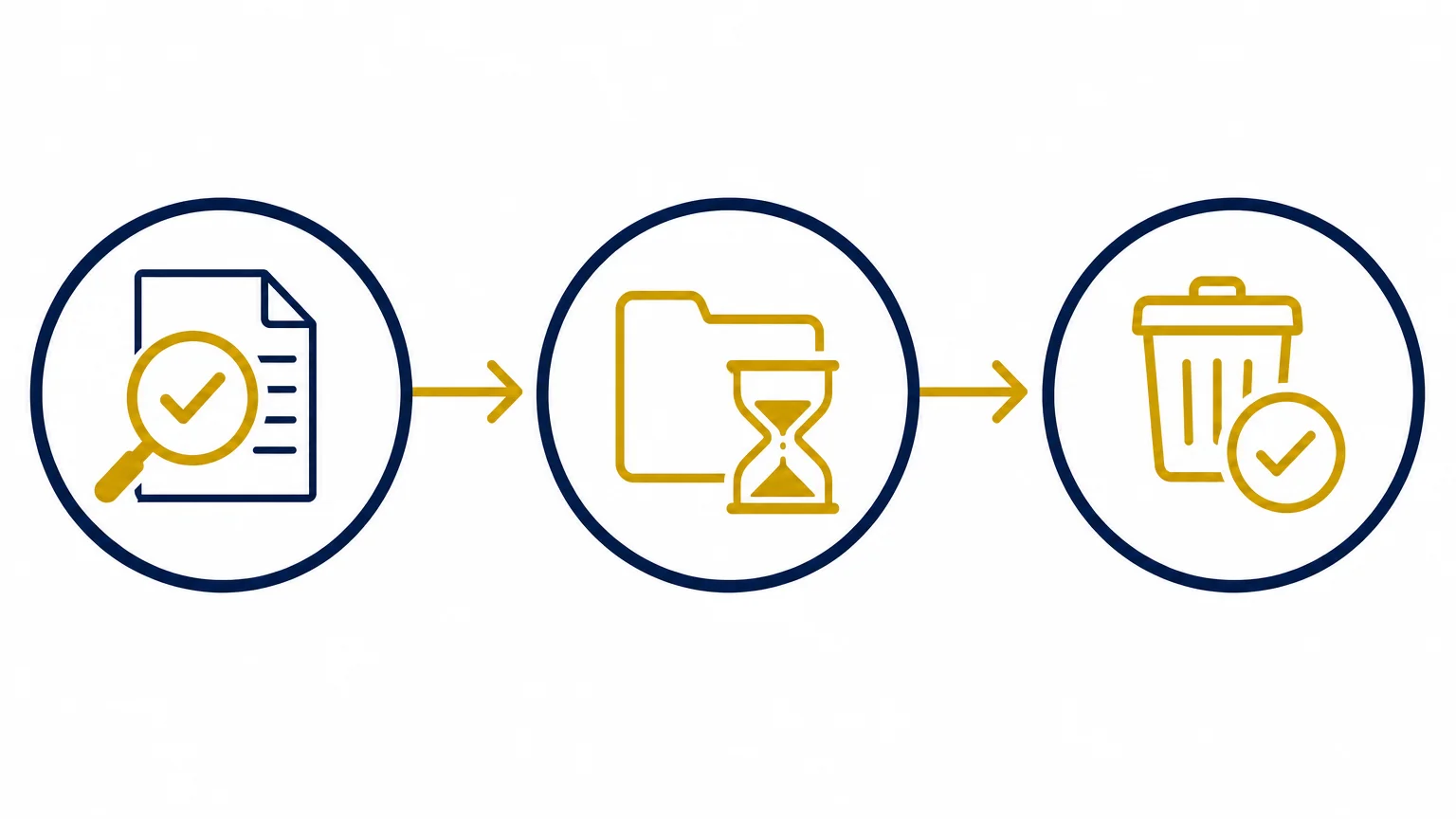
Deletion also requires evidence. Organizations should be able to show what rule applied, which system executed the action, when the action occurred, and whether exceptions prevented disposal. If deletion cannot be verified across the relevant environment, the stated retention period may not reflect the actual period of exposure.
What changes when data retention involves AI agents?
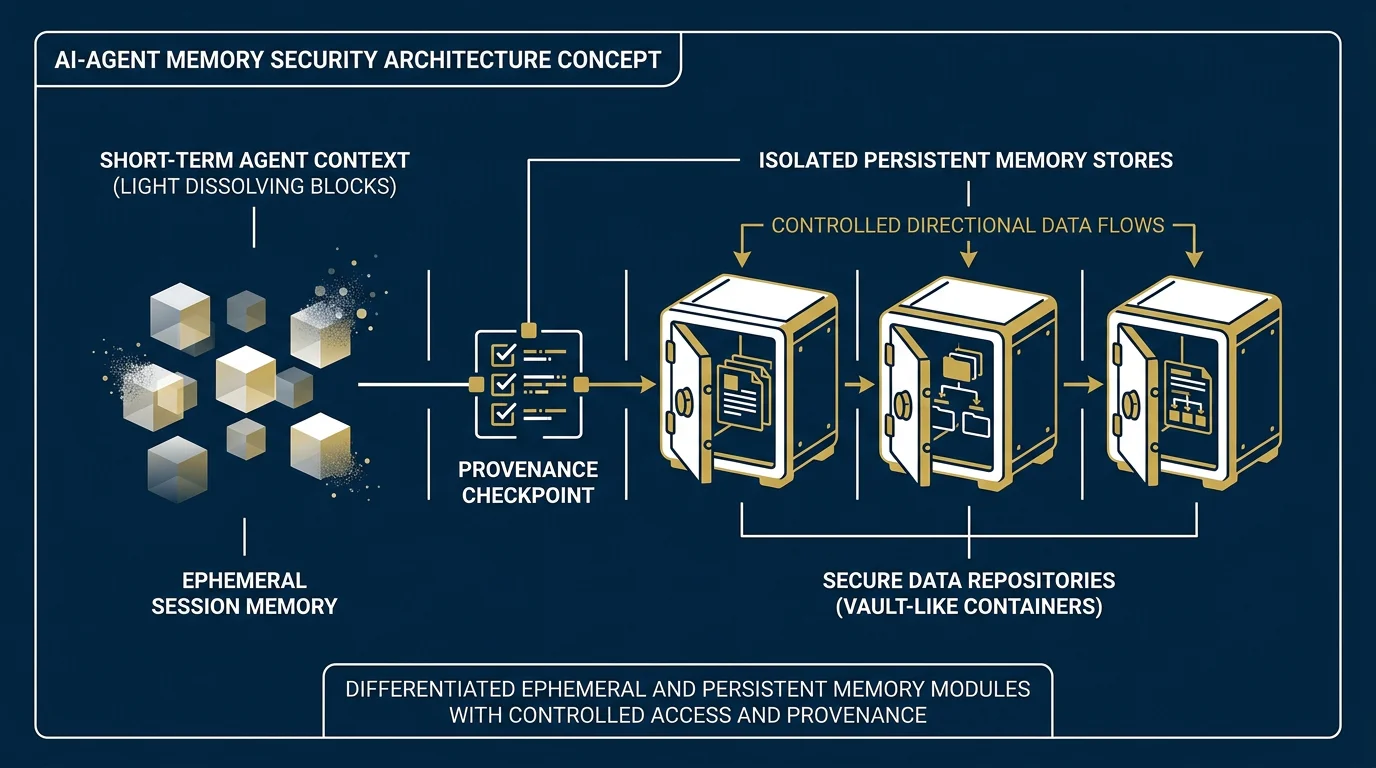
AI agents make retention decisions more complex because they may receive information, retrieve records, call tools, create outputs, and preserve memory for future tasks. A short request can therefore produce several additional data objects beyond the original prompt.
You should distinguish at least four forms of agent memory:
- Task context: Information needed only while the current request is being completed.
- Session memory: Information retained during a defined interaction or workflow.
- Persistent memory: Information stored for future conversations, personalization, or automation.
- Derived memory: Summaries, classifications, embeddings, decisions, profiles, or other outputs created from source information.
Each form creates a different exposure pattern. Persistent memory can improve continuity, but it can also increase the impact of unauthorized access or incorrect inference. Derived information may be difficult to recognize as personal data, even when it reveals preferences, behavior, relationships, or sensitive attributes.
Access control remains essential. An agent should not retain information simply because it can access it, and it should not access connected systems without a documented purpose. Least privilege limits what an agent can reach. Least data limits what exists for the agent to reach.
For healthcare environments, the U.S. Department of Health and Human Services describes a minimum necessary approach that limits access to electronic protected health information according to role and appropriateness. Its Security Rule guidance, reviewed in August 2026, also addresses documentation and periodic assessment. The HHS Security Rule provides a useful example of why retention, access, documentation, and review should be managed together.
AI-agent memory therefore requires more than a setting that says “do not train on this data.” You should inspect provider routing, tool permissions, memory stores, logs, retry behavior, failure paths, human review systems, and connected source repositories. Our Microsoft AI agent memory security and retention guide examines these risks through a broader architecture and lifecycle perspective.
What should a practical retention policy include?
A useful policy should be specific enough for teams to apply consistently and flexible enough to reflect different data categories. It should also define ownership. Legal teams may interpret obligations, security teams may define controls, records managers may maintain schedules, and business owners may confirm operational need.
At minimum, document the following elements:
- Scope: Identify the systems, records, formats, business units, jurisdictions, and third parties covered by the policy.
- Data categories: Classify personal, sensitive, financial, health, employee, operational, confidential, and public information.
- Retention rules: Assign a period or review point to each category, with the purpose and authority recorded.
- Storage locations: Include production systems, archives, endpoints, SaaS platforms, logs, backups, queues, and connected repositories.
- Access controls: Specify who may access retained information and under which circumstances.
- Disposal procedures: Define secure deletion, anonymization, destruction, validation, and exception handling.
- Legal holds: Explain when ordinary deletion must pause because of litigation, investigation, audit, or another documented obligation.
- Review and evidence: Establish review dates, policy owners, audit records, and escalation procedures.
Retention policies often fail because they describe an ideal state rather than the actual data environment. A policy may cover a central database while ignoring spreadsheets, personal devices, collaboration tools, vendor systems, or exported reports.
A June 25, 2026 GSA directive illustrates the importance of defining retention for both communications and IT device data. The policy provides guidance for managing email messages, attachments, and device data under federal records requirements. The GSA directive is a practical reminder that retention scopes should follow how information moves, not only where an organization prefers to store it.
Automation can help enforce rules, but automation does not replace classification or judgment. If the rule is incomplete, automation may delete information too early, retain it too long, or overlook copies outside the primary system.
Organizations should also distinguish between a retention schedule and a backup schedule. Backups support recovery and may have their own lifecycle, access controls, encryption requirements, and deletion process. A backup should not become an indefinite archive by accident.
Unused information creates another challenge. It may be difficult to classify, expensive to review, and attractive to attackers because it remains accessible without a clear owner. Our analysis of data graveyards and unused data explores why information that no longer supports a defined purpose can become a persistent liability.
When is less retention the better architecture?
Less retention is often appropriate when information is needed only for a short operational moment. Examples include transient task inputs, temporary authentication artifacts, intermediate processing files, diagnostic content with no continuing purpose, and personal information collected for a completed interaction.
However, reducing retention can create trade-offs. Teams may lose historical context, debugging detail, fraud indicators, or evidence needed for investigations. The answer is not to retain everything. The answer is to identify which evidence is genuinely necessary, reduce its sensitivity where possible, restrict access, and establish a defined review or disposal point.
Zero Data Protocol presents an emerging independent framework built on three directions: Zero Collection, Zero Retention, and Zero Exploitation. The framework asks whether information needs to enter the system, whether it needs to remain after processing, and whether it may be reused for unrelated purposes such as profiling, advertising, or unrelated training.
Its human consequence is Human Freedom Choice. When identity or personal information is not functionally necessary, the system should preserve the user’s freedom not to provide it. This principle is relevant to anonymity, tracking, consent, user control, and privacy-by-design decisions.
This approach does not mean that no information exists anywhere. Account data, billing records, configuration details, security records, aggregated operational information, connected source data, and legally required records may still persist. It also does not mean that temporary processing is automatically anonymous or that a zero-retention control guarantees compliance.
The broader lesson is architectural. Retention should be considered alongside collection, identity, access, connected systems, provider routing, derived information, and secondary use. This gives organizations a clearer basis for deciding what data should exist, what should persist, and what should be excluded from future use.
Build a retention strategy around necessity
Data retention works best when every category has a documented purpose, a defined lifecycle, an accountable owner, and a verifiable disposal method. You should review the full path of information, including requests, metadata, memories, outputs, logs, backups, connected systems, and derived records.
Retention is not a choice between keeping everything and keeping nothing. A more resilient approach keeps what is necessary, protects it while it exists, limits unrelated use, and removes it when the documented purpose ends. That balance supports security, governance, privacy, and operational continuity without treating any single control as a complete solution.
Take action with Zero Data Protocol
If your organization is reviewing data retention, the most useful starting point is to examine the entire architecture rather than one storage setting. Consider what information enters the system, which identities are required, how AI agents access connected resources, what memories or outputs persist, and whether unrelated reuse is possible.
Zero Data Protocol provides an independent architectural framework for evaluating these questions through Zero Collection, Zero Retention, Zero Exploitation, and Human Freedom Choice. To connect retention decisions with broader system design, explore our zero-retention architecture and use it as a starting point for clearer data lifecycles, narrower exposure, and more deliberate trust boundaries.
Frequently Asked Questions
What is data retention?
Data retention is the practice of keeping information for a defined period because of a legal, operational, contractual, security, or historical need. A retention policy also explains when information should be archived, anonymized, or securely deleted.
How long should an organization retain data?
There is no universal retention period for every data type. You should base each period on documented necessity, applicable requirements, operational value, sensitivity, and the organization’s ability to dispose of the information reliably.
What is the difference between retention and data minimization?
Data minimization asks whether information needs to be collected or processed at all. Retention asks how long information should remain after it has entered the system, so the two controls should be designed together.
Does zero retention mean that no data exists?
No. Zero retention usually applies to defined categories of information and does not automatically remove account records, billing data, configuration details, security logs, backups, connected source data, or legally required records. The scope and exceptions must be documented clearly.
How can Zero Data Protocol help with retention decisions?
Zero Data Protocol offers an independent framework for examining collection, persistence, and secondary use across digital systems and AI-agent environments. Its approach can help you evaluate whether data needs to enter a system, remain available, or be reused beyond the original purpose.