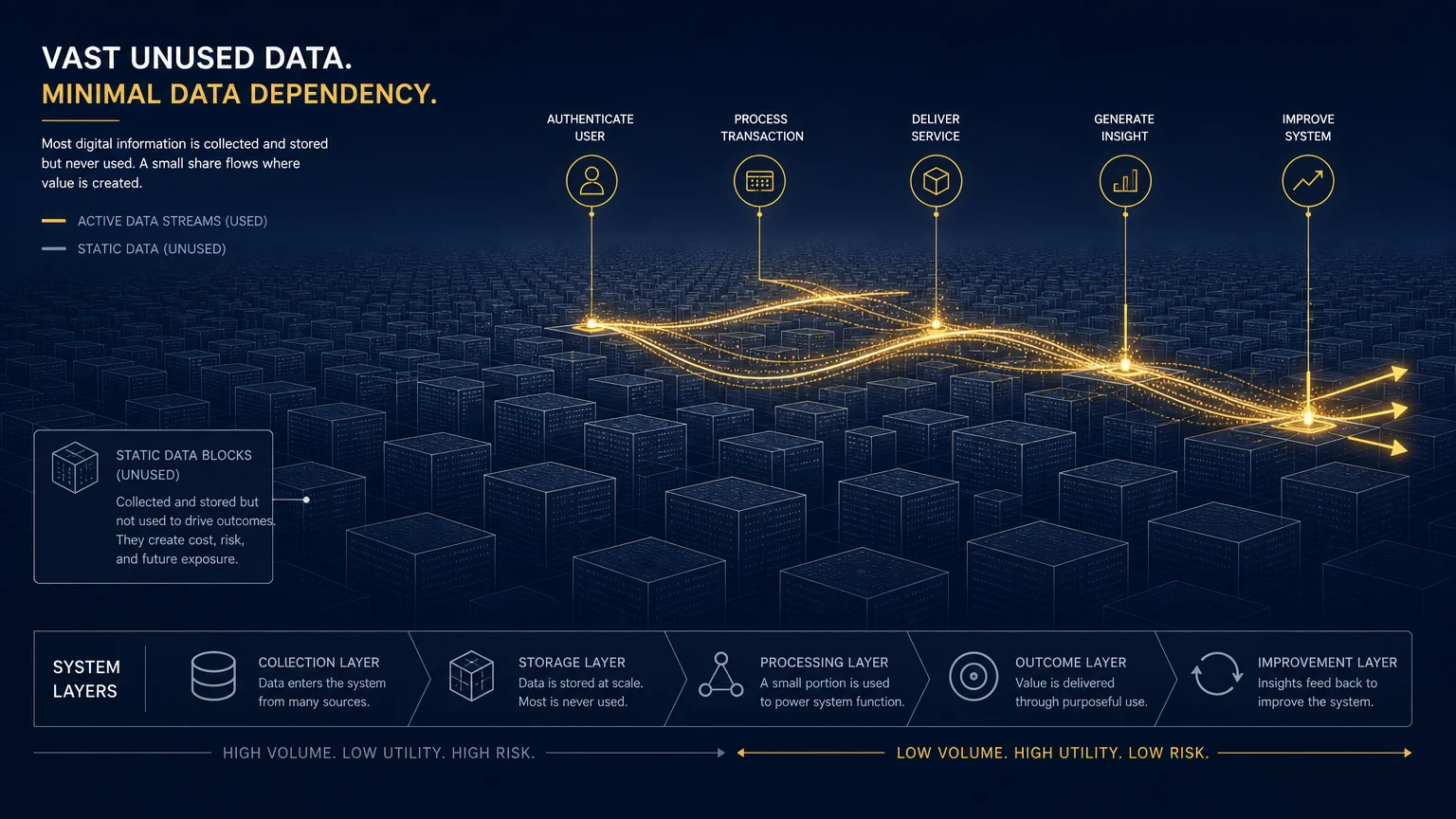

Only a fraction of the information organizations store is ever analyzed. Industry estimates suggest that roughly 55% of enterprise data sits unused, and much of it accumulates silently for years. This dormant material forms what many teams now call data graveyards: vast repositories that quietly consume storage, invite regulatory scrutiny, and expand the surface available to attackers. The cost is rarely visible on a single invoice, yet it compounds over time.
The problem is not that data exists. It is that data without a defined purpose keeps growing unchecked. According to dark data research, only about 15% of enterprise data receives active analysis, leaving the remainder as a liability rather than an asset. Understanding how these graveyards form, and what they truly cost, is the first step toward reversing the trend.
What a data graveyard actually is
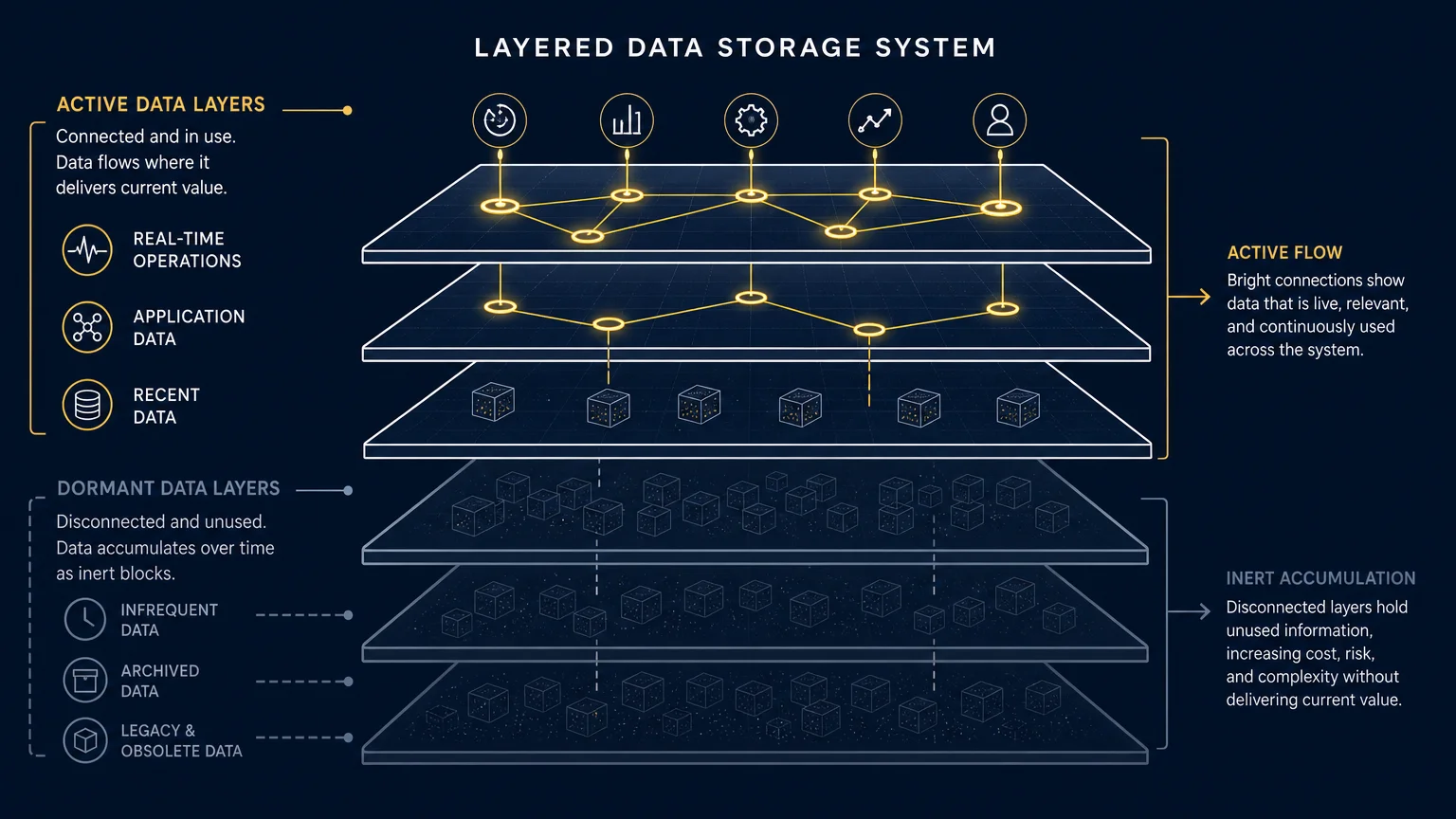
The term describes an accumulation of unmanaged information that occupies storage and creates risk while serving no active purpose. A data graveyard differs from a deliberate archive: an archive is organized, categorized, and preserved for a defined reason, whereas a graveyard is a collection of unclassified material with no documented value. The distinction matters because governance, not volume, separates the two.
The phrase entered wider use through development research. As Open Data Watch notes, unused datasets often pass into a "data graveyard," a concept traced to a 2017 AidData study, where they become inaccessible rather than reused. The same dynamic now affects private enterprises drowning in logs, duplicate tables, and abandoned customer records that nobody deletes and nobody consults.
The scale and hidden cost of unused data
The volume involved is difficult to overstate. Analysts estimate that unused enterprise data accounts for tens of zettabytes of global storage, and that companies waste an estimated 350 billion US dollars each year managing information they never use. More than 90% of that material is unstructured, meaning emails, chat logs, images, and sensor feeds that resist easy classification.
Storage itself is cheap, which is precisely why the problem is ignored. The real expense is indirect: infrastructure maintenance, duplicated ingestion, wasted processing, and the staff time required to navigate cluttered environments. Because dark data rarely appears as a discrete line item, decision-makers underestimate what it drains from budgets and productivity year after year.
IDC forecasts cited by Alation indicate that unstructured data accounts for 78% of stored data and could grow from 5.5 zettabytes in 2024 to 10.5 zettabytes by 2028. Not all unstructured data is unused, but its rapid growth increases the importance of classification, purpose and retention governance.
Why these graveyards keep forming
Consider a familiar pattern. A business team requests a new data source "just in case," unsure which fields it will actually need. The obsolete data that results is never revisited, never documented, and never deleted. Multiply that across departments and years, and the cause becomes clear: collection outpaces governance.
Falling storage costs removed the natural brake that once forced discipline. When capacity was expensive, teams were selective. Now the default posture is to keep everything, and requirements are defined loosely. Mergers, acquisitions, platform migrations, and shifting strategies then render older datasets irrelevant, yet the material lingers because no policy triggers its removal.
Weak data governance is the common thread. Without ownership, cataloging, and retention rules, information collected but never indexed becomes effectively invisible over time. It cannot be found by the people who might use it, but it remains fully exposed to the parties who might exploit it.
Security, compliance, and regulatory exposure
Every retained record is a potential target. Unused data still contains names, payment details, and identifiers, and it sits outside active monitoring where anomalies are hardest to detect. Research on enterprise dark data indicates that a substantial share is subject to regulatory retention requirements, yet most of it is never classified for compliance, creating a persistent blind spot.
The regulatory pressure is concrete. The GDPR’s storage-limitation principle requires personal data to be kept no longer than necessary for the purposes for which it is processed, subject to applicable legal obligations and exceptions. A graveyard full of sensitive records that should have been deleted is not a passive cost; it is an active liability waiting to be triggered by an audit or a breach.
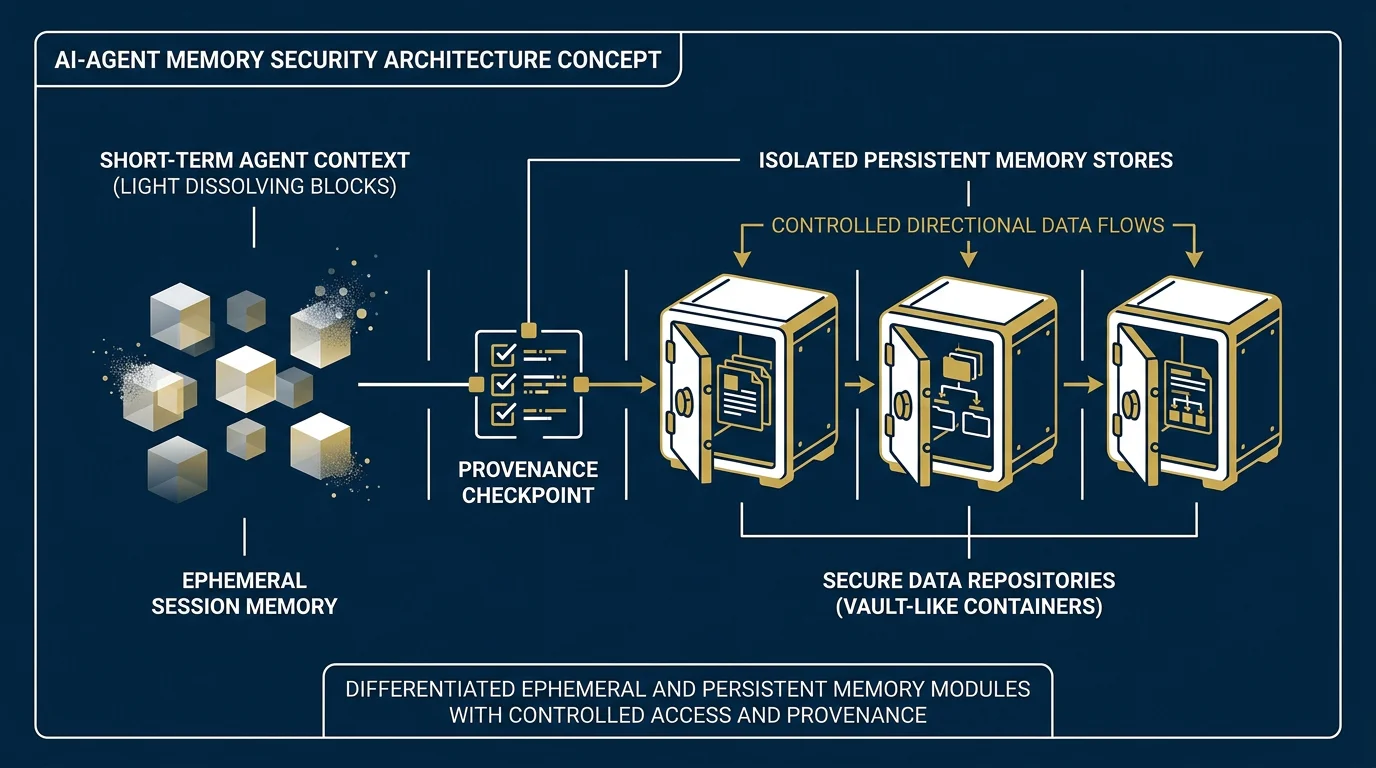
The risk is intensifying as artificial intelligence systems ingest historical stores. When AI agents draw on retained data, poorly governed material can resurface through inference and profiling in ways nobody intended. Our Microsoft AI Agent Memory Security and Retention Risk Guide examines how memory and retention choices in agent systems can quietly widen this exposure, and why deliberate limits matter.
Reducing exposure by collecting and retaining less
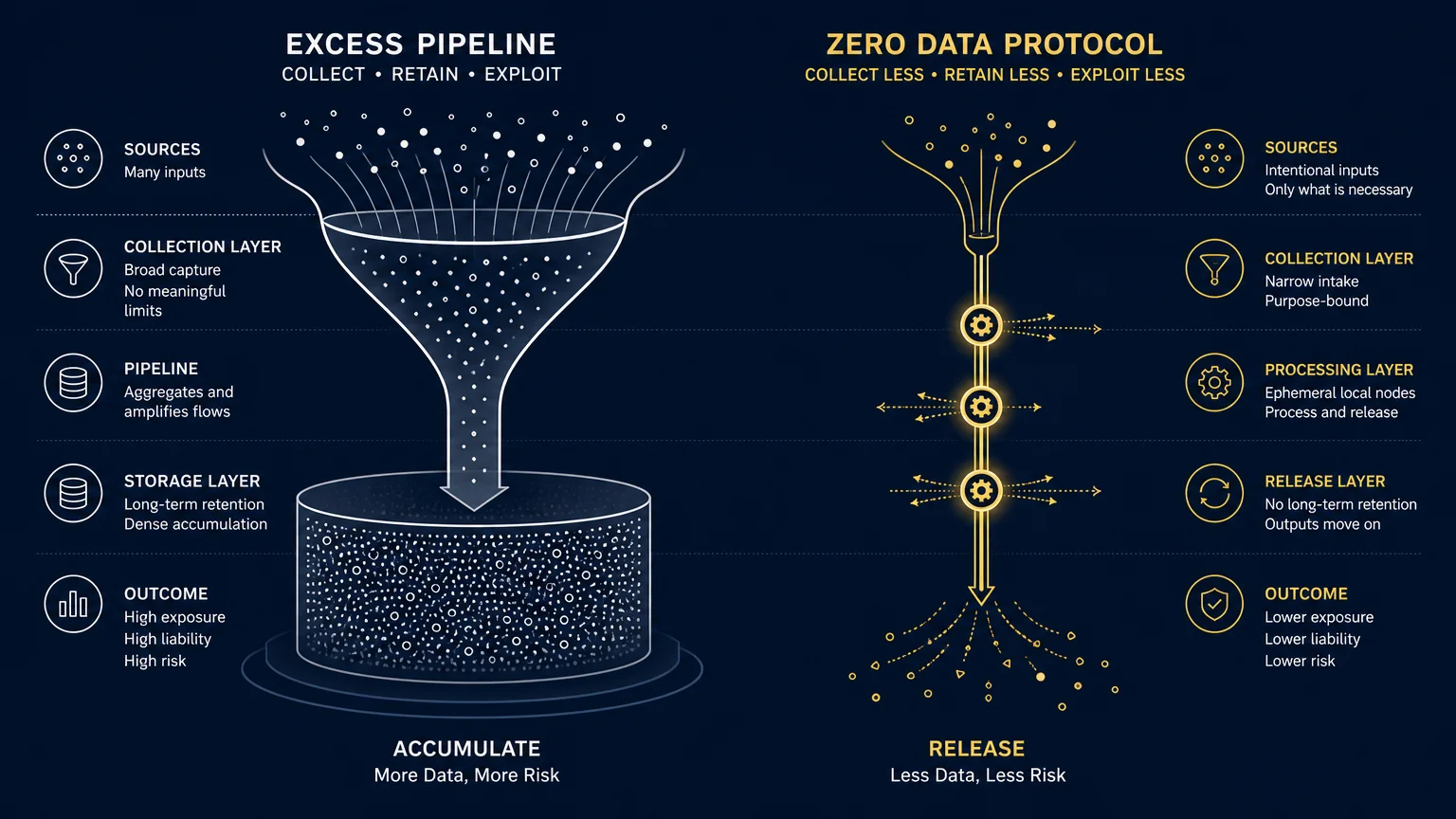
Most guidance treats the graveyard as something to clean up after the fact. A structural view asks a harder question: why was so much data collected in the first place? This is the premise behind Zero Data Protocol, an emerging independent framework built on three principles, Zero Collection, Zero Retention, and Zero Exploitation. Avoiding unnecessary collection removes an entire category of future retention and exposure risk.
The principles are complementary. Collecting less by default reduces what can ever become dormant. Retaining less shrinks the window during which information remains a target. Exploiting less means value comes from system function rather than from extraction of personal traces. Together they attack the root cause rather than the symptom, though they do not eliminate residual risk, and no framework can promise that.
There is a human dimension as well. When identity or personal data is not functionally necessary, the principle of Human Freedom Choice holds that users should remain free not to provide it. Designing for that freedom means fewer unnecessary records enter the system, which in turn means fewer future graveyards. Our work on our Zero Data Architecture explores how these ideas translate into concrete system design decisions.
Practical steps to shrink the graveyard
Reversing accumulation requires both cleanup and prevention. Governance is the operative word: a set of practices covering the full lifecycle, from creation and collection through use, sharing, and deletion. The following steps address the material you already hold and the material you have not yet collected.
Identify obsolete or redundant data. Locate outdated records, duplicate copies, and information already superseded by newer versions.
Assess value and relevance. Weigh commercial usefulness, regulatory obligations, and genuine future need to decide what to keep, archive, or delete.
Set retention and deletion policies. Define clear deadlines and secure procedures so that irrelevant data is removed rather than left to linger.
Do not feed new graveyards. When specifying any new source, confirm a defined purpose before a single field is collected.
Introduce cost accountability. A FinOps discipline helps surface storage inefficiencies that governance gaps would otherwise hide.
Prevention deserves the most attention, because it is where lasting savings originate. When AI-driven systems are involved, retention defaults deserve particular scrutiny, and our guidance on our AI agent data retention practices shows how limiting what agents keep reduces both clutter and risk. Every field you decline to store is a record you never have to secure, audit, or eventually delete.
Turning liability back into discipline
The accumulation of unused and unmanaged data is not inevitable. It is the predictable result of collecting without purpose and retaining without rules. Governance, cataloging, and honest value assessment can drain existing graveyards, but the durable fix is to collect and retain less from the outset. Treat every dataset as something you must justify, secure, and eventually remove, and the graveyard stops growing. Residual risk will always remain, yet a discipline of minimal data dependency turns a quiet liability into a measurable advantage.
Take action with Zero Data Protocol
If unused records and expanding retention are quietly widening your exposure, the most effective response is to design systems that depend on less personal data in the first place. Zero Data Protocol connects privacy, cybersecurity, AI governance, and system design into a single direction: collect less, retain less, exploit less.
Zero Data Protocol provides an independent architectural framework built around Zero Collection, Zero Retention and Zero Exploitation, with the objective of reducing unnecessary personal-data dependency where functionally and technically feasible.
Frequently Asked Questions
What is the difference between a data graveyard and a data archive?
An archive is organized, categorized, and preserved for a specific and documented purpose. A data graveyard is unclassified information with no defined value that simply accumulates. Governance and intent, not the age of the data, separate the two.
Why is unused data considered a security risk?
Retained data often contains personal identifiers, payment details, or sensitive records, and it usually sits outside active monitoring. That combination makes it an attractive and poorly defended target. Reducing what you store directly reduces what an attacker can reach.
How does unused data create compliance problems?
The GDPR requires organizations to respect storage limitation and other applicable data-protection obligations, meaning personal data should not be retained longer than necessary for its stated purpose unless another legal basis or obligation applies.
Can reducing data collection really help with this problem?
Yes, because prevention addresses the root cause rather than the symptom. Our Zero Data Architecture and the broader Zero Data Protocol principles focus on collecting and retaining less, so that fewer records ever become dormant liabilities. No approach removes all risk, but less data means less exposure.
Where should an organization start when cleaning up existing stores?
Begin by identifying obsolete and duplicate data, then assess each dataset for genuine value and regulatory obligations. From there, apply clear retention and deletion policies. Establishing ownership and cataloging prevents the same graveyard from reforming later.