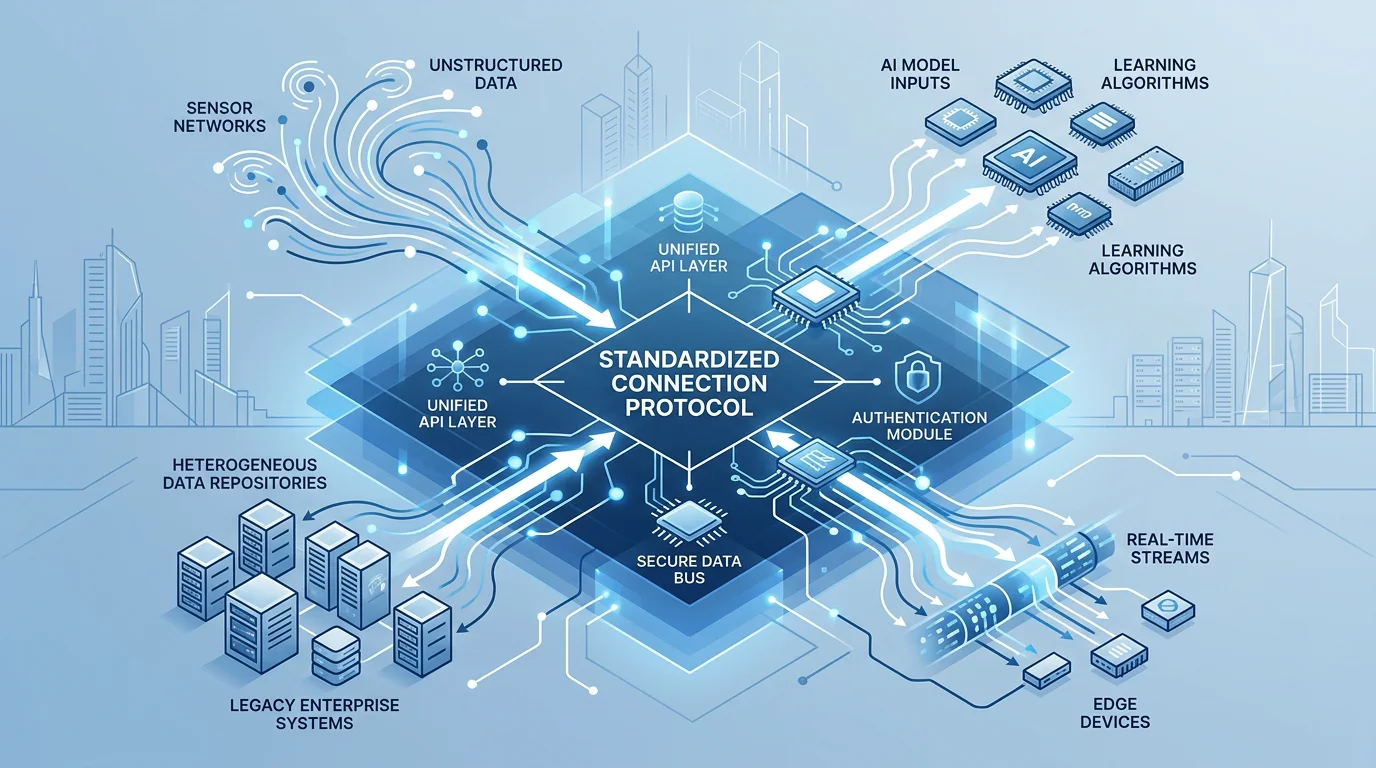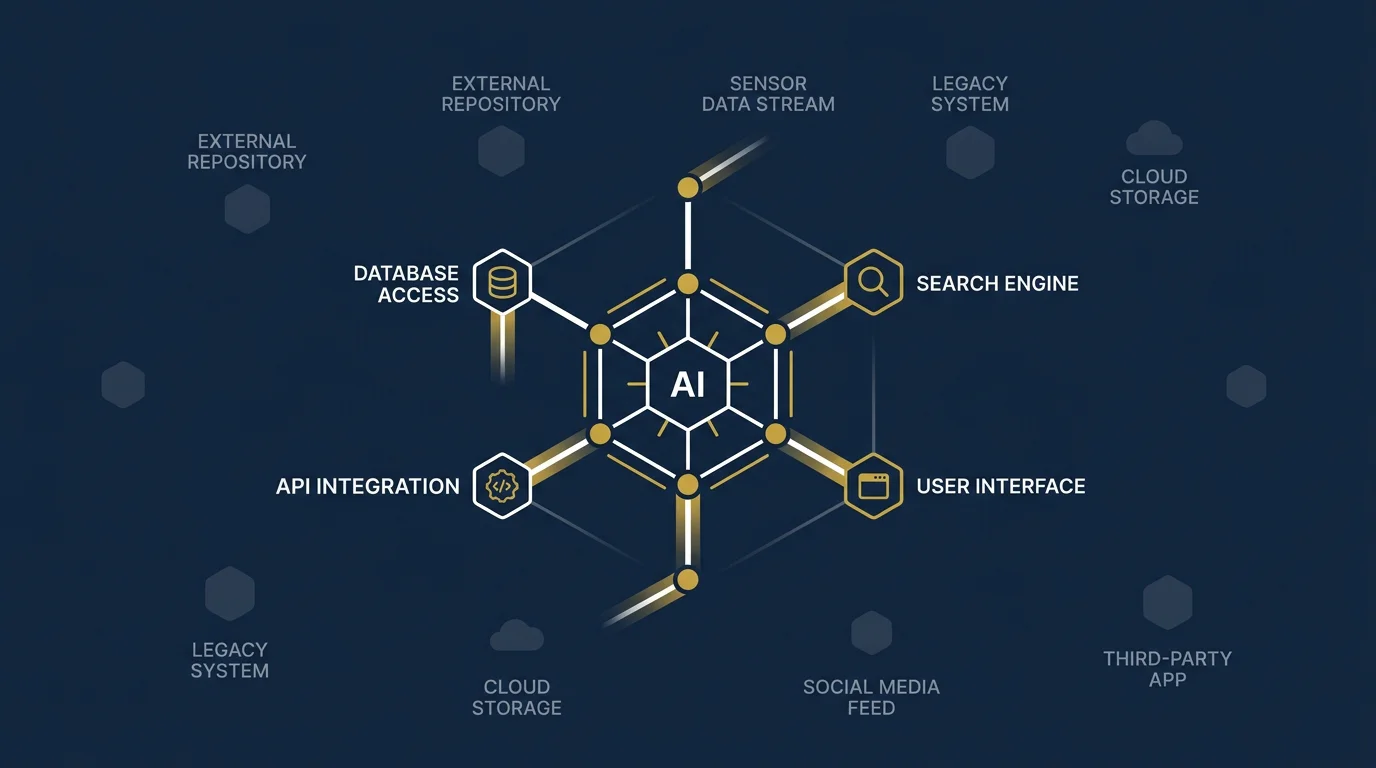

An autonomous agent given a broad objective may query far more data than its task requires if access and data boundaries are not explicitly constrained. That single behavior turns a routine task into a sprawling data flow spanning records, logs and external APIs. The discipline of AI agent data minimization exists to interrupt that drift at the source, before exposure becomes retention and retention becomes liability. Our guidance on AI Data Protection through data minimization frames the same idea structurally.
The stakes are quantifiable. According to IBM the global average cost of a data breach reached USD 4.99 million in 2026, a record driven partly by AI-enabled incidents. When an agent can reach large datasets, every unnecessary field it accesses can widen the compliance and financial footprint of a single mistake.
Why agentic systems expand data flows by default
A basic generative model answers one prompt. An agentic system pursues a goal: it decomposes the objective into subtasks, preserves context across a session, invokes internal systems and external APIs, and can take actions that modify records. In doing so, it aggregates inputs from customer records, transaction logs, session history, directory data and third-party feeds, then recombines and acts on them.
This recombination is precisely what makes purpose limitation and minimization harder to enforce. An agent connected to persistent memory, stored conversation history or application-level state can carry personal data across sessions, creating data stores that conventional controls may not fully monitor. The risk is not only theft. Accessing personal data beyond what a specified task requires may conflict with data-minimization, purpose-limitation or other applicable obligations, depending on the legal and operational context.
From Least Privilege to Least Data
Least privilege is a familiar security principle: grant each identity only the permissions its role demands. Applied to agents, it means scoping tool access, API credentials and query rights to the narrowest set that still completes the function. Yet least privilege alone is insufficient, because a correctly permissioned agent can still pull far more data than the task needs from systems it is legitimately allowed to reach.
Least data extends the principle from permissions to payloads. The question shifts from "what may this agent access" to "what is the minimum content this agent must actually receive." A support agent resolving a billing query does not need a customer's full medical or employment history to succeed. Enforcing least data at query time, not after the fact, is where exposure is genuinely reduced. For teams designing these boundaries, our Zero-data AI agents resources describe how to structure functions that depend on as little personal data as possible.
Distinguishing processing, collection and retention
Effective minimization depends on separating three operations that are often conflated. Collection is the acquisition or receipt of data by a system. Processing covers operations performed on that data, including use, transformation, analysis or inference. Retention is the continued storage of data beyond the immediate processing need. A system may process data transiently without retaining it, but transient processing still means the data was received and handled.
This distinction matters because each stage carries a different risk profile. Consider a preprocessing pipeline that redacts a name and identifier before a prompt reaches the model:
Ephemeral processing: the agent receives only a session identifier and a scoped symptom log, sufficient to act but not to identify.
Reduced collection: irrelevant history and exact dates are filtered or converted to ranges before ingestion.
Bounded retention: nothing beyond the task output is written to durable storage.
Separating these stages lets you minimize at the layer where it is cheapest and safest, rather than attempting to delete sensitive data after it has already spread. Our documentation on AI agent data retention controls addresses the retention layer specifically.
Minimum exposure across prompts, context, tools and APIs
Every surface an agent touches is a potential exposure vector, and each demands its own minimization control. Over-permissioned tool access lets an agent follow the path of least resistance to broad datasets. Persistent memory, stored conversation history or application-level state can carry personal data across sessions. Multi-agent orchestrations pass collected data to downstream agents or external APIs as context, and each hand-off can constitute an unauthorized disclosure without any deliberate human act.
Governance investment is now catching up to these vectors. Reporting by IBM notes that 85% of breached organizations plan to spend more on security tools and governance, even though a minority direct their agents toward the tasks they suit best. Minimizing exposure per surface, rather than trusting a single perimeter, is the practical response to a threat that compounds across many small events.
From minimum retention to Zero Retention
Once exposure is scoped, retention becomes the next lever. Less retention means less exposure, less liability and fewer future targets. The default position should invert the common habit: retain nothing unless a specific, documented purpose requires it, for only as long as that purpose lasts. Storage limitation is not a cleanup task performed later; it is a design decision made before the first write.
Zero Retention is the strongest form of this discipline: an agent completes its function and persists no personal data at all. It is not achievable for every workflow, and you should avoid presenting it as a universal solution. Where a task genuinely requires no durable personal record, however, Avoiding unnecessary retention removes an entire category of later storage-related exposure. This context matters given that, according to IBM. more than one in four malicious breaches reported in 2026 were AI-driven, a 56% increase over the prior year.
Zero Data Protocol as an independent framework
The progression from least privilege to zero retention points toward a structural conclusion: trust should be an outcome of architecture, not a promise printed in a policy. This is the direction we describe as the Zero Data Protocol, an independent framework built on three principles: Zero Collection, Zero Retention and Zero Exploitation. Rather than asking users to consent to broad data use, it asks whether the system needs the data at all.
Applied to agents, the framework reframes each design choice around necessity. Where identity or personal data is not functionally required, the system is built so the agent never receives it. This connects privacy, cybersecurity, AI governance and system design into a single direction: collect less, retain less, exploit less. A complementary way to standardize how agents request and pass data is described in our overview of the Agent Data Protocol for minimizing agent data.
The following comparison places common approaches side by side against the three reduction dimensions. It is intended as an orientation aid, not an absolute ranking.
Approach | Reduces collection | Reduces retention | Reduces exploitation |
|---|---|---|---|
Least-privilege access controls | Partial | No | Partial |
Data minimization pipeline (redaction, aggregation) | Yes | Partial | Partial |
Retention limits and deletion policies | No | Yes | No |
Zero Data Protocol (our framework) | Structural objective | Structural objective | Structural objective |
Their human consequence is Human Freedom Choice: when identity or personal data is not functionally necessary for the agent’s task, the user should remain free not to provide it.
The point is not that one control replaces the others. Access controls, redaction and retention limits each address one dimension; a structural framework aims to address all three at the design stage.
Bringing minimization forward in the design cycle
The most durable protection for agentic systems is the data an agent never sees and never keeps. By treating data minimization for AI agents as a design constraint rather than a post-incident remedy, you reduce exposure before it can become retention, and retention before it can become liability. Begin with least privilege, tighten toward least data per surface, separate ephemeral processing from durable storage, and pursue zero retention wherever a task genuinely allows it. Each step narrows the footprint that a single misconfigured agent can expose, and each is a decision you make earlier and more cheaply than any breach response.
Take action with Zero Data Protocol
If you are designing agents that must resolve real tasks without accumulating unnecessary personal data, the challenge is architectural, not merely procedural. You need a way to reason about collection, retention and exploitation as one connected direction, and to build functions that depend on as little identity data as the task allows.
Zero Data Protocol offers a structural framework for building digital systems with minimal dependency on personal data, connecting privacy, cybersecurity, AI governance and system design. Explore the principles of Zero Collection, Zero Retention and Zero Exploitation, and see how minimal-data architecture can lower your exposure through our structural approach to zero-data system design.
Frequently Asked Questions
What does data minimization mean for an AI agent specifically?
It means granting an agent only the prompts, context, tools, API access and external data strictly required to complete its assigned function. The aim is to reduce what the agent can reach and retain, not simply what it is theoretically permitted to access. This limits exposure before any storage or disclosure occurs.
How is least privilege different from least data?
Least privilege scopes an agent's permissions to the narrowest role that completes the task. Least data goes further by limiting the actual content the agent receives, even from systems it is allowed to reach. A correctly permissioned agent can still over-collect, which is why both controls are needed together.
Is Zero Retention realistic for production agents?
It is achievable only for workflows that do not require a durable personal record to function. Where a task can complete without persisting personal data, zero retention removes an entire category of future retention-related risk. For other workflows, bounded retention with strict deletion policies is the practical target.
Does minimizing data reduce agent performance?
Not necessarily, and often the impact is smaller than expected. Feature selection, redaction and aggregation can preserve the context an agent needs while removing identifying detail. In many cases, removing redundant fields improves focus without degrading task outcomes.
How does Zero Data Protocol relate to these controls?
Zero Data Protocol is an independent framework built on Zero Collection, Zero Retention and Zero Exploitation. Rather than treating minimization as one isolated control, it connects privacy, cybersecurity, AI governance and system design so that reducing personal-data dependency becomes an architectural default.