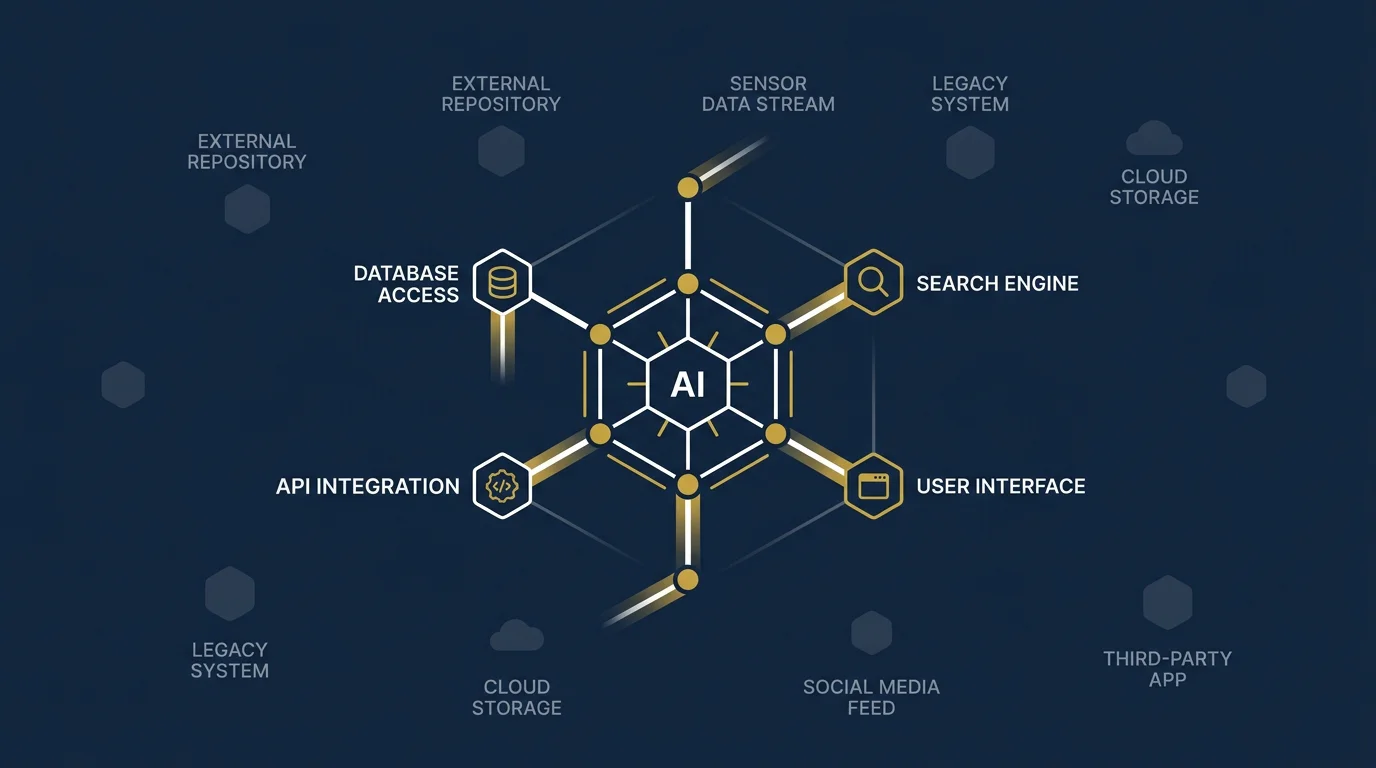

If an AI agent can read your messages, inspect business systems, make decisions, and act on your behalf, what prevents it from retaining more information than the task requires? That question sits at the center of agentic AI privacy. For a practical starting point, you can review our AI agent data minimization guidance.
Traditional applications usually follow a visible request and response pattern. Agentic systems can plan, call tools, combine sources, create new inferences, and continue working with limited supervision. Privacy therefore depends on the entire data lifecycle, not only on access permissions or a provider policy.
Why agentic AI privacy is an architecture problem
Agentic systems create privacy risk because they combine autonomy with access. A chatbot may answer one prompt, while an agent can retrieve records, inspect a calendar, update a database, send a message, or trigger a transaction. Each step can introduce new data, new permissions, and new records.
In its 2026 report, the OECD report found that 56.1% of surveyed developers strongly agreed that they had concerns about security and privacy when using AI agents. Another 25.3% somewhat agreed. The underlying developer survey was conducted in 2025, while the OECD report was published in 2026.
The concern is not limited to a data breach. An agent can create privacy harm while operating exactly as designed. It may combine harmless fragments into a sensitive profile, retain a private conversation in long-term memory, or disclose information to a tool that was not part of the user’s original expectation.
This changes the central design question. Instead of asking only who can access the data, you must also ask why the data entered the system, which components can transform it, how long each output persists, and whether the agent can act without a meaningful review point.
What information can an AI agent expose?
Consider a travel agent that books a trip. The obvious data includes your destination, dates, and payment information. The less visible data may include browser activity, location history, travel companions, loyalty identifiers, email content, supplier responses, failed booking attempts, and an inferred purpose for the journey.
A useful privacy review separates these categories rather than treating them as one data pool:
- Request content, including the text, files, images, or voice data you submit.
- Metadata, including timestamps, device details, account identifiers, network information, and usage patterns.
- Connected data, including records retrieved from email, calendars, customer systems, financial tools, or internal repositories.
- Operational records, including logs, queues, retries, caches, audit trails, and error reports.
- Derived information, including summaries, classifications, recommendations, embeddings, profiles, and decisions.
- Agent memory, including temporary context, session history, persistent memory, and information carried into later tasks.
These categories can follow different retention rules and ownership arrangements. A provider may avoid storing the prompt while an account record, billing record, security log, connected source document, or derived output remains available elsewhere.
Privacy analysis must therefore follow the data through every handoff. You should map the initial request, the model provider, the tools, the connected systems, the outputs, and the downstream purposes. Otherwise, a narrow deletion promise may leave the most revealing information untouched.
Why least privilege is not enough
Least privilege limits what an agent can reach. It does not determine how much information should exist in the first place. An agent may have permission to access one folder, yet that folder may contain far more personal information than the task requires.
That distinction matters as organizations expand AI use. More than 80% of organizations reported rising demand for personal and non-personal data as AI use moved toward core business functions, according to Cisco's 2026 study. The finding is dated to 2026 and reflects a broad increase in data pressure around generative and agentic systems.
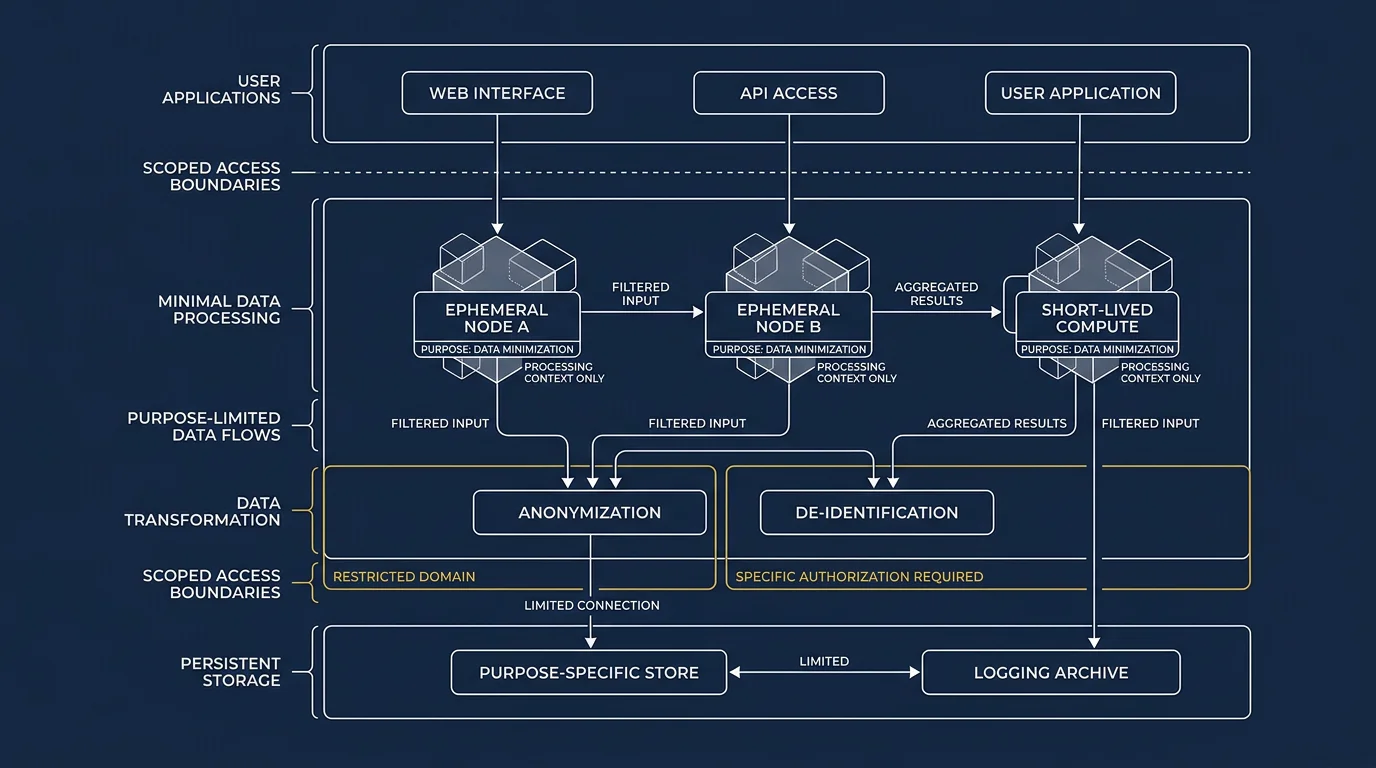
A stronger model combines least privilege with data minimization. The agent should receive only the fields, records, and context necessary for a defined task. Sensitive attributes should be removed, masked, generalized, or kept inside the source system when the agent does not need direct access.
For teams reviewing this design principle, our privacy engineering and data minimization blueprint provides a useful way to connect collection decisions with system architecture. The goal is not to make the agent blind. It is to prevent unnecessary information from becoming available to future prompts, tools, models, and operators.
Least privilege also needs time limits. A permission granted for one task should not become a permanent capability. Temporary credentials, scoped tokens, isolated workspaces, approval gates, and clear revocation paths reduce the chance that an agent will carry excessive authority into unrelated work.
How Zero Collection, Zero Retention, and Zero Exploitation work together

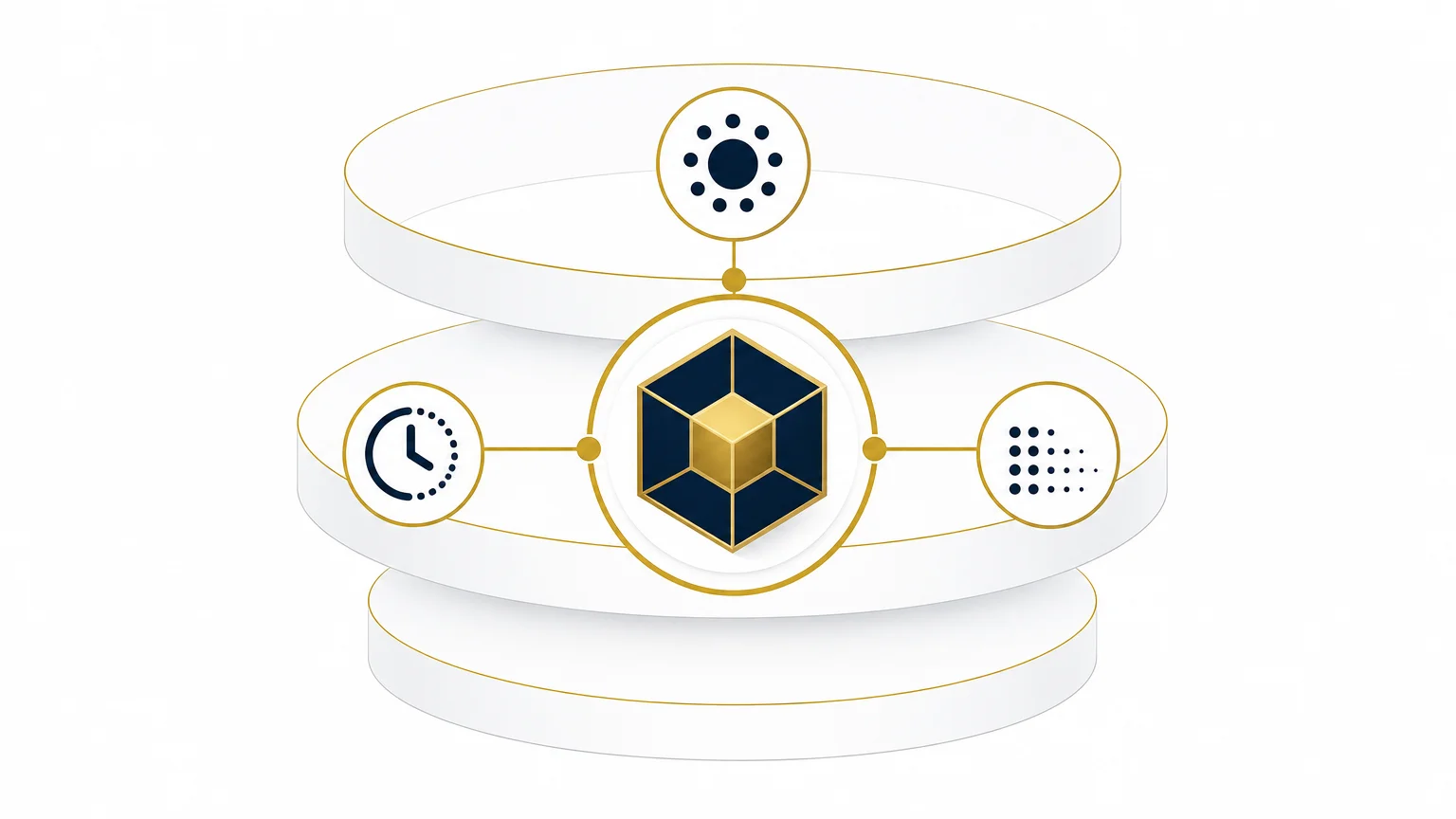
Zero Data Protocol presents an emerging independent framework built around three connected principles: Zero Collection, Zero Retention, and Zero Exploitation. It is not a regulation, certification, product, official standard, or universal solution. It is a way to examine whether data should enter a system, remain there, or be reused for unrelated purposes.
Zero Collection asks whether information is functionally necessary before ingestion. If an agent can complete a task without a birth date, full identity, precise location, or complete conversation history, those fields should not be collected by default.
Zero Retention asks whether information must persist after the operational need ends. A request may need temporary processing but not a permanent memory, training record, searchable transcript, or reusable profile.
Zero Exploitation asks whether information supplied for one legitimate purpose is later used for another. Profiling, advertising, unrelated model training, secondary scoring, and behavioral activation can all create a new purpose that the original interaction did not require.
These principles lead to Human Freedom Choice. When identity or personal data is not functionally necessary, the user should retain the freedom not to provide it. This does not mean every service must be anonymous. It means that identity dependency should be justified by function rather than assumed for convenience, tracking, or future reuse.
The framework also recognizes residual risks. Data minimization can reduce debugging context, abuse investigation evidence, personalization, or operational continuity. Those trade-offs should be documented and bounded, rather than used as a reason to retain everything indefinitely.
How to control agent memory and retention
Memory is one of the clearest dividing lines between ordinary AI assistance and agentic operation. A system may need short-lived task context, but that does not automatically justify session memory or persistent memory.
A 2026 white paper from the University of California, Berkeley Center for Long-Term Cybersecurity describes testing that replicated normal and adversarial behavior across five popular AI agents. The researchers focused on risks including unintended disclosure and over-permissioned actions, as described in a Berkeley white paper.
Designers should separate memory into distinct lifecycles:
- Task context exists only while the agent performs a specific request.
- Session memory supports continuity during a bounded interaction.
- Persistent memory remains available for future sessions and requires a stronger justification.
- Derived memory includes summaries, preferences, classifications, and inferred traits created from earlier activity.
Every memory type needs an owner, purpose, retention period, access rule, review mechanism, and deletion path. You should also test what happens during failures. Retries, timeouts, background queues, backups, caches, incident investigations, and exported reports can all preserve information beyond the visible conversation.
For a focused review of this issue, our Microsoft AI agent memory security guide examines retention risk across agent memory and related system layers. The practical question is simple: if a future task does not need the information, why should the agent keep it available?
Volatile processing is not automatically anonymous. Data can remain identifiable and sensitive while it is held in memory, transferred between components, or used to make a decision. Deletion after processing also does not remove copies that entered connected source systems or downstream services.
What should you test before deploying an agent?
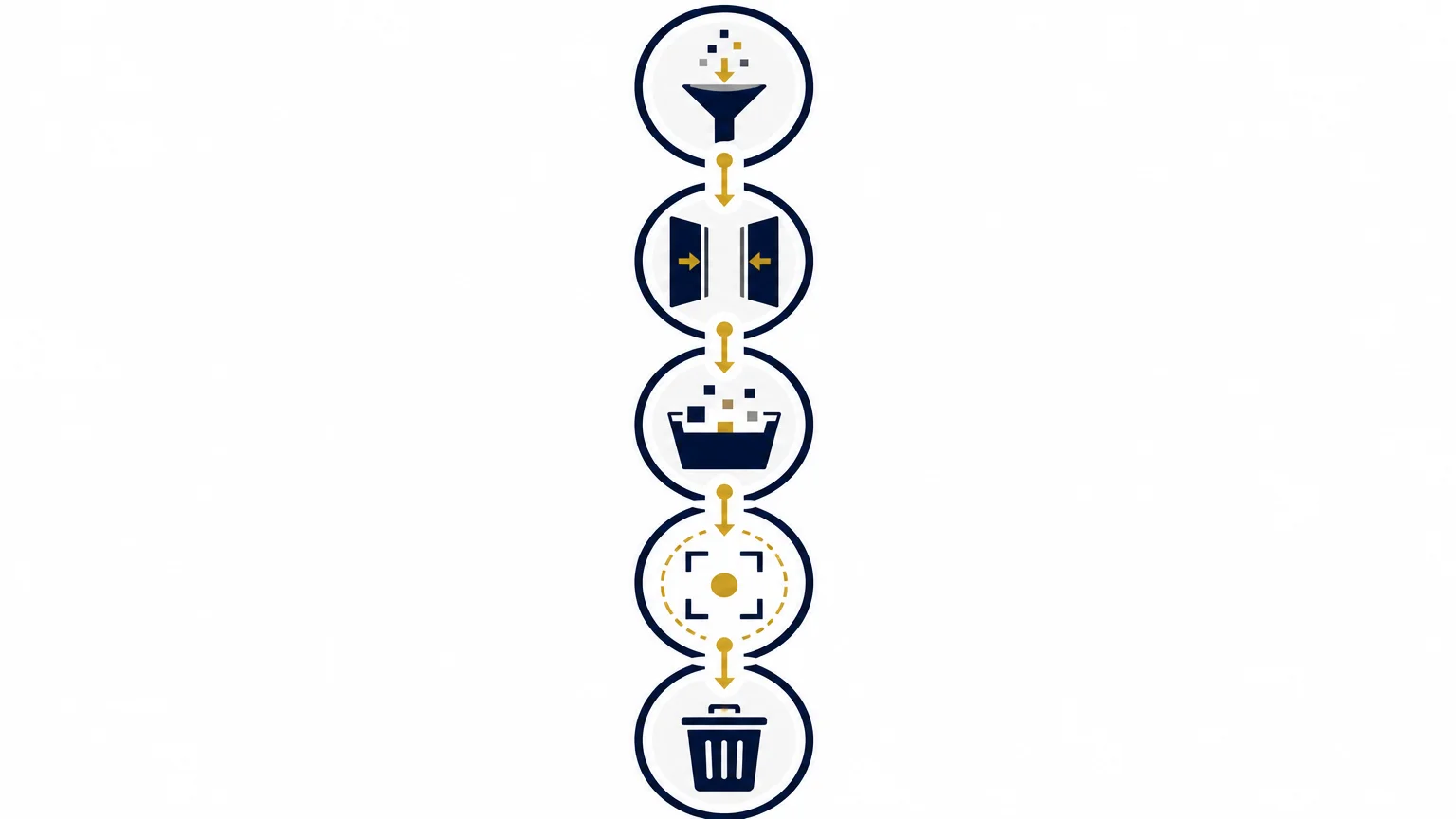
Before deployment, a privacy review should examine the agent as an operating system component rather than as a prompt with a model behind it. The following checks create a practical baseline:
- Define the task boundary. State the outcome, the allowed actions, the prohibited actions, and the information required for success.
- Reduce the input. Remove unnecessary identity fields, sensitive attributes, historical context, and unrelated attachments before inference.
- Separate access layers. Distinguish request content, account data, metadata, connected records, and derived information.
- Constrain tools. Give the agent only the tools, credentials, datasets, and network paths required for the current task.
- Control memory. Set explicit rules for temporary context, session history, persistent memory, and derived memory.
- Inspect provider routing. Identify which model, service, region, subcontractor, or external tool receives the data.
- Test hostile input. Assess prompt injection, malicious documents, deceptive websites, unauthorized tool calls, and attempts to extract unrelated records.
- Verify deletion. Test normal requests, failures, retries, queues, caches, backups, exports, and incident response paths.
- Keep a human decision point. Require review when an action affects finances, employment, healthcare, legal rights, access, identity, or other high-impact interests.
Monitoring should also cover what the agent actually did, not only what it was instructed to do. Logs should support investigation without becoming an uncontrolled archive of personal content. Where detailed records are necessary, retention should be narrow, access should be restricted, and deletion should be tested.
Where compliance and human choice fit
Privacy architecture supports compliance, but it does not replace legal analysis. Obligations depend on jurisdiction, purpose, contracts, notices, data categories, user rights, and documented exceptions. A technical control alone cannot determine whether a specific deployment is lawful.
In a January 2026 review, the U.S. Government Accountability Office identified privacy-related gaps in federal AI guidance. It also noted potential performance trade-offs when organizations adjust or remove data for privacy purposes, as discussed in the GAO review.
This is why privacy decisions should be recorded as design choices. You should document what the agent collects, why it needs the information, where the data travels, how long each layer persists, and which alternatives exist when a person declines unnecessary identity or tracking.
Human choice is meaningful only when refusal does not create an unreasonable penalty. If an agent can provide a basic function without identity, the system should preserve anonymous, pseudonymous, or unlinkable use where appropriate. If identity is essential, the reason should be clear and proportionate to the task.
The result is a more honest privacy model. It does not promise that an agent is risk-free. It shows where risk remains, which controls reduce exposure, and where human judgment must continue to govern autonomous action.
Design privacy before granting agency
Agentic AI privacy begins before the model receives its first request. Limit the information entering the system, restrict the tools and records an agent can reach, separate temporary context from persistent memory, and reject unrelated reuse. You should also test deletion, provider routing, derived information, and high-impact decisions. The most resilient design is not the one that stores everything securely. It is the one that makes unnecessary collection, persistence, and exploitation structurally difficult.
Take action with Zero Data Protocol
If you are evaluating an AI agent, the central question is not only whether the system can protect stored data. You should also examine whether the data needs to enter the workflow, remain available after the task, or support a secondary purpose.
Our independent architectural framework connects Zero Collection, Zero Retention, Zero Exploitation, memory lifecycle analysis, identity dependency, and externally enforced security controls. Explore our zero-data architecture for private agentic AI to assess collection, persistence, connected systems, derived information, and user choice within one structured review.
Frequently Asked Questions
What is agentic AI privacy?
Agentic AI privacy is the practice of limiting how autonomous AI systems collect, access, infer, retain, and reuse personal or sensitive information. It covers the full lifecycle, including tools, connected systems, metadata, outputs, and memory.
Why can agentic AI create more privacy risk than a chatbot?
An agent can plan tasks, call tools, combine information, and act with limited supervision. This expands the number of systems involved and increases the chance of unintended disclosure, excessive access, persistent memory, or harmful inference.
Does zero retention mean that no data exists anywhere?
No. Request content may avoid persistent storage while account data, billing records, security logs, metadata, connected source data, backups, or derived information remain elsewhere. Retention claims must therefore define the covered data and the complete lifecycle.
How can you limit the information an AI agent can access?
Define the task boundary, minimize inputs, use least-privilege permissions, separate accounts and datasets, restrict network paths, and issue time-limited credentials. You should also test tool calls, prompt injection, provider routing, logging, and deletion behavior.
What does Human Freedom Choice mean in privacy architecture?
Human Freedom Choice means preserving a person’s ability not to provide identity or personal data when that information is not functionally necessary. Within our Zero Data Protocol framework, it connects data minimization with anonymity, consent, user control, and privacy by design.